
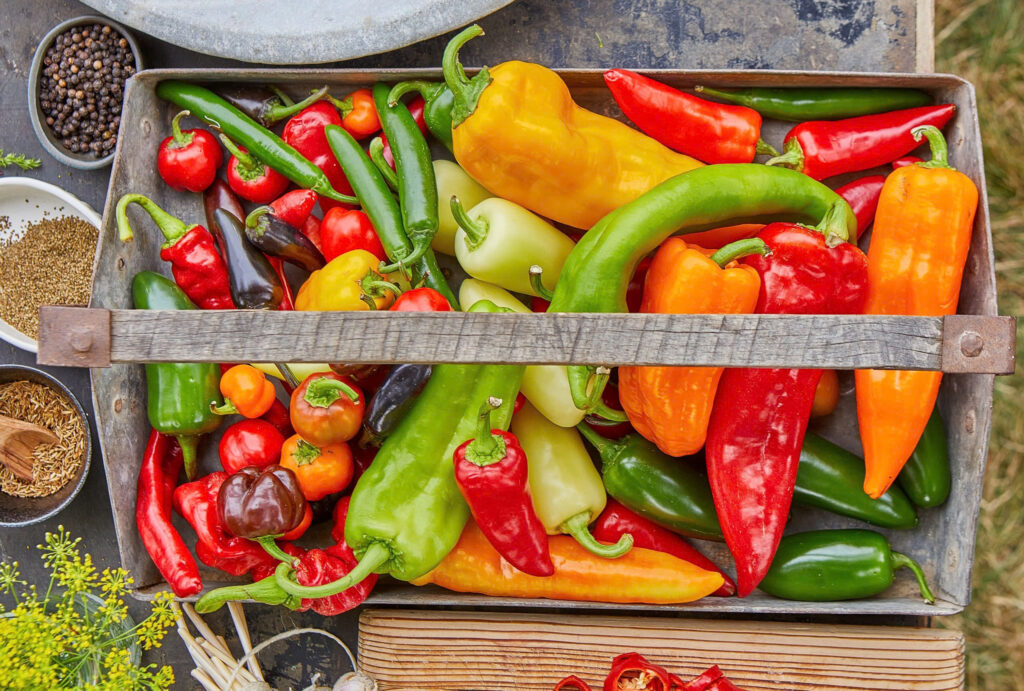
Garden centre in Vancouver: Want bigger, better peppers in your backyard? Discover expert-approved tips from Vancouver’s top garden centre on pruning, watering, fertilizing, and more to boost your pepper yields.
Growing peppers in Canada can be a joy or a challenge depending on how you approach it. Whether you’re in Zone 5 or Zone 7, learning how to get the most out of every plant is key to enjoying a bumper crop of spicy jalapeños or sweet bell peppers.
Hi, I’m Darrell Smith, owner of DH Garden Centre in Kitsilano, Vancouver, and founder of DH Landscape Solution. After 25 years in landscaping and over a decade running our family-owned garden centre, I’ve helped hundreds of local gardeners grow thriving veggie gardens, even in our tricky coastal climate.
Today, I want to walk you through a story and a strategy about getting the most out of one of the most rewarding crops you can grow at home: peppers.
Let’s dig in.
I Grew 80+ Varieties of Peppers—Here’s What Mattered Most
Several years ago, I set myself a challenge: grow as many varieties of peppers as I could in one season. I ended up with over 80. From delicate shishitos to fire-breathing habaneros, I experimented with techniques, fertilizer blends, staking methods, and even companion planting.
What I learned might surprise you.
Because what made the biggest difference wasn’t the fancy gadgets or rare seeds—it was simple, timely care and knowing when to act.

What made the biggest difference wasn’t the fancy gadgets or rare seeds—it was simple, timely care and knowing when to act.
1. Should You Top and Prune Your Peppers?
Let’s start with the most debated technique: topping.
Topping means snipping off the top growth of your pepper plant early in its life to encourage it to grow bushier. It’s similar to what we do with basil to get more branching—and potentially more fruit.
But here’s my honest advice: don’t top your peppers if you’re gardening in Zones 3–6.
Why? Our growing season in much of Canada is just too short. Peppers need time to recover from topping, and that delay can reduce your overall harvest—especially if you’re growing large varieties like bell or Anaheim peppers.
I only recommend topping in two cases:
-
You’re growing small-fruited peppers like shishito or pequín.
-
You live in a long-season zone (Zone 7 and up) and top them early—right around the “Y” fork in the stem.
Otherwise? Skip the scissors. Let your pepper ride.
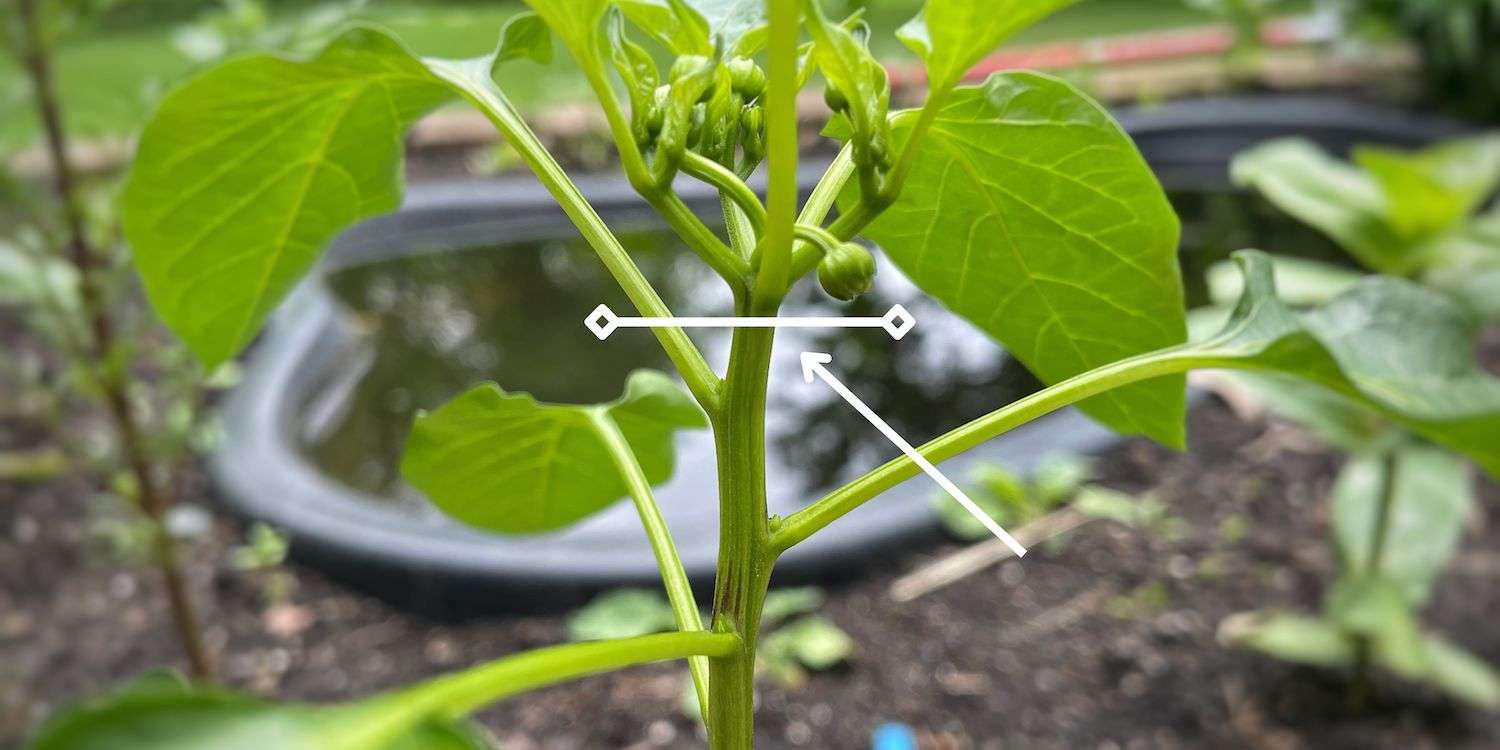
Topping means snipping off the top growth of your pepper plant early in its life to encourage it to grow bushier.
2. Support Your Peppers Before the Wind Breaks Them
One of the most painful things to see in the garden is a healthy pepper plant snapped in half from wind or heavy fruit load. And it happens more than you’d think—especially here in Vancouver where coastal winds can whip through gardens without warning.
The fix? Stake early.
-
Use bamboo stakes (available at DH Garden Centre—affordable and reusable).
-
Tie with soft twine—just snug, not tight.
-
Place the stake 6–8 inches into the soil, close to the main stem.
Even for smaller pepper varieties, this simple habit can save your entire crop. It’s like insurance for your veggies.
3. Hot and Sweet Peppers Can Coexist—Here’s the Truth
One of the biggest myths I hear is that you shouldn’t grow hot and sweet peppers together because they’ll “mix” flavors.
Let’s clear it up: cross-pollination affects the seeds, not the current fruit.
That means your sweet peppers will stay sweet, and your hot peppers will stay hot—this year. The only time it matters is if you’re saving seeds for next season, in which case, you might end up with a spicy surprise!
So if you’re working with limited space, go ahead and mix them in the same bed.

Do Peppers Cross Pollinate? All About Pollination In Pepper Plants
4. Sunscald: The Silent Pepper Killer
Ever noticed brown, dry, leathery patches on your peppers? That’s sunscald—and it’s more common in Canadian gardens than you think.
It happens when direct sun hits the fruit during peak hours, and while our cooler climate helps a bit, summer heatwaves can still do real damage.
Here’s how I protect my plants:
-
Plant densely – 10 to 12 inches apart to create natural shade.
-
Use companions – Tall plants like sunflowers provide dappled afternoon shade.
-
Apply shade cloth – Especially during hot, dry stretches. You can stake bamboo poles and drape lightweight cloth over the bed from 1–4pm.
Think of it like sunscreen for your peppers.
5. Watering Peppers the Right Way
Most pepper-growing problems come down to this: overwatering.
Unlike tomatoes, peppers don’t need as much water. Their waxy leaves retain moisture well, and overwatering can actually mimic drought stress by suffocating the roots.
Here’s what I recommend:
-
Hand watering? Only at the base, not overhead.
-
Best option? Install drip irrigation (we have DIY kits at our shop).
-
Check before you water. Pull back the mulch and feel the soil. If it’s damp 1–2 inches below, skip the watering.
And here’s a pro tip: if your pepper leaves droop during the day but perk up in the evening, it’s heat stress—not thirst. Don’t be fooled into overwatering.
6. Fertilizing: Feed Wisely, Not Excessively
Peppers can grow in average soil—but if you’re aiming to maximize your yield, feeding can help.
Here’s my simple system:
-
At transplant time: Mix organic fertilizer into the planting hole. Look for a balanced or fruit-forward blend, like 4-9-3.
-
Mid-season: When you see flowers forming, scratch in a scoop around the base and water it in. Avoid high-nitrogen fertilizers at this stage—too much leaf, not enough fruit.
-
Monthly: Reapply if your plants are pumping out lots of peppers.
If you follow a no-dig method and your soil’s rich in compost, you might skip this step altogether. Just monitor your plants—if they’re thriving, let them be.
7. Harvest at the Right Time—Then Keep the Party Going
Most of us think green bell peppers are a separate variety—but they’re just unripe versions of yellow, orange, or red bells.
Harvest early if you want more total peppers. Or wait for sweetness and color, depending on your taste.
For jalapeños, let them turn red and crack for more flavor. If you smoke them? Congratulations—you’ve just made chipotle.
Bonus Tip: Overwinter your pepper plants indoors and start next season ahead of the game. We’ll show you how in our next guide.
:strip_icc()/BHG-gardening-basket-harvest-peppers-EIpyzz36KY2B5A0n-43wT6-2b62930e608345f3a8613d17d424f795.jpg)
Overwinter your pepper plants indoors and start next season ahead of the game. We’ll show you how in our next guide.
Final Thoughts: Grow Bold, Grow Smart
I’ve seen it again and again—gardeners frustrated with small yields, slow fruit, or wilted plants. And often, the fix is simple.
-
Skip topping unless you’re in a long-season zone.
-
Stake early.
-
Mix hot and sweet freely.
-
Shade your fruit when the sun gets aggressive.
-
Water only when needed.
-
Feed gently.
-
Harvest smart.
At DH Garden Centre, we’re not just here to sell plants—we’re here to grow alongside you. Whether you’re just starting out or you’re ready to push your pepper harvest to the next level, our team is here to help.
Stop by our garden centre in Kitsilano or browse our online store for the best seeds, fertilizers, stakes, and everything in between.
Let’s grow your best garden yet.
Visit us today:
📍 3742 West 10th Avenue, Vancouver, BC
🌐 dhgardencentre.com
📞 604-929-7335
📸 Instagram & Facebook: @dh.garden.centre
🎥 YouTube: @ThePlantDoctorOfficial
Keep reading

Have a plant question? Bring it to the counter.
DH Garden Centre is at 3742 West 10th Avenue in Kitsilano, Vancouver, open 11:00 to 6:30 every day. Bring the plant, or a photo of the spot you want to fill, and we will look at it with you. If you buy a pot here we repot the plant at the counter, soil included up to 5 litres.
