
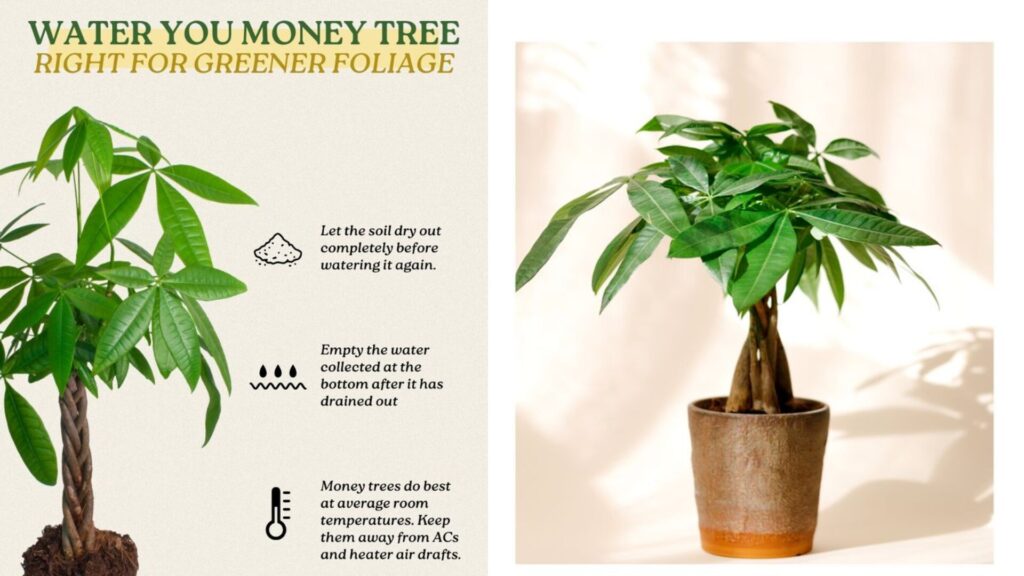
Learn how to care for a money tree with this complete, expert-backed guide. Discover the best lighting, watering schedule, soil mix, humidity, fertilizing routine, repotting tips, and common mistakes to avoid so your Money Tree grows strong, healthy, and beautiful indoors.
Introduction: Why So Many Canadians Love the Money Tree
Step inside any Canadian home, from a downtown Vancouver condo to a cozy Toronto apartment, and you’re likely to spot a glossy-leaved Money Tree standing proudly in a corner. It’s more than a decorative plant. For many, it symbolizes prosperity, peace, calm energy, and a sense of renewal that brightens long Canadian winters.
But despite its reputation for being “easy,” the Money Tree requires proper knowledge and consistent care to truly thrive. In this guide, we’ll break down how to care for a money tree the right way, based on professional grower insight and real-world experience.
By the end of this article, you’ll know exactly:
• How to choose a healthy Money Tree at the garden centre
• Where to place it for optimal light
• How often to water it (and how to avoid root rot)
• What soil mix helps it grow fast
• When and how to fertilize
• How to repot without harming the plant
• How to keep pests and diseases away
• The two essential care steps that prevent 90 percent of plant deaths
Let’s begin.
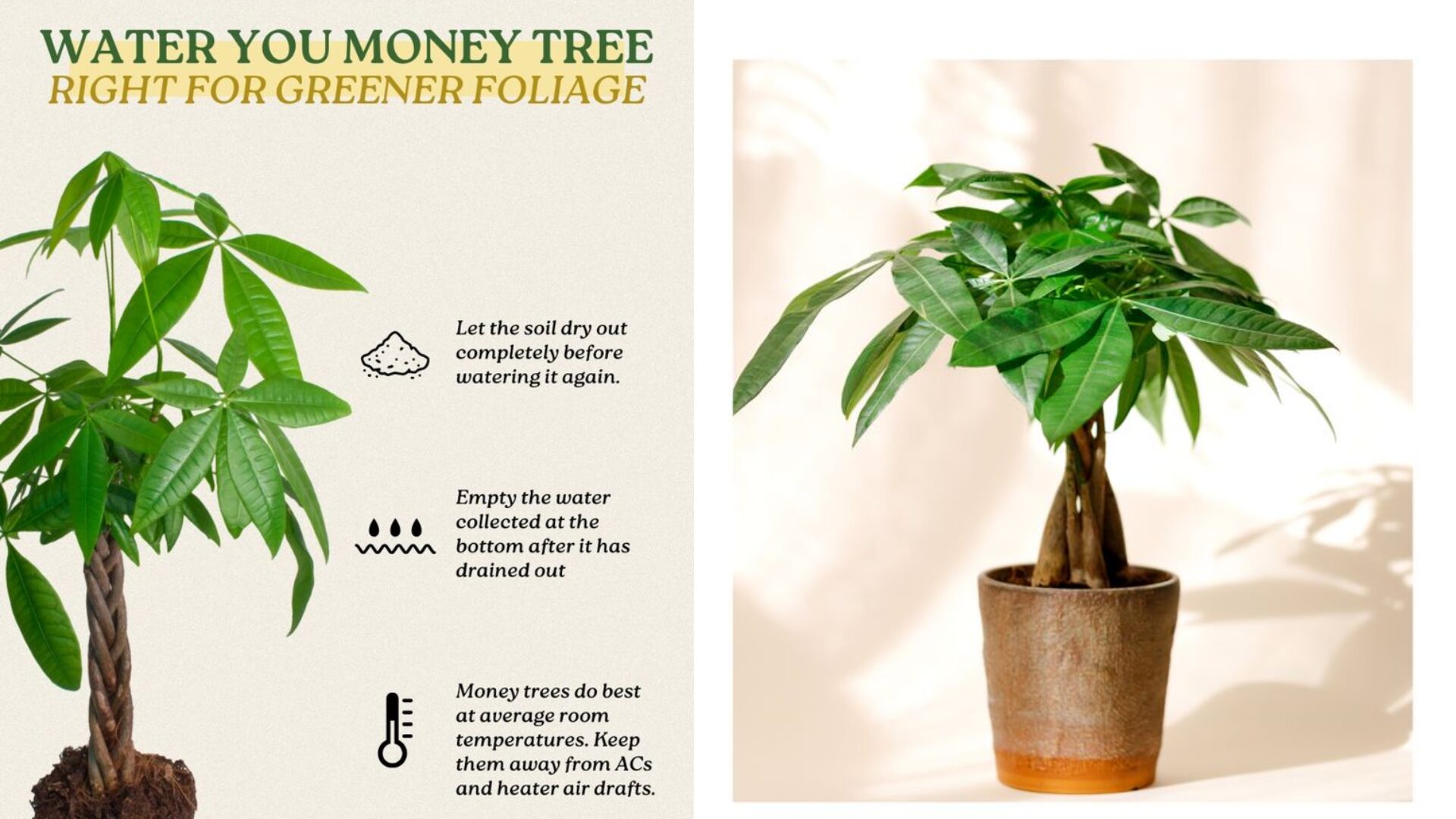
How to Choose a Healthy Money Tree at the Garden Centre
Before learning how to care for a money tree, you must start with the right plant.
1. Look at the shape and braid
Most Money Trees sold in Canada come with braided trunks. Choose a plant with:
• Even, uniform braids
• Trunks that are similar thickness
• No leaning or collapsing braid structure
If the braid is uneven, the thicker trunks can eventually choke out the thin ones.
2. Inspect the leaves carefully
Avoid plants with:
• Many yellow leaves
• Brown crispy tips
• Soft black spots
• Signs of disease or heavy stress
A few imperfections are normal, but patterns of damage signal deeper issues.
3. Check for pests
Look closely, especially under the leaves, for:
• Spider mites
• Mealybugs
• Aphids
• Fungus gnats
If you see flying gnats when you shake the plant, keep looking.
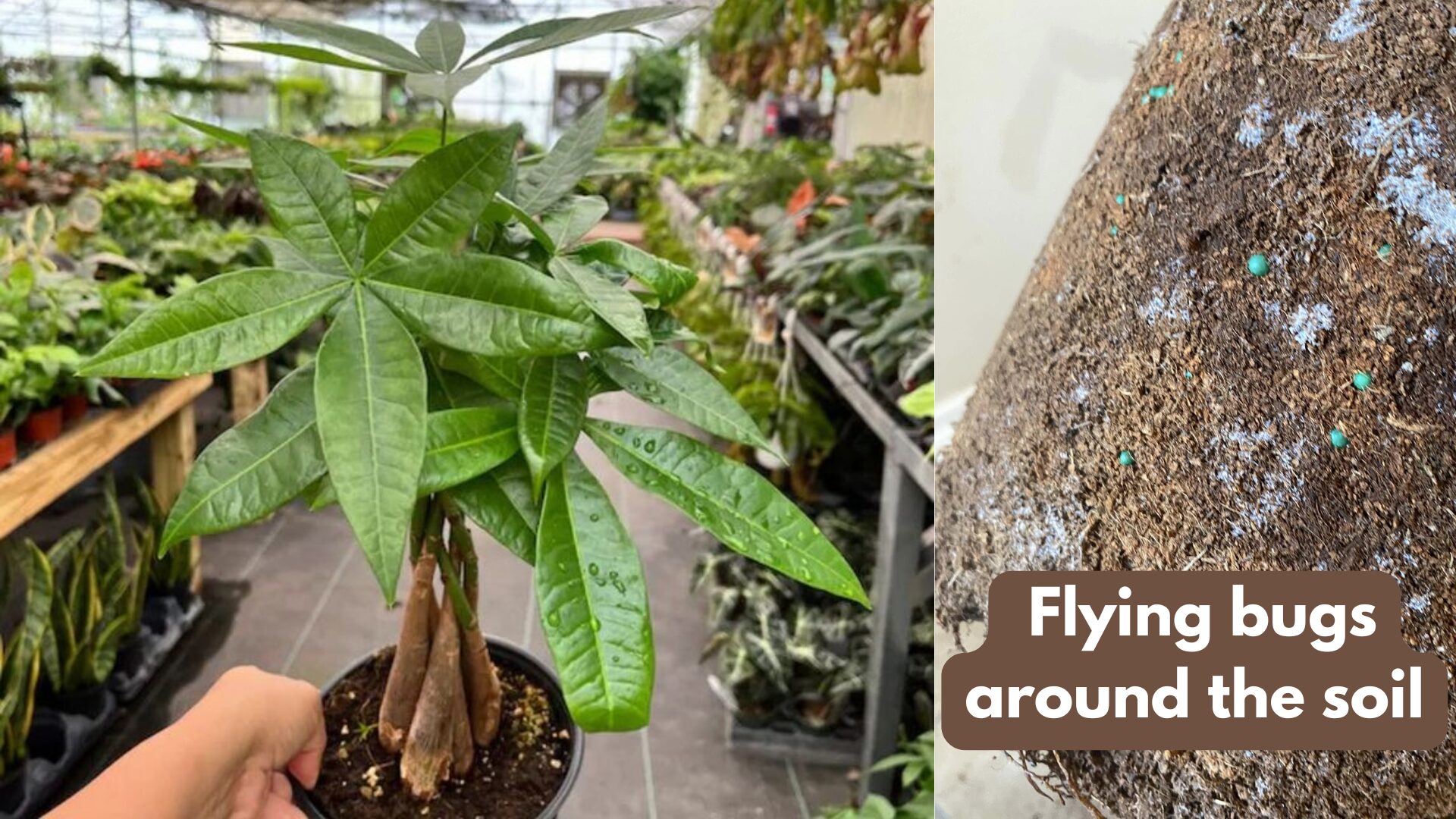
4. Examine the roots
If allowed, gently remove the pot to check root health.
Healthy roots are:
• White or light tan
• Firm
• Soil is loose and breathable
Avoid plants with black, mushy roots, this is early root rot.
How to Care for a Money Tree Indoors (The Complete Guide)
Here begins the heart of what most readers search for: how to care for a money tree in a real Canadian indoor environment.
1. Lighting Requirements: Bright Indirect Light Is Ideal
Money Trees love bright, indirect light. They grow under the rainforest canopy in the wild, so harsh sun is not their friend.
Best Spots in a Home
• Near an east-facing window
• Beside a bright south window but out of direct sunlight
• A bright corner with diffused natural light
If you live in a dark apartment
No worries. Many Canadians do.
Use grow lights. Affordable LED grow lights work beautifully and keep the plant healthy year-round.
Warning: Avoid direct, intense sunlight
Direct afternoon sun can scorch leaves, leaving faded patches or crispy edges.
2. Temperature and Humidity Needs
Canada’s indoor temperatures fluctuate dramatically between seasons, but Money Trees are tolerant.
Ideal temperature range
• Thrives between 18°C–29°C
• Can tolerate down to 10°C briefly
• Avoid cold drafts near windows in winter
Humidity matters
Money Trees come from marshy tropical regions. Increase humidity by:
• Grouping plants
• Using a humidifier
• Placing a pebble tray beneath the pot
High humidity helps prevent leaf drop and encourages fresh growth.
3. Clean the Leaves Monthly (A Highly Underrated Step)
Most plant owners don’t do this, but learning how to care for a money tree properly means understanding the power of clean leaves.
Cleaning leaves helps with:
1. Photosynthesis efficiency
Dust blocks light. Clean leaves = stronger growth.
2. Pest prevention
While wiping the leaves, you’ll spot pests early.
3. Removing existing pests
A simple shower or wipe-down knocks pests off before they multiply.
Two Methods to Clean Money Tree Leaves
Method A: Spray and Wipe
Use:
• Clean water
• Optional: a few drops of Castile soap
• Microfiber cloth
Spray and gently wipe the leaves.
Method B: Shower Wash
Cover soil with a plastic bag.
Bring the plant to the shower or hose.
Spray the foliage to remove dust and pests.
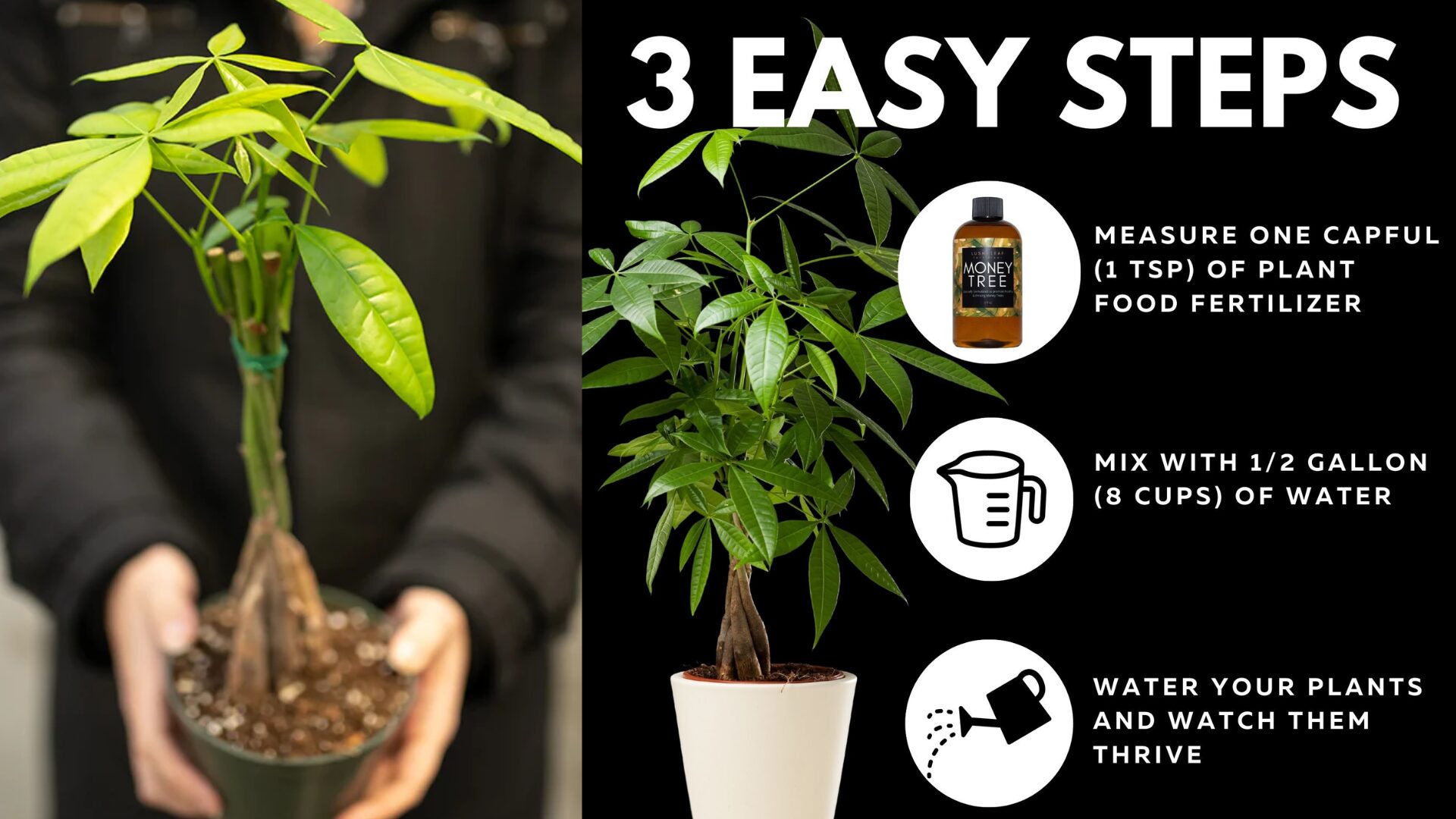
4. Fertilizing Your Money Tree: What to Use and How Often
During the active growing season, spring and summer, fertilize once per month.
Which fertilizer is best?
A general indoor plant fertilizer is perfect. Look for:
• Nitrogen
• Phosphorus
• Potassium
• Micronutrients
How to apply fertilizer safely
Always water before fertilizing.
This prevents root burn by eliminating dry pockets of soil.
Mix the fertilizer in water at half-strength and apply evenly across the soil surface.
5. How to Water a Money Tree Properly (The Step Most People Get Wrong)
The number one cause of Money Tree death is overwatering, not underwatering.
When learning how to care for a money tree, this section matters more than any other.
How to water correctly
You can water deeply, use as much water as the pot can drain
BUT only water when the soil is fully dry.
Use the skewer test
Insert a wooden skewer to the bottom of the pot.
• If it comes out dry → water
• If it comes out damp → wait
Using a moisture meter
Water only when the meter reads 0.
Why deep watering is important
Money Trees get dry pockets easily. Deep watering:
• Rehydrates the entire soil mass
• Prevents channeling
• Ensures even moisture distribution
6. Repotting a Money Tree: How to Do It Without Causing Rot
You’ll repot every 2–3 years, or when:
• Soil becomes compact
• Roots circle the bottom
• Plant shows signs of root stress
Step-by-step repotting method
1. Water two days before repotting
Hydrated roots transition better.
2. Choose the right pot size
Only 1–2 inches larger than the current pot.
A pot that’s too big holds too much moist soil → leads to root rot.
3. Use the correct soil mix
A perfect Money Tree soil contains:
• Coco coir or peat moss (holds moisture)
• Pine bark (structure + aeration)
• Sand or perlite (drainage)
4. Replant carefully
Center the plant.
Gently compact the soil (not tight).
Water once to settle the mix, then resume your normal “water only when dry” routine.

Two Crucial Final Tips That Prevent 90 Percent of Money Tree Deaths
Tip #1: Quarantine new plants
Keep new plants isolated for 2–3 weeks.
This prevents pest outbreaks from spreading to your other houseplants.
Tip #2: Never water on a schedule
Watering by calendar kills more Money Trees than pests or cold combined.
Always check dryness first.
Common Problems & Fixes
1. Yellow leaves
Cause: Overwatering
Fix: Allow soil to dry completely before watering again.
2. Drooping leaves
Cause: Lack of light or underwatering
Fix: Move to brighter spot or water deeply.
3. Brown crispy edges
Cause: Low humidity
Fix: Increase humidity with a humidifier.
4. White haze on soil surface
Cause: Fertilizer salt buildup
Fix: Flush soil with clean water.
FAQ: How to Care for a Money Tree
1. Should I rotate my Money Tree?
Yes. Rotate weekly for even light exposure.
2. Can Money Trees grow in low light?
Yes, but growth slows and leaves may stretch. Use grow lights if needed.
3. How often should I water my Money Tree?
Only when soil is 100 percent dry. Never follow a weekly schedule.
4. Why is my Money Tree losing leaves?
Usually stress from overwatering, low humidity, or sudden temperature change.
5. Are Money Trees safe for pets?
Yes, they’re non-toxic to cats and dogs.
CTA: Ready to Help Your Money Tree Thrive?
Now that you know exactly how to care for a money tree, you can help your plant grow stronger, healthier, and more beautiful year-round.
If you’d like more expert plant guides tailored for Canadian homes, subscribe, share your questions, or check out our next plant-care article.
Your Money Tree and your indoor oasis will thank you.

Whether you’re shopping for plant lovers, hunting for meaningful plants, or simply looking to add a touch of green to your own holiday décor, DH Garden Centre has everything you need for a joyful, vibrant, and beautifully green Christmas.
Visit DH Garden Centre today: where the holidays grow brighter, one plant at a time.
Keep reading

Have a plant question? Bring it to the counter.
DH Garden Centre is at 3742 West 10th Avenue in Kitsilano, Vancouver, open 11:00 to 6:30 every day. Bring the plant, or a photo of the spot you want to fill, and we will look at it with you. If you buy a pot here we repot the plant at the counter, soil included up to 5 litres.
