
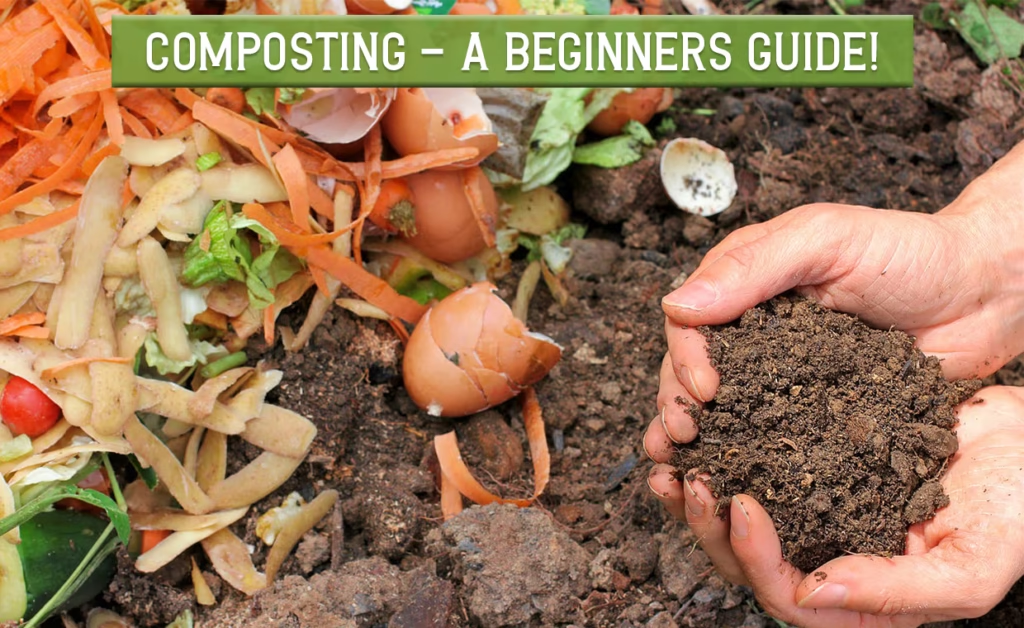
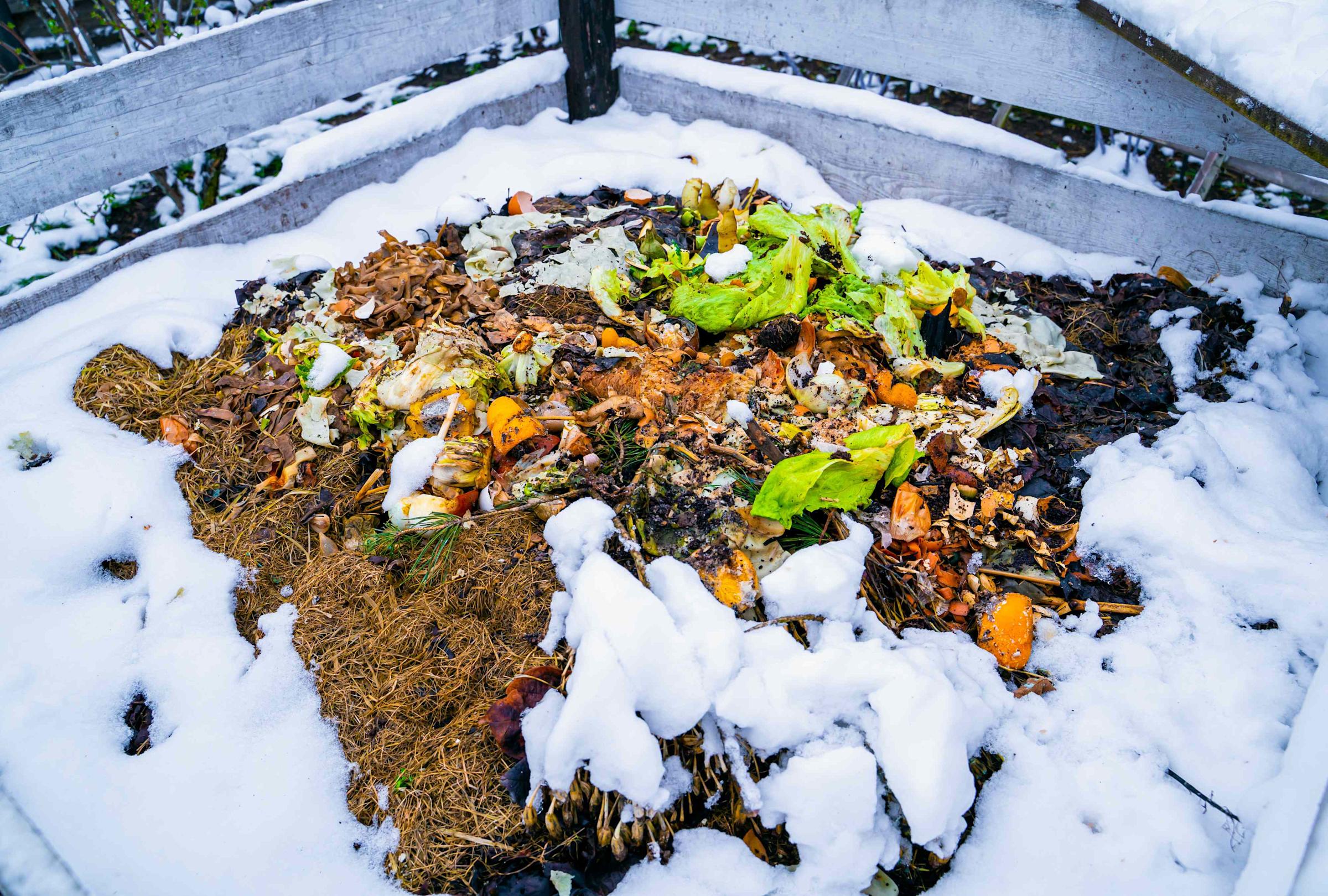
Winter composting doesn’t have to stop when your garden freezes. Learn 6 essential tips on how to compost in winter, manage moisture, pile size, browns and greens, and keep your compost active all season long.
Winter Composting: 6 Essential Tips to Keep Your Pile Working All Season
As gardeners, we love watching life cycles unfold: tiny seeds turning into abundant harvests, flowers blooming and fading, beds filling and clearing. There’s another transformation quietly powering all of this behind the scenes: the way a messy heap of leaves, stems, kitchen scraps, and dead plants becomes dark, crumbly compost.
All season long, your compost pile has been breaking down:
- Spent foliage from your crops
- Old potted plants past their prime
- Kitchen scraps and yard trimmings
Without this “well-oiled machine,” most of us would drown in garden waste. But as temperatures drop, something changes: your winter compost pile slows down, while your waste stream does not. You still cook, still peel vegetables, still clear beds. Left unmanaged, the pile grows, mats, and feels “stuck.”
The good news: winter composting can absolutely keep going. You will not get the same blazing-hot temperatures as midsummer, but with the right setup, you can keep decomposition ticking along beneath the frost.
In this guide, we will walk through 6 essential tips for how to compost in winter so that even when the rest of your garden is asleep, your compost stays quietly at work.
1. Get the Basics Right: Browns, Greens, Air, and Water
No matter the season, composting rests on four fundamentals:
- Browns (carbon): dry leaves, straw, shredded cardboard, wood chips
- Greens (nitrogen): fresh grass, kitchen scraps, green plant material
- Air: oxygen for aerobic microbes
- Water: moisture so bacteria and fungi can function
When these are roughly balanced, your compost breaks down quickly and stays sweet-smelling. When they are out of balance:
- Too many greens → smelly, slimy, anaerobic
- Too many browns → dry, slow, dusty
- Too little air → compacted, sour, no heat
- Too little water → dry, stalled pile
In warm weather, a slightly imperfect balance still works because microbial activity is intense. In winter, however, the system has less margin. If your winter compost pile is already struggling in summer, the cold will only make it worse.
Before the real cold arrives, spend some time:
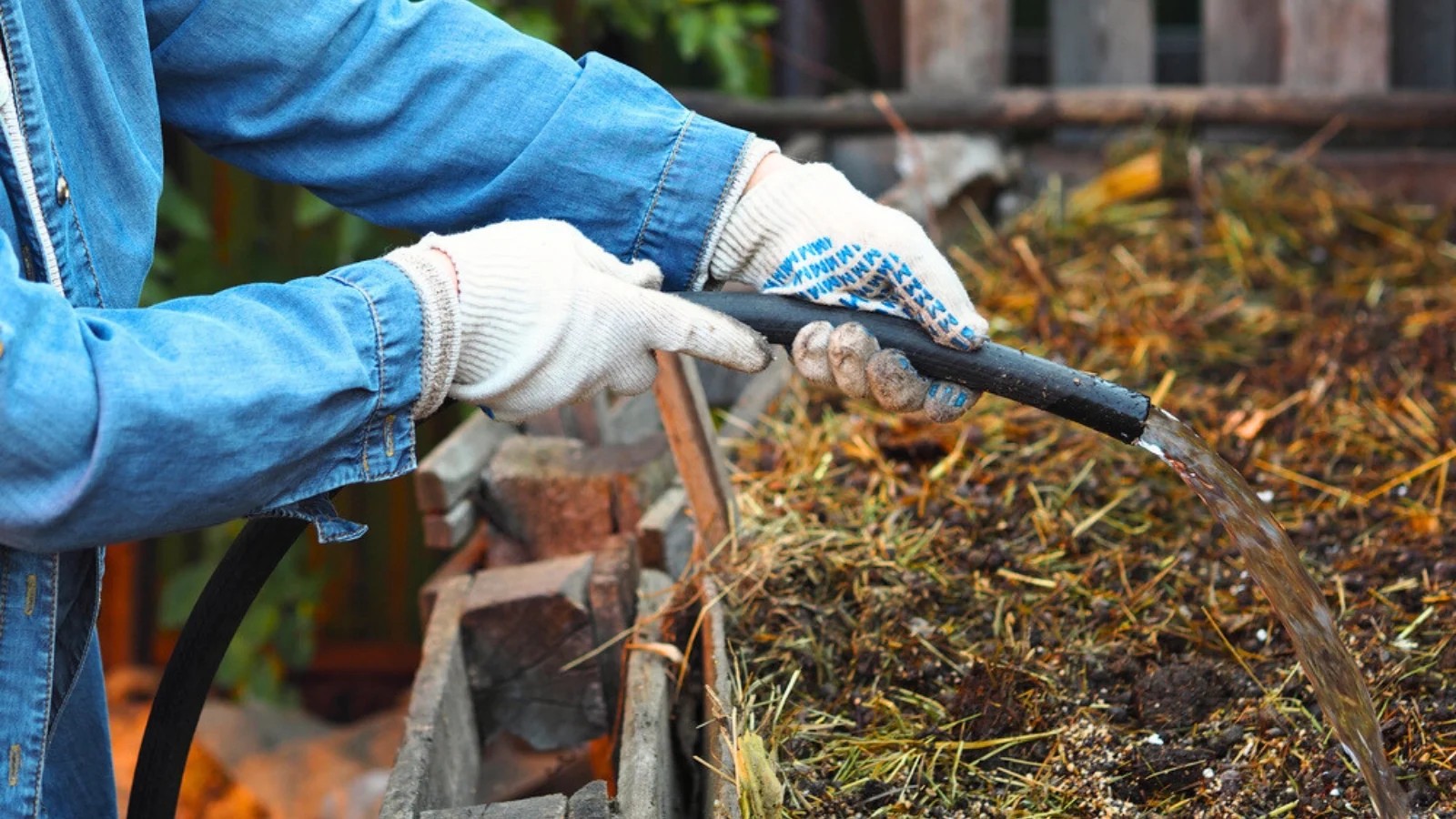
- Checking that the pile is moist but not soggy (like a wrung-out sponge)
- Adjusting your browns and greens ratio
- Breaking up big clumps and mats to let air in
- If your compost is active and healthy going into winter, it has a much better chance of staying productive as temperatures drop.
2. Size Matters: Build a Larger Winter Compost Pile
One of the most important winter composting tips is pile size.
In cold weather, thermal mass is your friend. A larger pile:
- Holds heat more effectively
- Buffers against sharp temperature swings
- Is less likely to freeze solid all the way through
Small piles have almost no insulation. When a freeze hits, they can freeze from top to bottom and go completely dormant. That’s not “wrong” – they will thaw and restart in spring – but it’s not what you want if your goal is active winter composting.
As a rule of thumb for how to compost in winter:
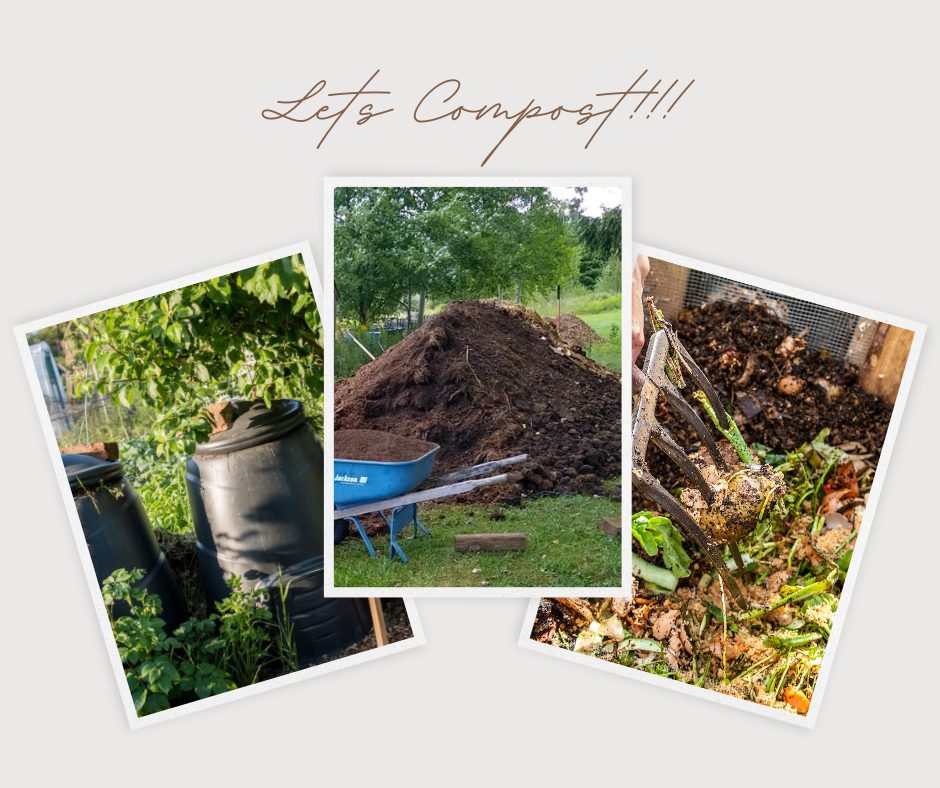
- Aim for at least 3 × 3 × 3 ft (1 × 1 × 1 m) as an absolute minimum
- Ideally, push closer to 4 × 4 ft or larger if space allows
If you’re currently working with several small piles, consider:
- Combining them into one big central winter compost pile, or
- Mounding material together for winter, then separating later in spring
- The larger it is, the more your compost can fend off cold and keep the “core” active.
3. Reduce Particle Size: Smaller Pieces Break Down Faster
In composting, the real action happens on the surface area of each piece:
- Microbes live on the surfaces
- Smaller pieces = more surface area
- More surface area = faster decomposition
During summer, you can throw in big stems, whole leaves, and chunky plant material and still get decent results. In winter, that luxury disappears. If you want your winter compost pile to keep working:
- Chop or shred branches and stalks
- Tear up cardboard and egg cartons
- Break leaves and stems into smaller pieces
This doesn’t have to be perfect or fussy. Simple changes help:
- Cut long stalks into shorter lengths with pruners
- Run leaves over with a lawn mower
- Crush dry stems underfoot before adding
The goal is not “powder,” just smaller pieces so your cold-weather microbes don’t have to chew through logs when they’re moving slowly.
4. Add Bulk and Structure: Insulation + Oxygen in One Move
Bulk is one of your secret weapons for composting in winter.
Adding bulky, structured material:
Insulates the pile (like the fluff in a winter jacket)
Creates air pockets that allow oxygen to move through
Helps prevent compaction and anaerobic zones
Great bulk materials include:
- Autumn leaves
- Straw
- Shredded stems
- Woody plant material in small pieces
The timing is almost poetic: leaf fall arrives just when you need extra browns and insulation. Use it.
Practical ways to add bulk:
- Layer fallen leaves directly onto the pile as they drop
- Alternate kitchen scraps with thick leaf layers
- Mix coarse browns into dense, wet material
- Think of bulk as your winter compost “down jacket” – it traps air, slows heat loss, and gives microbes the oxygen they need.
5. Resist the Urge: Don’t Turn Your Pile in Mid-Winter
This one goes against everything many composters have learned:
In winter, turning your compost pile too often can do more harm than good.
Turning is fantastic in warm weather because:
- It redistributes fresh material
- Reintroduces oxygen
- Often makes the pile heat up again
- But in winter composting, every time you turn the pile you:
- Expose the warm core to cold air
- Bleed off the precious heat you’ve built up
- Force microbes to “start over” from a lower temperature
If your goal is to keep compost active in winter, you want to preserve that warm interior.
So in cold weather:
- Limit turning to occasional adjustments rather than frequent mixing
- Only turn if the pile is seriously compacted, stinking, or saturated
- When you do turn, try to be quick and re-cover the core promptly
Think of your winter compost pile like a thermos: the more you open it, the faster the heat escapes.
6. Manage Moisture Carefully: Not Too Dry, Not Too Wet
Moisture is tricky in winter, especially depending on your climate:
Some regions get constant rain or snow → too wet
Others get cold, dry air and freeze-thaw cycles → too dry
Either extreme slows your winter composting:
- Too dry: microbes go dormant, pile stalls
- Too wet: water fills air spaces, creates anaerobic conditions, smells bad
Here’s how to manage it.
In wet winter climates
Your main job is preventing waterlogging. You can:
- Add extra browns (leaves, straw, shredded cardboard)
- Mix in more structured, bulky material to hold air
- Avoid covering the pile with solid plastic that traps water
If your compost looks like a soggy sludge, it needs more structure and carbon, not more turning.
In cold, dry winter climates
Here, the challenge is keeping enough moisture in the pile for microbes to function.
You might:
- Water the pile lightly on milder days
- Use a breathable cover (like a tarp or straw cap) to reduce evaporation
- Check the interior moisture level, not just the crunchy frozen surface
The target is always the same: compost that feels like a wrung-out sponge – damp, not dripping.
Bonus: Get Your Compost “Right” Before Winter Hits
One of the most underrated winter compost tips is simply this:
Compost that is already active and well balanced before winter will handle cold far better than a stressed, struggling pile.
If your compost:
- Never heats up
- Smells sour or rotten
- Is bone-dry or swamp-wet
…then winter will not magically fix it. Cold weather only magnifies existing issues.
So in late autumn:
- Adjust your carbon-to-nitrogen (C:N) ratio
- Fix moisture problems
- Add bulk for structure and insulation
- Get the pile working while temperatures are still reasonable
Once your compost is “humming” in the shoulder season, it has momentum. When the first freeze arrives, it will slow down, but it won’t immediately flatline.
FAQs: Winter Composting Explained
1. Can you really compost in winter?
Yes. Winter composting is absolutely possible. The pile will be slower and cooler, but with enough size, bulk, and correct balance, the core can keep breaking down material all season.
2. How big should a winter compost pile be?
Aim for at least 3 × 3 × 3 ft, and ideally closer to 4 × 4 ft or more. Larger piles hold heat better and are less likely to freeze solid.
3. Should I turn my compost in winter?
Only rarely. In cold weather, frequent turning can cool the pile and stall decomposition. Turn only if it’s overly compacted, smelly, or badly layered.
4. What do I do with kitchen scraps in winter?
Keep adding them. If your pile is full or inaccessible, store scraps in buckets with lids and add them when you work the pile. They’re valuable green material for composting in winter.
5. My compost is frozen solid. Is it ruined?
Not at all. A frozen compost pile is just “paused.” When temperatures rise in spring, microbes will wake up and resume breaking material down.
6. Do I need a bin for winter composting?
No. Bins can help with wind and insulation, but open piles work fine if they are big enough, well-structured, and properly balanced.
Call to Action: Prepare Your Winter Compost Pile Today
Winter doesn’t have to shut down your composting. If you:Build a larger pile
- Use smaller particles
- Add bulk and structure
- Resist over-turning
- Manage moisture carefully
- And tune your pile before deep winter hits
…you can keep your winter compost pile quietly transforming waste into rich, fertile soil while the rest of the garden sleeps.
Take a look at your pile today. Does it need more browns? More structure? A bit more size? Make those adjustments now, and your future spring self – standing in front of a bin full of finished compost will be very glad you did.

3742 West 10th Avenue, Vancouver, BC V6R 2G4, Canada
Whether you’re shopping for plant lovers, hunting for meaningful plants, or simply looking to add a touch of green to your own holiday décor, DH Garden Centre has everything you need for a joyful, vibrant, and beautifully green Christmas.
Visit DH Garden Centre today: where the holidays grow brighter, one plant at a time.
