
Struggling with fungus gnats in your houseplants? Learn how to eliminate fungus gnats permanently with expert-approved methods trusted by DH Garden Centre in Vancouver.
Fungus Gnats: The Indoor Plant Problem Almost Everyone Faces
If you grow houseplants long enough, fungus gnats are not a matter of if but when. At DH Garden Centre, one of the most common frustrations we hear from plant owners is not yellow leaves or slow growth, but tiny black flies hovering around their plants, faces, and kitchen lights.
Fungus gnats feel relentless. They seem to appear overnight, multiply rapidly, and refuse to disappear no matter how often you water less or spray the air. Many people assume they are doing something wrong and begin blaming themselves.
The truth is simpler and more reassuring. Fungus gnats are not a sign of failure. They are a sign of a specific soil condition combined with a misunderstood life cycle.
Once you understand how fungus gnats live, controlling them becomes methodical rather than emotional.
What Fungus Gnats Actually Are (And What They Are Not)
Fungus gnats are small, dark, mosquito-like insects commonly found around indoor plants. The adults are annoying but harmless. They do not bite humans and do not directly damage plants.
The real problem lies beneath the soil surface.
It is the larvae, not the flying adults, that cause plant stress. Fungus gnat larvae feed on organic matter, decaying roots, and in heavy infestations, fine feeder roots. This can stunt growth, weaken seedlings, and make plants more susceptible to disease.
Understanding this distinction is critical because most ineffective treatments target only what you can see.
The Fungus Gnat Life Cycle: Why They Are So Hard to Eliminate
To control fungus gnats effectively, you must interrupt their life cycle.
The fungus gnat life cycle consists of four stages:
-
Eggs
Adult females lay eggs in moist soil, typically near the surface. -
Larvae
Eggs hatch within three days. Larvae live in the soil for about 7–10 days, feeding continuously. -
Pupae
After feeding, larvae pupate for 3–4 days. -
Adults
Adult gnats emerge, live for about a week, and lay up to 200 eggs each.
Under ideal conditions, the entire cycle completes in less than 30 days.
This explains why fungus gnats seem impossible to control. If even one stage is left untreated, the population rebounds.
How to Confirm You Have Fungus Gnats
Before treating, it is important to confirm the pest.
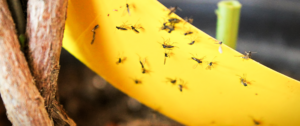
The most reliable method used at garden centres in Vancouver is yellow sticky traps.
Why yellow sticky traps work:
-
Fungus gnats are attracted to yellow
-
Adults land and become trapped
-
You can visually confirm infestation levels
Sticky traps help monitor progress, but they are not a solution on their own. They address symptoms, not the cause.
Why Fungus Gnats Appear in the First Place
Fungus gnats thrive under three conditions:
-
Consistently moist soil
-
Organic matter
-
Warm indoor temperatures
Most infestations begin with:
-
Overwatering
-
Poor drainage
-
Contaminated soil
-
New plants brought home without quarantine
At DH Garden Centre, we see that many infestations originate from newly purchased plants or soil stored in ventilated bags indoors.
Prevention Starts Before the Plant Comes Home
The most effective fungus gnat treatment is prevention.
Inspect plants before purchase:
-
Gently shake the plant and watch for flying insects
-
Examine the soil surface
-
Check leaf undersides
Quarantine new plants:
-
Keep new plants separate for 2–4 weeks
-
Monitor closely before placing near existing plants
Skipping quarantine is the fastest way to spread fungus gnats through an entire collection.
Watering: The Most Common Mistake
Fungus gnats require moist soil to reproduce. The wetter the soil surface, the better the breeding ground.
This does not mean plants should be starved of water. It means watering must be intentional.
Best watering practices:
-
Allow the top 1–2 inches of soil to dry
-
Avoid watering on a schedule
-
Learn each plant’s real needs
At DH Garden Centre, we emphasize that overwatering is not about quantity, but frequency.
The Only Way to Break the Cycle: Kill the Larvae
This is where most online advice fails.
Sprays, essential oils, and vinegar solutions may reduce adult gnats temporarily, but they do nothing to larvae.
The proven solution: BTI
BTI (Bacillus thuringiensis israelensis) is a naturally occurring bacterium that targets fungus gnat larvae.
Common products include:
-
Mosquito Bits
-
Mosquito Dunks
BTI is:
-
Safe for people and pets
-
Safe for plants
-
Extremely effective against larvae
How to apply BTI correctly:
-
Soak mosquito bits in water for 30 minutes
-
Strain out granules
-
Water soil thoroughly
-
Repeat every two weeks
-
Apply 2–3 times total
This timing aligns with the fungus gnat life cycle.
At DH Garden Centre, BTI is our most recommended fungus gnat control product.
Why Bottom Watering Changes Everything
Once larvae are eliminated, preventing reinfestation becomes the priority.
Bottom watering removes the moist surface layer where adult gnats lay eggs.
How bottom watering works:
-
Place the pot in a tray of water
-
Allow soil to absorb moisture from below
-
Remove after 10–15 minutes
-
Drain excess water
This keeps the soil surface dry while roots remain hydrated.
Soil Choice Matters More Than You Think
Poor soil structure traps moisture and oxygen-deprived roots.
Ideal indoor soil:
-
Free-draining
-
Lightweight
-
Designed for houseplants
Avoid:
-
Outdoor garden soil
-
Compost-heavy mixes indoors
-
Soil stored in perforated bags
Healthy soil equals fewer pests.
Common Mistakes That Make Fungus Gnats Worse
At garden centres in Vancouver, we frequently see these errors:
-
Treating adults only
-
Repotting repeatedly without larval control
-
Overusing hydrogen peroxide
-
Decorative stones trapping moisture
-
Lack of drainage holes
-
Ignoring early warning signs
Fixing fungus gnats requires consistency, not panic.
Long-Term Fungus Gnat Prevention Strategy
Once control is achieved, maintenance is simple.
Long-term habits:
-
Quarantine all new plants
-
Bottom water when possible
-
Allow soil to dry appropriately
-
Use sticky traps as monitors
-
Choose proper soil mixes
Plants thrive when soil conditions are stable.
Frequently Asked Questions
Are fungus gnats dangerous to humans?
No. They are a nuisance only.
Can fungus gnats kill plants?
Heavy larval infestations can damage roots, especially in seedlings.
Will repotting alone fix the problem?
No. Larvae often survive and reappear.
How long until fungus gnats are gone?
Typically 3–4 weeks with proper treatment.
Why DH Garden Centre Recommends This Approach
This method works because it:
-
Targets larvae and adults
-
Respects plant health
-
Uses proven, safe products
-
Prevents reinfestation
It is the same approach we trust in our own plant care.
If fungus gnats are taking over your plants, do not give up.
Visit DH Garden Centre, your trusted garden centre in Vancouver, for:
-
BTI products
-
Indoor soil mixes
-
Expert advice
-
Real solutions that work
Healthy plants start with healthy soil.

Whether you’re shopping for plant lovers, hunting for meaningful plants, or simply looking to add a touch of green to your own holiday décor, DH Garden Centre has everything you need for a joyful, vibrant, and beautifully green Christmas.
Visit DH Garden Centre today: where the holidays grow brighter, one plant at a time.
Keep reading

Have a plant question? Bring it to the counter.
DH Garden Centre is at 3742 West 10th Avenue in Kitsilano, Vancouver, open 11:00 to 6:30 every day. Bring the plant, or a photo of the spot you want to fill, and we will look at it with you. If you buy a pot here we repot the plant at the counter, soil included up to 5 litres.
