
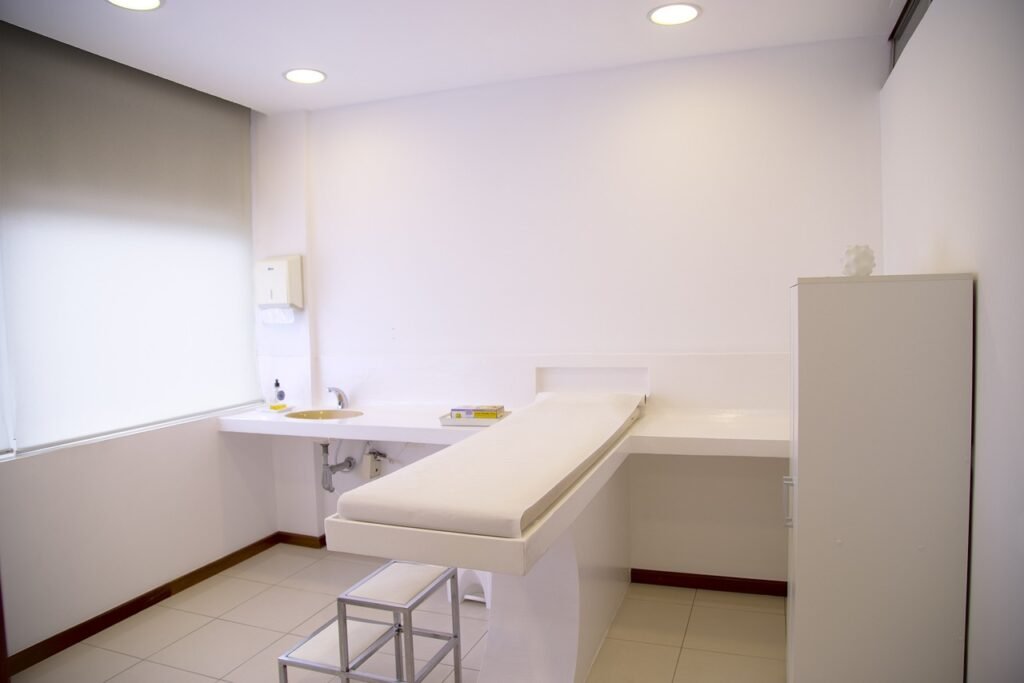
This article gives you a short, honest list of plants for windowless offices, and tells you plainly where the ceiling is. You will know within five minutes whether your room is worth planting or worth solving a different way.
We get this question at the shop in Kitsilano most weeks. It comes from dental treatment rooms. From the interior office at the back of a Vancouver clinic. From studio change rooms with no glass at all.
The question is usually asked hopefully. We would rather answer it straight.
Can any plant live in a room with no window?
Some can hold on for a long time. None will truly thrive. That is the honest ceiling, and everything below sits under it.
Light is food. A plant in a windowless room is not being starved quickly, it is being starved slowly. The good species simply take a very long time to run out.
Anyone who says a plant will flourish in a sealed interior room is selling you the replacement too.
What actually holds on
Three plants do genuinely well at surviving this, and we would put them in this order.
ZZ plant. The toughest of the group. It stores water and energy in thick underground rhizomes, so it can coast for months. It is also the one people mistake for artificial, which tells you how little it complains.
Snake plant. Nearly as tough, and it takes a narrow footprint, which suits a corridor or a corner beside a door.
Cast iron plant. Named for exactly this. Slower and less common, but it earns the name.
Those three are the core of any honest list of plants for windowless offices. Everything else is a compromise.
Below those three, the drop is steep. Pothos and heartleaf philodendron manage low light but want some daylight. In a truly windowless room they stretch, go pale, and thin out over a year.
What will not work, whatever the label says
Fiddle leaf fig, bird of paradise, olive, most palms, anything variegated. Variegation is the giveaway. The white or yellow parts of a leaf cannot photosynthesise. So a variegated plant needs more light than a plain green one, not less.
If a plant came home from a bright shop floor looking spectacular, that is a warning rather than a recommendation. We covered the broader version of this in why office plants die.
Is overhead light the same as no light?
No, and this matters. A room lit by good overhead fluorescent or LED panels for eight hours a day is a real, if weak, light source. A room with the door shut and the lights off most of the day is not.
If your ceiling lights are on through the working day, your shortlist gets longer. We set that list out separately in office plants that hold up under fluorescent light.
So before you decide your room is hopeless, count the hours the lights are actually on. Many treatment rooms do better than their owners assume.
How to measure your light without buying anything
There is a test that takes ten seconds and needs nothing but your hand.
Stand where the plant will go, at the darkest part of your working day. Hold your hand about thirty centimetres above a sheet of white paper. Then look at the shadow.
A sharp shadow with clear edges means bright light. A soft shadow you can still make out means moderate light. No shadow at all means low light, and that is the level most plants for windowless offices have to live at.
Do the test with the room in its normal state, lights on as they usually are. Testing at noon with the door open tells you nothing useful.
The three ways out of a genuinely dark room
When a room really has no window and the lights are off much of the day, there are three honest options.
Rotate. Keep two plants, one in the dark room and one somewhere brighter, and swap them every few weeks. This is what commercial plant companies do quietly, and it works. The plant recovers in the bright spot while its twin holds the dark one.
Choose preserved instead of living. Preserved moss panels and preserved foliage need no light and no water at all. They are not a trick, and they are not plastic. They are real plant material, stabilised. In a windowless treatment room they often look better in year three than a struggling live plant does in month six.
Move the plant, not the problem. Sometimes the honest answer is that the plant belongs in reception, where clients sit and the daylight is. The interior room then gets something else. We say this to people often and it is rarely what they expected to hear.
Does a plant in reception actually do anything?
There is decent evidence that it does, and we want to be precise about it rather than sweeping.
Researchers at the University of Exeter, the University of Groningen and the University of Queensland ran field studies in real offices. They found that adding plants to a bare workspace raised measured productivity by about 15 percent. Reported concentration rose alongside it.
There is a Vancouver specific angle too. The Canadian Mental Health Association reports that about 15 percent of Canadians get the winter blues. A smaller share is affected by seasonal affective disorder. Our dark season runs October to March.
A plant is not treatment for any of that, and we would never present it that way. It is one small thing that makes a grey room less grey for the people sitting in it.
What a dark room does to watering
This is the part that catches people out, and it kills more plants here than the darkness itself.
A plant in low light grows slowly, so it drinks slowly. The soil stays wet far longer than it would by a window. Water it on the same schedule as a bright room and the roots sit in water for weeks.
Darrell has spent more than 25 years working with plants in Vancouver, and this is the correction he makes most often. People assume a struggling plant needs more. It usually needs less.
Check by feel, to the second knuckle. In a dark room in winter, three or four weeks between waterings is normal rather than neglectful.
Why a Vancouver winter changes the maths
Our low season is darker than people who moved here expect. At the December solstice the sun never climbs much above 17 degrees. Genuine sun hours are scarce for weeks at a time.
A room three metres back from a window behaves like a windowless room from November to February. That is why plants that sailed through summer start failing in the new year, and why the owner blames themselves.
Watering has to change with it. In low light a plant uses far less water, so the same weekly routine that worked in July drowns it in January. Feeding should stop from about November to February.
One thing to check before you blame the room
Before you accept that the room is the problem, check the door.
Plenty of interior rooms are darker than they need to be, simply because the door is kept shut. An internal room with a glazed door, or a door left open between appointments, borrows real light from the corridor.
We have seen rooms move up a whole light category by that alone. It costs nothing to test for a week.
Getting the pot and soil right matters more here, not less
In a dark room the plant is running on a small energy budget. Root rot is what usually finishes it, so drainage does more work than in a bright room.
Use a pot with a real drainage hole. Keep it lifted slightly off the surface it sits on. Choose a mix that drains rather than one that holds. We go through the mixes in the indoor plant soil guide.
Decorative thin walled pots without a hole are fine as covers. Leave the plant in its nursery pot and drop it in.
Here is Darrell repotting a large houseplant at the store, checking the root ball before choosing the pot.
Have someone read the light before you buy
Guessing light is the expensive part. If you are near the shop, we do a free twenty minute walkthrough for businesses and read the light room by room. You can book the Winter Light Walkthrough and keep the written plan either way.
If you would rather read first, try the free Vancouver Plant Care and Repotting Guide. It is written for our light and our wet months.
Questions we get at the counter
What is the single best plant for a room with no window? A ZZ plant. It stores energy underground and asks for very little. It will hold its shape far longer than anything else on the list, though it will still not grow much.
How often should I water a plant in a dark room? Less than you think, and by feel rather than by calendar. Push a finger into the soil to the second knuckle. If it is damp, wait. In winter that can mean three or four weeks between waterings.
Will a grow light fix a windowless office? It can, and it is a legitimate answer. A small LED grow light on a timer for eight hours a day changes the room completely. The catch is that it has to look acceptable in a client facing space.
Are preserved moss panels real plants? Yes. They are real plant material that has been stabilised so it keeps its colour and texture without light or water. They do not grow, and they are not a substitute for a living plant where a living plant would work.
Our treatment rooms have no windows but the lights are on all day. Is that different? Yes, meaningfully. Eight hours of good overhead light is a weak but real light source, and it widens the shortlist. Count the hours before you write the room off.
Come and ask
DH Garden Centre
3742 West 10th Avenue, Vancouver BC V6R 2G4
Open seven days, 11:00 to 18:30
Call or text 236-990-8386
Find us on Google Maps
Bring a photo of the room with the lights on as they normally are. That one photo answers most of this. If you would rather we came and looked, the walkthrough is how.
Have a plant question? Bring it to the counter.
DH Garden Centre is at 3742 West 10th Avenue in Kitsilano, Vancouver, open 11:00 to 6:30 every day. Bring the plant, or a photo of the spot you want to fill, and we will look at it with you. If you buy a pot here we repot the plant at the counter, soil included up to 5 litres.
