
Two heads of garlic can sit side by side on the same bench and look close to identical. One of them will give you a proper head next July. The other will sit in cold ground all winter and come out roughly the size it went in.
The difference is not luck, and hardneck vs softneck garlic is not something you can fix in spring. It comes down to hardneck vs softneck garlic, and it is decided the day you choose which type goes in the ground.
Hardneck vs softneck garlic, the short answer
Hardneck garlic is built for cold winters. It needs weeks of cold soil before a planted clove will split into a full head, it sends up a curled flower stalk called a scape in June, and it gives you fewer but larger cloves. Softneck garlic is the braiding type, grown mostly in milder climates, with more cloves per head and a much longer shelf life. For most of Canada, hardneck is the safer plant.
I am Darrell. I have been putting things in the ground around Vancouver for over twenty five years, and hardneck vs softneck garlic is the choice where I see the most people do everything else right in October and still come up short.
What hardneck garlic does that softneck does not
Hardneck vs softneck garlic starts with where each one came from, and hardneck came out of cold parts of the world. The clove goes into the ground in autumn, the ground closes over it, and a long cold stretch is what tells the plant to divide. Skip that cold and you get one round lump in July instead of a head with cloves in it.
That is also why spring planting disappoints people, whichever side of hardneck vs softneck garlic they started on. There is nothing wrong with the clove. It simply did not get the winter it was waiting for.
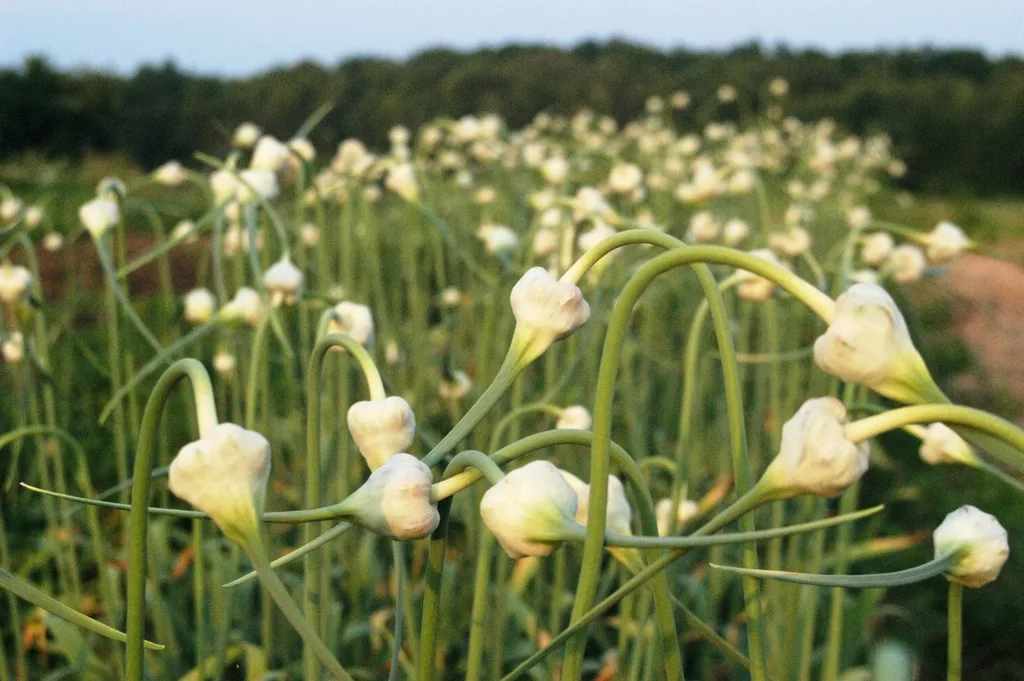
The second thing hardneck does is the scape. In early summer a stiff green stem rises out of the middle of the plant and curls over on itself. You cut it off, which pushes the plant to put its energy back down into the bulb, and you take the curl inside and cook it. It tastes like mild garlic with the texture of a green bean. Hardly any grocery store carries scapes because they do not travel well, so for most people the only way to eat one is to grow it.
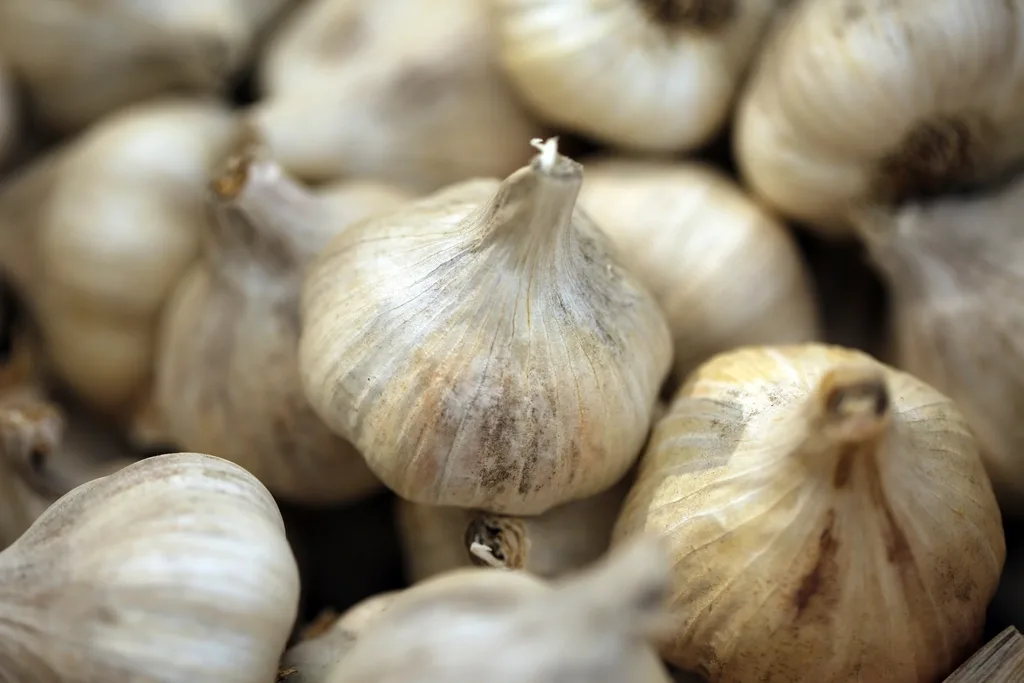
With hardneck vs softneck garlic, the trade is storage. Hardneck heads generally keep well for something like four to six months in a cool, dry, airy spot. Softneck heads can hold most of a year. If you want garlic hanging in the garage next April, that is worth knowing before you choose.
Where softneck garlic still makes sense in Canada
I am not going to tell you hardneck vs softneck garlic has the same answer everywhere, because that is not true. In the mild coastal pockets of British Columbia, on southern Vancouver Island, and in the warmer parts of southern Ontario, plenty of gardeners grow softneck well. Winters there are long enough and cool enough to do the job without being brutal.
Softneck also gives you the braid. If you have ever wanted a plait of garlic hanging in the kitchen, that is a softneck thing, because there is no stiff stalk in the middle to fight you. And the heads carry more cloves, though the inner ones run small.
A hard prairie winter is where hardneck vs softneck garlic really parts ways, because softneck does not enjoy it. Zones 2 through 4 are asking a lot of it. If you garden where the ground freezes deep and stays frozen, hardneck is the type that has already proven it can sit through that and come up in April.
Which garlic should you plant if you live in a cold zone?
Plant hardneck. Across zones 2 to 6, hardneck vs softneck garlic is not really a contest, because hardneck varieties are the ones bred for ground that freezes hard and stays frozen for months. They handle the cold, they reward you with scapes in June, and their larger cloves are easier to peel. Mulch the bed after planting and the winter does the rest.
That mulch matters more the colder you are. Straw or dry leaves laid over the bed after planting keeps the soil temperature from swinging every time there is a January thaw, and it is the difference between cloves that stay settled and cloves that get heaved up out of the ground. If you are working with heavy ground, it is worth reading how to improve clay soil naturally before you plant, because garlic sitting in a wet, airless bed all winter is the other common way to lose a crop.
The kitchen difference nobody mentions
Most people arrive at the hardneck vs softneck garlic question thinking about flavour, and then find the real difference shows up at the chopping board. Hardneck cloves are bigger and sit in a single ring around that central stalk, usually four to eight of them. You peel four cloves and you are done cooking. The flavour tends to be more distinct from variety to variety, which is why growing three types in one bed is more interesting than it sounds.
Softneck heads pack more cloves in layers, and the ones near the middle are fiddly, which is the part of hardneck vs softneck garlic you notice in the kitchen. What you gain is the storage life, which is exactly why the supermarket sells softneck. It travels and it sits on a shelf.
If you want to try both without giving up half a bed, containers work. Garlic is one of the easier things to grow in a deep pot, and we have written up how to grow garlic in containers separately.
Can you tell hardneck from softneck by looking at the bulb?
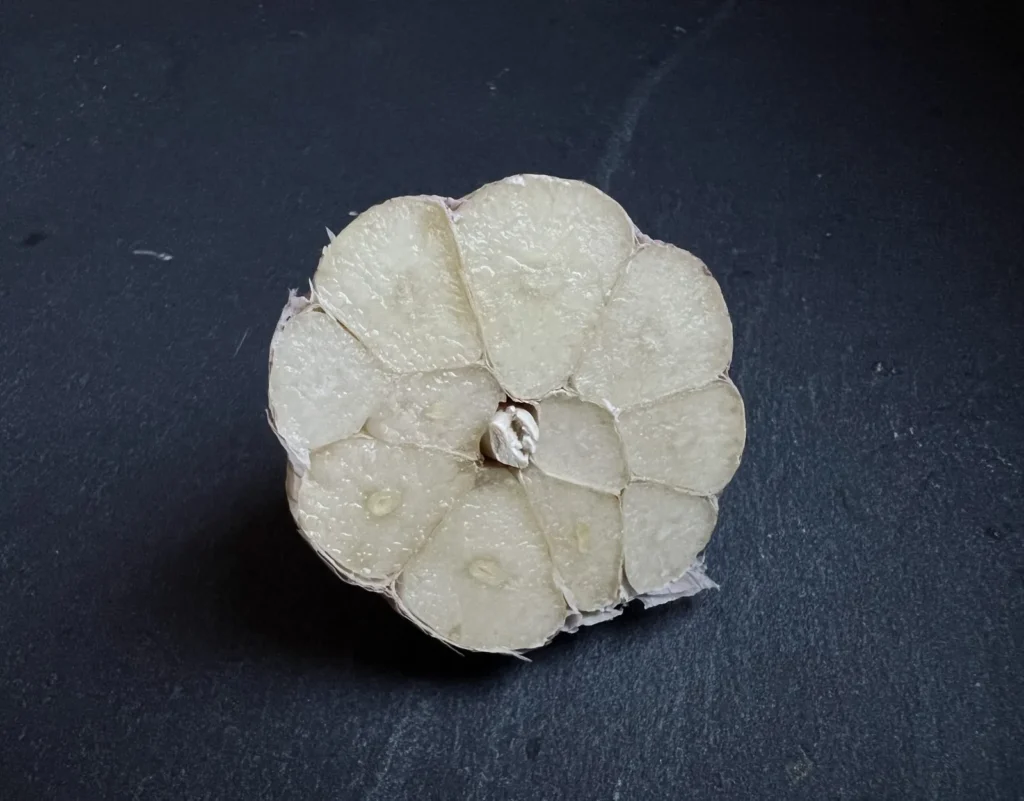
Usually, yes. Cut a head across the middle and look for a hard woody stem in the centre with cloves arranged in one ring around it. That is hardneck. Softneck has no central stem and shows layers of cloves, small ones tucked inside larger ones. Neck flexibility is the other quick test.
There is one more thing worth checking before you commit a bed to it. Garlic sold for eating is often treated so it will not sprout on the shelf, and it can carry disease into your soil. That is a longer story, and I have set it out in what actually happens when you plant supermarket garlic.
What we ordered for this fall, and why
We settled the hardneck vs softneck garlic argument for our own list by going entirely hardneck. That was a deliberate call rather than a preference, because we ship across the country and hardneck is the type that behaves itself from Halifax to Kamloops.
The three hardneck varieties we put together for cold ground come as nine seed bulbs, which is enough for a small bed or a long planter, and it lets you find out which flavour you like without giving a whole season to one variety.
Once you have chosen a type, the next decision is the one people get wrong more often: how deep to plant garlic for your zone.
What this looks like next July
Picture a bed in mid July with the leaves gone yellow, and you lifting heads out with a fork, brushing the soil off, and hanging them in the garage to dry. Before that, in June, you will have stood over the same bed cutting curled scapes and taking them inside for supper. That is two harvests from one October afternoon.
The seed garlic comes to us in small lots, and once a variety is spoken for there is no reordering it partway through the season. That is simply how the growers work.
If that sounds like the sort of thing you would like sitting in your garden all winter, have a look at the hardneck garlic we chose for this season and see which varieties appeal to you.
If you would rather watch than read, Darrell covers how Darrell picks planting stock, and which cloves he puts back in a short video on our channel.
What hardneck vs softneck garlic costs you if you guess
The money side of hardneck vs softneck garlic is quiet, so most people never add it up. A bed of the wrong type is nine months of ground you cannot use for anything else, plus a winter of buying garlic because your own heads came up small. Then you buy planting stock again the following autumn.
The tiring part is the reading. Search fall planting in Canada and you get ten sources that disagree, half of them written for a climate nothing like yours. You end up in the garden holding a bag, unsure whether to trust the pack or the forum thread. That wears people down more than the digging does.
A garlic bed is also something you share. You hand a head over the fence, you send some home with your daughter, you put a bowl of it on the counter when friends come round. When it works, you feel it. When it comes up the size of a marble, you say nothing and buy garlic at the shop.
So we handle the part we control. Every box of seed garlic that lands here is opened on the bench, and each bulb is pressed at the shoulders before it goes into a pack, so a soft one stops with us. Darrell has more than 25 years of hands on gardening and landscaping behind him, and he has grown garlic in Vancouver for most of them.
Settle hardneck vs softneck garlic now and next July is a fork, a full head in your hand, and a garage that smells of garlic for a week. Keep guessing and you can lose a season to a question that takes ten minutes.
Frequently asked questions
Can I grow softneck garlic in Vancouver?
Yes. Coastal British Columbia has mild, damp winters, and softneck garlic does reasonably well here as long as the bed drains. The main risk is a wet winter rather than a cold one. If your soil holds water, plant into a raised bed or a container so the cloves are not sitting in it from November to March.
Do I need to buy new seed garlic every year?
No. Save your largest heads from July, keep them somewhere cool, dry and airy, and replant the outer cloves in October. Garlic adapts to your ground over a few seasons, which is one of the nicer things about it. Bring in fresh stock only if your harvest starts shrinking or you spot disease in the bed.
Is elephant garlic a type of hardneck garlic?
It is not garlic at all, strictly speaking. Elephant garlic is closer to a leek, which is why the heads are huge and the flavour is mild and slightly sweet. It grows well in milder zones and is worth a spot if you like it, but do not plant it expecting the punch of a hardneck clove.
When is it too late to plant garlic in the fall?
You are reading the soil rather than the calendar. The window runs from when the ground has cooled to when it locks up solid, which for most of the country falls somewhere between late September and the end of October. If you can still get a trowel in without fighting it, you can still plant.
Come and have a look
If you are in Kitsilano or anywhere on the Vancouver Westside, the seed garlic is on the bench and you are welcome to pick heads up and feel the weight of them. That tells you more in ten seconds than any photograph does.
DH Garden Centre
3742 West 10th Avenue, Vancouver, BC V6R 2G4
Open daily, 11:00 to 18:30
604-929-7335
Keep reading
Have a plant question? Bring it to the counter.
DH Garden Centre is at 3742 West 10th Avenue in Kitsilano, Vancouver, open 11:00 to 6:30 every day. Bring the plant, or a photo of the spot you want to fill, and we will look at it with you. If you buy a pot here we repot the plant at the counter, soil included up to 5 litres.
