Looking for a cat safe plant gift? Check the plant’s scientific name on the ASPCA list before you buy it. A common name like “money tree” is not enough. Our braided money tree is Pachira aquatica. The ASPCA lists Pachira aquatica as non-toxic to cats and dogs. Any cat that chews a plant can still get an upset stomach. If you think a cat has eaten a toxic plant, or a plant you can’t identify, call your vet right away.
In this guide
- Cat safe plant gift? Start with the scientific name
- Is a money tree toxic to cats?
- Why we suggest a braided money tree as a plant gift for cat owners
- Should flowers go with the plant?
- Can I give a hoya or another plant from the counter?
- A gift for the cat instead
- Bring the name to West 10th
A plant gift for cat owners takes one extra step, because plenty of familiar houseplants are on the ASPCA’s toxic list for cats. It lists pothos (Epipremnum aureum), monstera (Monstera deliciosa), snake plant (Sansevieria trifasciata) and weeping fig (Ficus benjamina) as toxic to cats. Check the exact name on each pot.
Cat safe plant gift? Start with the scientific name
Check the exact scientific name on the ASPCA list, then make sure the plant in your hand matches it. You can check the ASPCA list on your phone while you’re standing in the shop.
- Find the scientific name. It’s the two-word Latin name, like Pachira aquatica, and it’s usually on the tag or the product page. If the tag doesn’t show the scientific name, ask us to check it before buying.
- Search that name on the ASPCA list. The ASPCA Animal Poison Control Center keeps a plant list for cats, split into toxic and non-toxic. Search the Latin name, because common names get mixed up. The ASPCA lists Crassula argentea, the jade plant, as toxic to cats, and its other names include “Chinese rubber plant”.
- Match the plant to the name. Doesn’t match? Ask us to identify it before buying. Some plants look a lot like others that are on the toxic list.
- Ask about the cat. The ASPCA notes that eating any plant material may cause vomiting and stomach upset in dogs and cats. So “non-toxic” on the list doesn’t mean it’s fine to chew. If their cat chews plants, ask where the plant can be kept securely out of reach.
If you think a cat has eaten a toxic plant, or a plant you can’t identify, call your vet or the ASPCA Animal Poison Control Center at (888) 426-4435 right away. A consultation fee may apply. If a cat seems unwell after chewing any plant, call your vet.
NC State Extension’s plant database describes Pachira aquatica as having low severity poison characteristics. It names the seeds as the poison part and notes that cats may have mild to moderate stomach upset. The same page says houseplants never produce seeds.
Is a money tree toxic to cats?
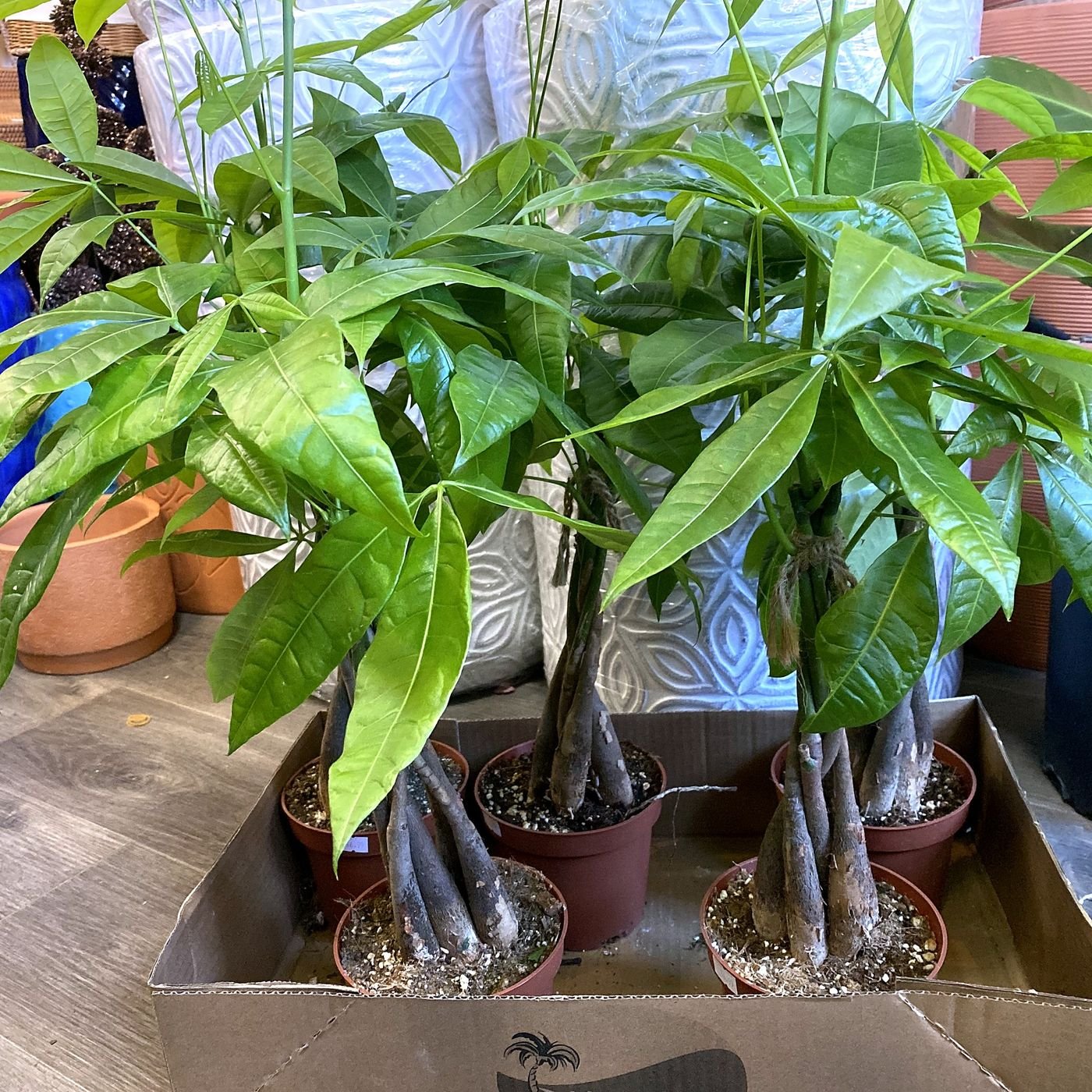
The ASPCA lists Pachira aquatica, the braided money tree, as non-toxic to cats and dogs. Check the scientific name, because the jade plant is also called a money tree or money plant. The ASPCA lists Crassula argentea, the jade plant, as toxic to cats and dogs.
The common name “money tree” is used for more than one plant. If you’re not sure which one you’re holding, ask us to check the scientific name.
| Braided money tree | Jade plant | |
|---|---|---|
| Scientific name | Pachira aquatica | Crassula ovata, listed by the ASPCA as Crassula argentea |
| Trunk | Several thin trunks, often braided together | One thick, woody stem that branches |
| Leaves | Long, thin leaflets that spread like an open hand | Thick, fleshy, oval leaves |
| ASPCA listing for cats | The ASPCA lists Pachira aquatica as non-toxic to cats | The ASPCA lists Crassula argentea as toxic to cats |
Why we suggest a braided money tree as a plant gift for cat owners
The ASPCA lists Pachira aquatica as non-toxic to cats and dogs. That is why we suggest it. Its ASPCA entry also lists nausea, vomiting and loose stool as clinical signs, so it is not a plant for a cat to chew.
Our braided money tree comes in a 5 inch plastic nursery pot. You can carry it in one hand, and it can sit inside a cover pot they already own.
Darrell Smith, co-owner of our shop, has handled a lot of these. In his words, “Money trees are one of those plants that can withstand a lot of change.”
It wants bright, indirect light. In a Vancouver winter, keep it near the brightest window with the leaves off the cold glass. Darrell’s rule for watering is “Let them dry the top quarter of their pot size between your watering.” If it gets too much water later on, we have a guide on saving an overwatered money tree.
Should flowers go with the plant?
Keep Lilium lilies and Hemerocallis daylilies out of a home with cats. The ASPCA says true lilies and daylilies can cause severe kidney injury in cats. If a cat may have touched lily pollen, drunk the vase water or eaten any part of a lily, call a vet or the ASPCA Animal Poison Control Center right away.
Some holiday bouquets include lilies, so ask the florist to identify every flower in the bouquet, or bring a plant you’ve checked instead.
Can I give a hoya or another plant from the counter?
For a hoya or any other plant, bring us the exact name on its tag. We’ll check that name on the ASPCA list with you before you buy.
A gift for the cat instead
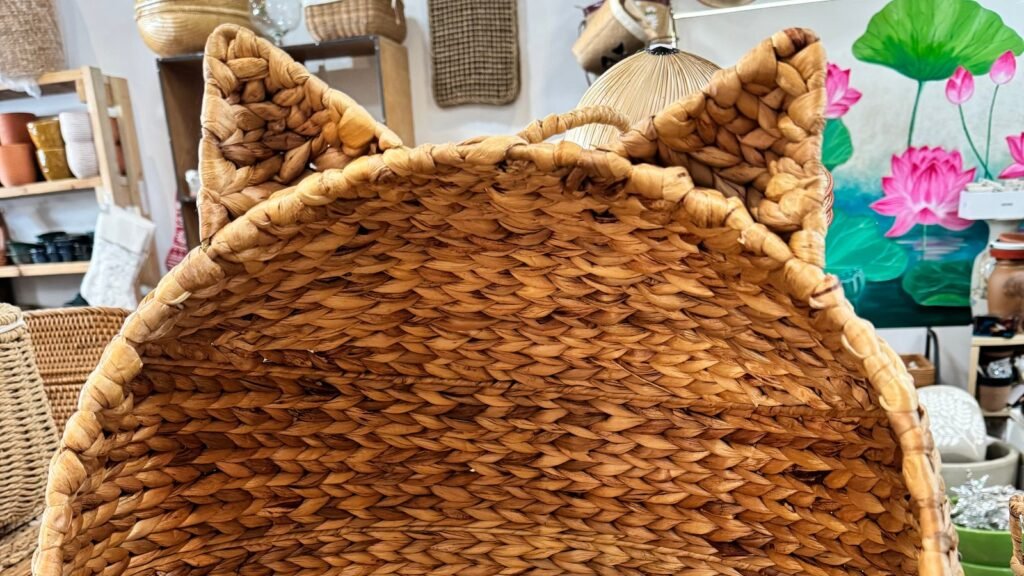
If you’d rather skip a plant, we also carry woven cat caves at the shop. They’re handwoven in Vietnam from dried water hyacinth, with two woven ears, a small handle on top and a cream fabric cushion inside. Small is 15.75 x 15.75 in (40 x 40 cm). Large is 19.69 x 19.69 in (50 x 50 cm).
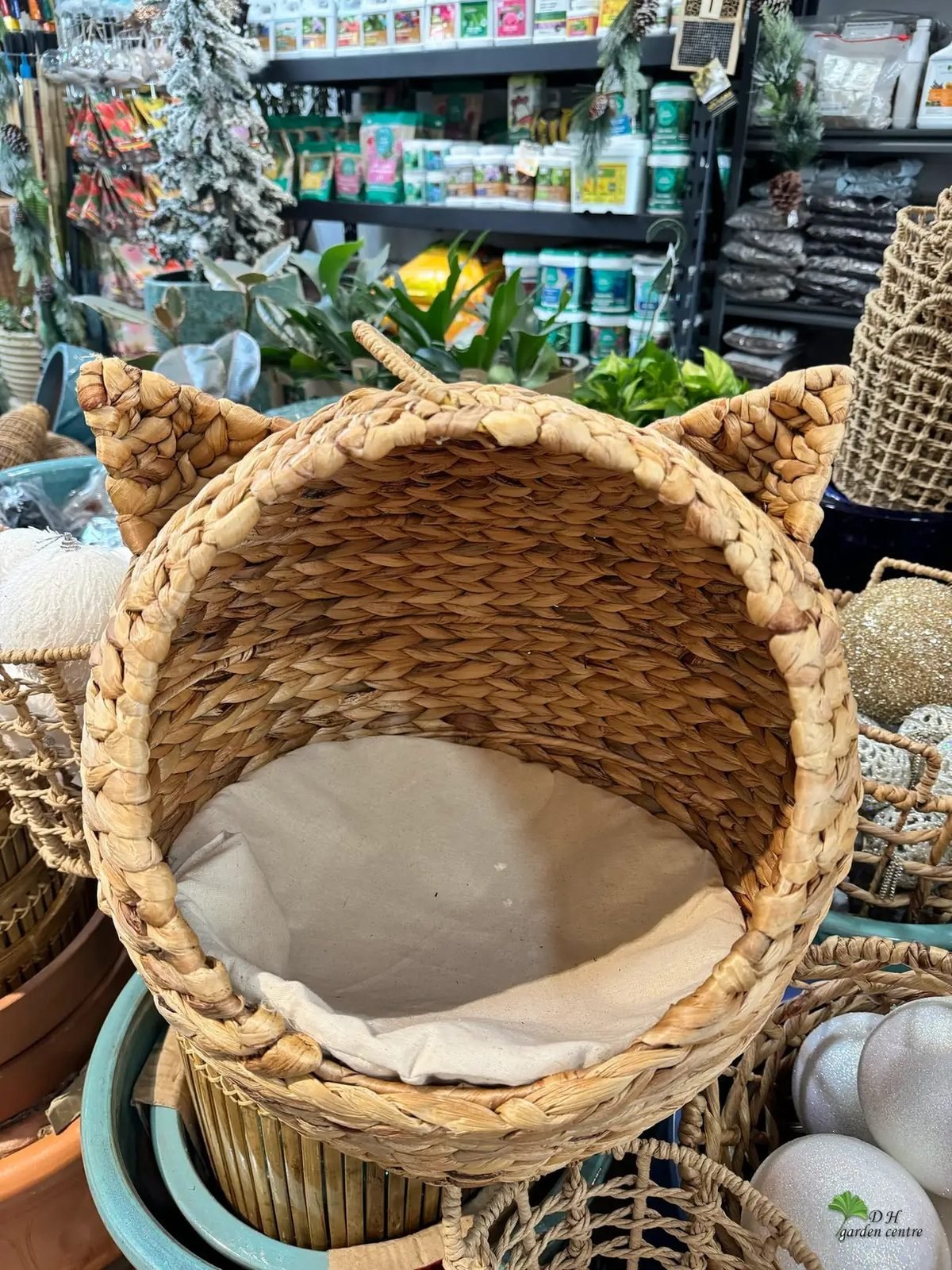
Cats vary, so check the opening and size against their cat before choosing one. Ask whether the cat chews or claws woven fibres, because plant fibre can fray. In a damp Vancouver winter, keep it in a dry room.
Not sure about the cat or their light? A DH gift card lets them choose at our counter. We ask about pets there before we suggest anything.
Bring the name to West 10th
Bring the plant’s scientific name to our West 10th shop. We’ll check the ASPCA listing with you before you choose a plant gift for cat owners.
DH Garden Centre
3742 West 10th Avenue, Kitsilano, Vancouver, BC V6R 2G4
+1 (604) 929-7335 · contact@dhgardencentre.com
Closed December 25 and January 1.
Get directions on Google Maps
Frequently asked questions
Is a money tree toxic to cats?
The ASPCA lists Pachira aquatica, the braided money tree, as non-toxic to cats and dogs. Check the scientific name, because the jade plant is also called a money tree or money plant. The ASPCA lists Crassula argentea, the jade plant, as toxic to cats and dogs.
How do you check a plant gift for cat owners?
Check the exact scientific name on the ASPCA list, then make sure the plant in your hand matches it.
Does non-toxic mean my cat can chew the plant?
No. The ASPCA notes that eating any plant material may cause vomiting and stomach upset in dogs and cats. So “non-toxic” on the list doesn’t mean it’s fine to chew.
What should I do if my cat eats a plant?
If you think a cat has eaten a toxic plant, or a plant you can’t identify, call your vet or the ASPCA Animal Poison Control Center at (888) 426-4435 right away. A consultation fee may apply. If a cat seems unwell after chewing any plant, call your vet.
Should flowers go with the plant?
Keep Lilium lilies and Hemerocallis daylilies out of a home with cats. The ASPCA says true lilies and daylilies can cause severe kidney injury in cats. If a cat may have touched lily pollen, drunk the vase water or eaten any part of a lily, call a vet or the ASPCA Animal Poison Control Center right away.
Keep reading

Have a plant question? Bring it to the counter.
DH Garden Centre is at 3742 West 10th Avenue in Kitsilano, Vancouver, open 11:00 to 6:30 every day. Bring the plant, or a photo of the spot you want to fill, and we will look at it with you. If you buy a pot here we repot the plant at the counter, soil included up to 5 litres.
