
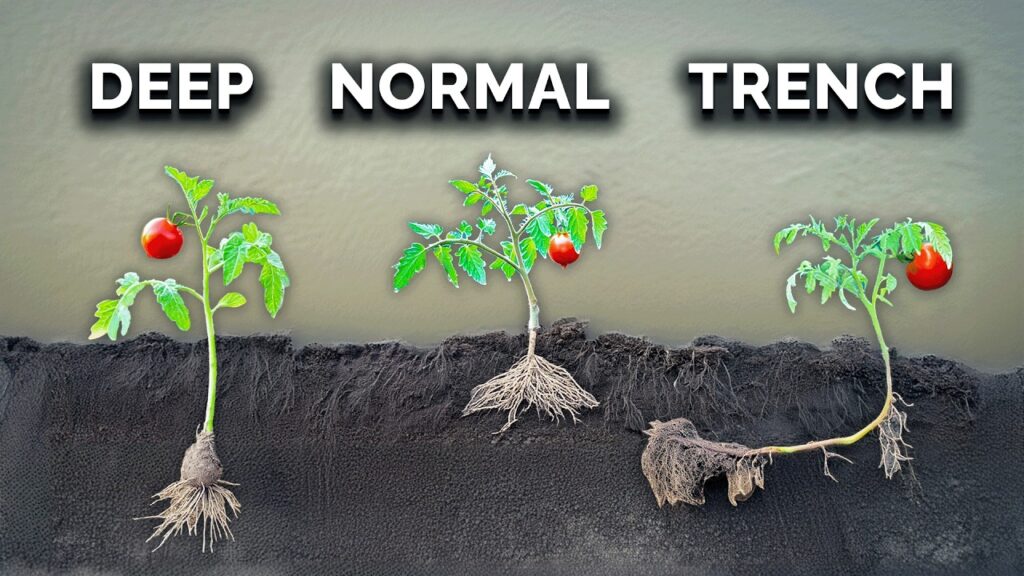
Discover the best way to transplant tomatoes through a real backyard experiment comparing deep planting, trench planting, and surface planting. Evidence-based, practical, and beginner-friendly.
Why the “Best Way to Transplant Tomatoes” Is Still Debated
If you have grown tomatoes for more than one season, you have probably heard at least three completely different opinions about the best way to transplant tomatoes.
Some gardeners swear by burying tomato plants deep.
Others insist trench planting is the secret to massive root systems.
A few quietly plant tomatoes at soil level and somehow still harvest baskets of fruit.
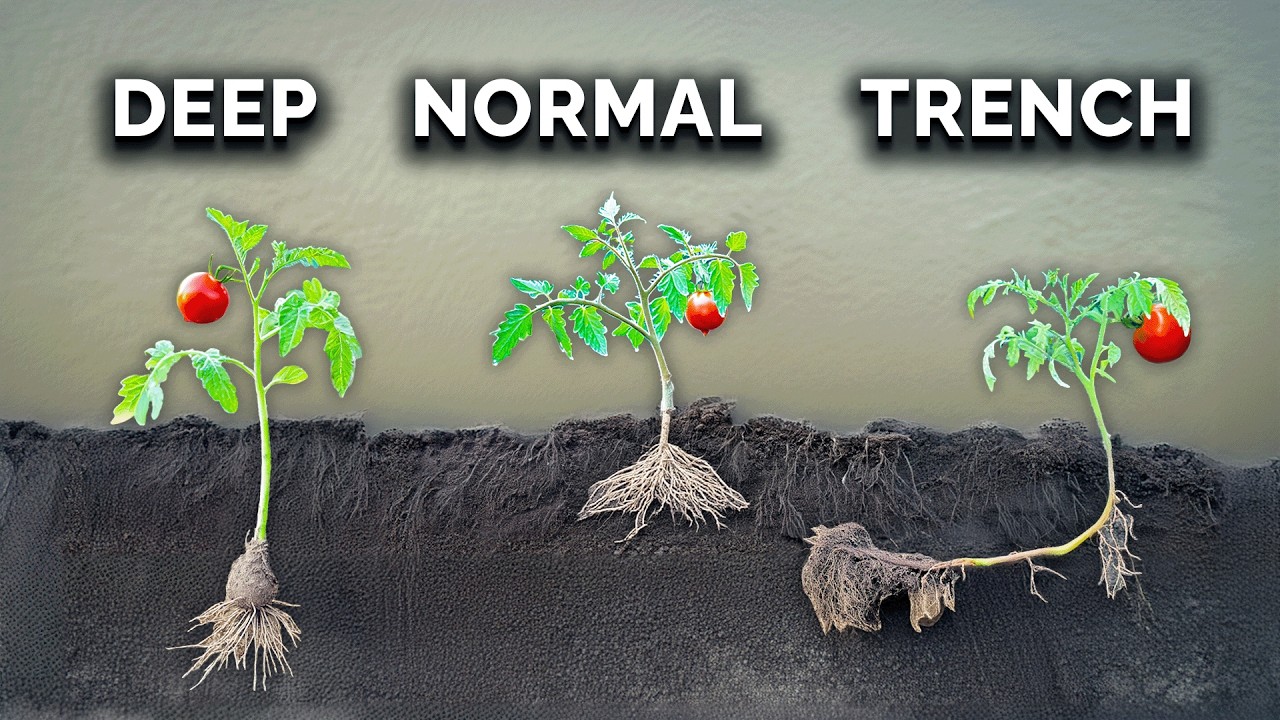
So which method actually works best?
Instead of relying on gardening folklore, Epic Gardening conducted a real backyard experiment using three identical Cherokee Carbon tomato plants, transplanted using three different techniques and grown under the same conditions.
This article breaks down that experiment, explains the plant science behind each method, and gives you a clear, practical answer to the question: What is the best way to transplant tomatoes?
The Three Tomato Transplanting Methods Tested
To identify the best way to transplant tomatoes, all variables were kept the same except for transplanting depth.
- Same tomato variety
Same soil
Same fertilizer schedule
Same sun exposure
No pruning differences
Only the transplanting method changed.
1. Deep Planting (Burying the Tomato Stem)
This is the most commonly recommended method.
How it works
- Lower leaves are removed
- The tomato is planted much deeper than the original pot
- A large portion of the stem is buried underground
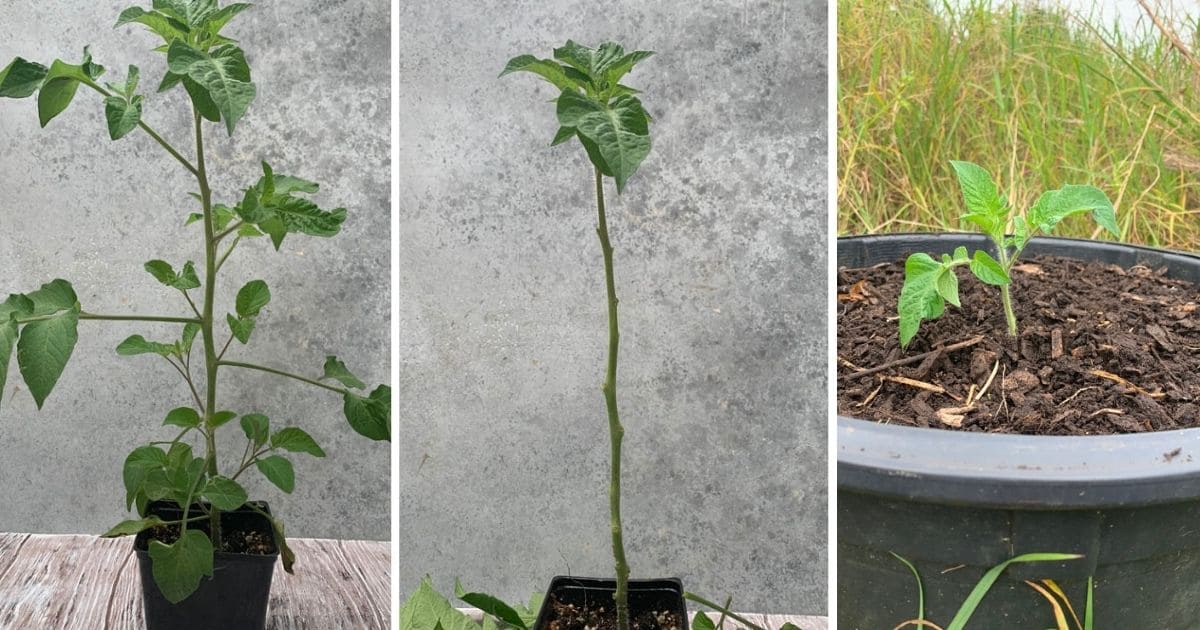
Why gardeners do this
Tomatoes can form adventitious roots along buried stems. The theory is that more roots mean:
- Better water uptake
- Higher nutrient absorption
- Stronger plants
This plant was nicknamed “Titanic” because it was planted extremely deep.
2. Surface Planting (Planting at Original Soil Level)
This is the simplest and most traditional approach.
How it works
- The tomato is planted at the same depth it grew in the pot
- No leaves are buried
- No stem is underground
Many gardeners avoid this method because it feels “wrong” for tomatoes, yet it remains widely used in commercial production.
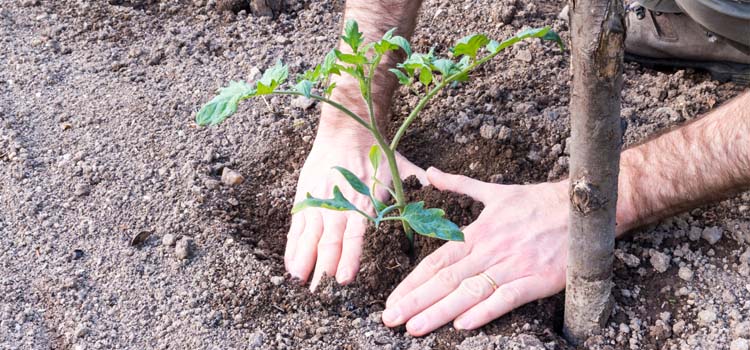
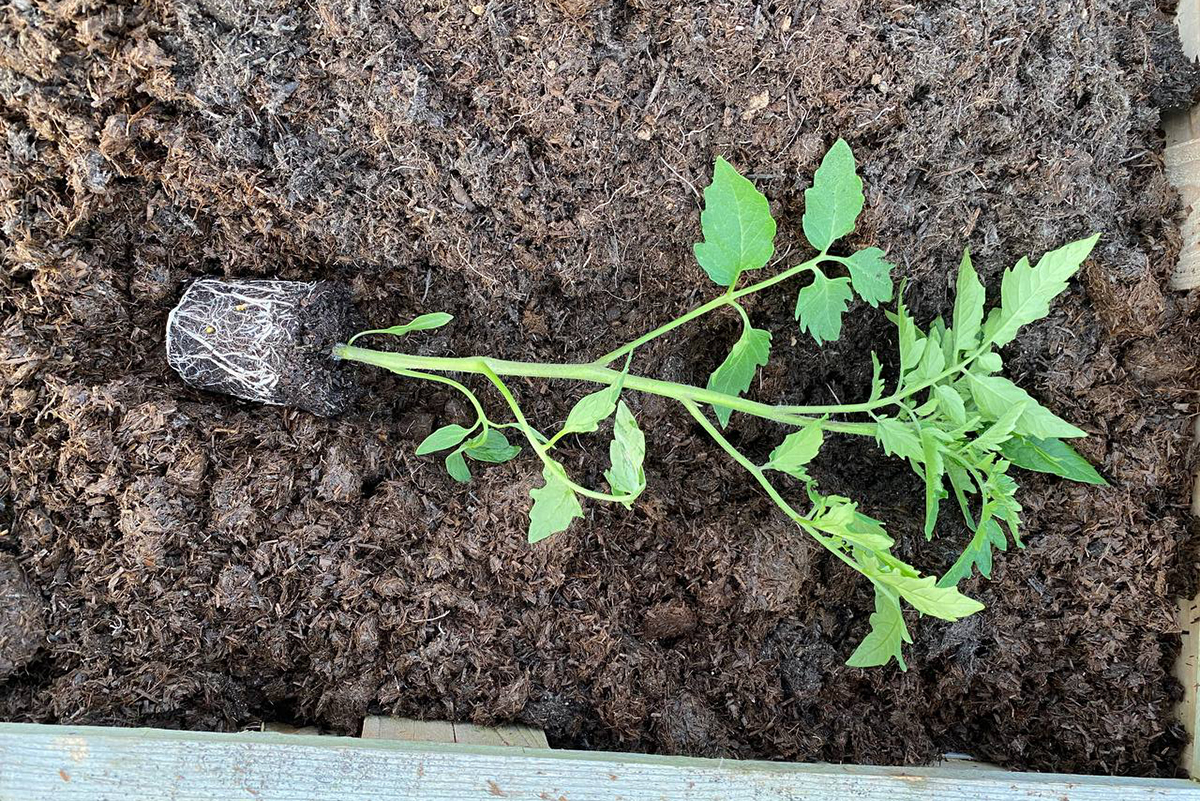
3. Trench Planting (Laying the Tomato on Its Side)
This method is less common but often promoted online.
How it works
- A shallow trench is dug
- The tomato plant is laid horizontally
- The stem is buried sideways, then bent upward
The idea is to combine stem rooting with warmer surface soil temperatures.
Early Growth Results: Weeks 2 to 4
Surprising Early Observations
At the two-week mark, results already challenged common assumptions about the best way to transplant tomatoes.
- The surface-planted tomato was the tallest
- Both buried methods showed slower vertical growth
- All plants began flowering unusually early
This early flowering suggested that deeply buried tomatoes might temporarily slow top growth while allocating energy to root formation.
Growth Speed Comparison
By week four:
- Surface planting produced the fastest vertical growth
- Deep planting lagged behind in height
- Trench planting showed mild stress symptoms early but later recovered
At this stage, the surface-planted tomato looked the most vigorous overall.
Six-Week Results: Fruit Development Tells a New Story
At six weeks, fruit development became the most important metric.
Fruit Count Comparison
- Surface planting: 10+ developing fruits
- Deep planting: 3 fruits
- Trench planting: 3 fruits
The surface-planted tomato not only grew faster but also set fruit earlier and more abundantly.
This contradicts the belief that deep planting always leads to higher productivity.
Final Harvest Results: Which Method Truly Wins?
At the end of the season, Epic Gardening evaluated:
- Total plant height
- Total fruit count
- Fruit ripening speed
- Root system structure
Plant height
- Surface planting: Tallest
- Trench planting: Second tallest
- Deep planting: Shortest
Total Fruit Production
- Surface planting: ~20 tomatoes
- Deep planting: ~14–15 tomatoes
- Trench planting: ~13–14 tomatoes
Fruit Ripening Speed
- Deep planting and trench planting produced earlier ripe fruit
- Surface planting produced more fruit overall, but ripened later
Root System Analysis: The Most Fascinating Discovery
When the plants were dug up, the root systems revealed why results differed.
Surface-Planted Tomato Roots
- Compact but dense
- Healthy white feeder roots
- No unnecessary energy spent forming new stem roots
Deep-Planted Tomato Roots
- Some new roots formed on the buried stem
- Overall root mass was not dramatically larger
- Root ball was smaller than expected

Trench-Planted Tomato Roots
This was the biggest surprise.
- Massive horizontal root growth along the buried stem
- Fibrous, well-distributed root system
- Roots developed closer to warm surface soil
The trench method created the largest root system, but that did not translate into the highest fruit yield.
So, What Is the Best Way to Transplant Tomatoes?
Based on this experiment, the answer is refreshingly honest:
There is no single “best way” to transplant tomatoes for every situation.
However, if we judge by:
- Ease
- Speed
- Overall yield
- Consistency
👉 Surface planting is the best way to transplant tomatoes for most home gardeners.
Why Surface Planting Works So Well
- No transplant shock from extreme bending or burial
- Immediate access to oxygen
- Faster transition into vegetative growth
- Earlier fruit set
- Less labor and fewer mistakes
- Deep planting and trench planting are not wrong, but they delay above-ground growth because the plant reallocates energy to root construction.
When Deep or Trench Planting Still Makes Sense
Despite surface planting winning overall, other methods have valid use cases.
Use Deep Planting If:
- Your seedlings are leggy
- Soil dries out quickly
- You garden in hot, dry climates
Use Trench Planting If:
- Soil temperature is cool
- You want maximum root spread
- You have loose, well-drained soil
Common Tomato Transplanting Mistakes to Avoid
No matter which method you choose, avoid these errors:
- Burying leaves instead of stems
- Overwatering immediately after transplanting
- Compacting soil too tightly
- Applying fertilizer too early
- Ignoring airflow and spacing
These mistakes matter more than the transplanting method itself.
FAQ: Best Way to Transplant Tomatoes
1. Is burying tomato stems necessary?
No. Tomatoes can grow and produce extremely well when planted at soil level.
2. Does trench planting increase yield?
Not necessarily. It increases root mass, but not always fruit production.
3.Which method prevents transplant shock best?
Surface planting causes the least shock.
4. Which method is best for beginners?
Surface planting is the simplest and most forgiving option.
Final Verdict from a Gardener’s Perspective
Gardening is not mythology. It is observation, patience, and adaptation.
This backyard experiment shows that the best way to transplant tomatoes is often the simplest one. Plant them at soil level, care for them consistently, and let the plant do what it has evolved to do for thousands of years.
Sometimes, the old, boring method wins.
