This Sunday is Father’s Day, and I keep thinking about a man I met in Saigon back in February.
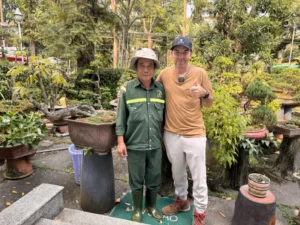
It was one of those afternoons where the heat just sits on you. I’d wandered into the bonsai section at Thảo Cầm Viên, the old botanical gardens, and there was an older gentleman crouched over a tree no taller than a teapot, working at it one small cut at a time. He was in no rush about any of it. I stood and watched a while before I said hello.
He’s one of the people who looks after the bonsai there, and he has spent the better part of his life at it: designing, tending, and shaping these little trees into the kind of work that stops you in your tracks. The care he put into a single branch told me everything. I came away admiring him.
I took photos, and I’ll put a few in this post. The pots I came home with are a different story, made in a pottery village far to the north, and I’ll get to those. But it was this man, and the lifetime of patience in his hands, that put bonsai on my mind in the first place.
What does “bonsai” actually mean?
A lot of people think bonsai is a type of tree. It isn’t. The word comes from Japanese. Bon means the tray or pot, and sai means the planting. So bonsai literally means “planted in a container.” It’s a tree grown small on purpose, trimmed and trained over years so it carries the look of a full-grown, weather-beaten tree in a space you can hold in two hands.
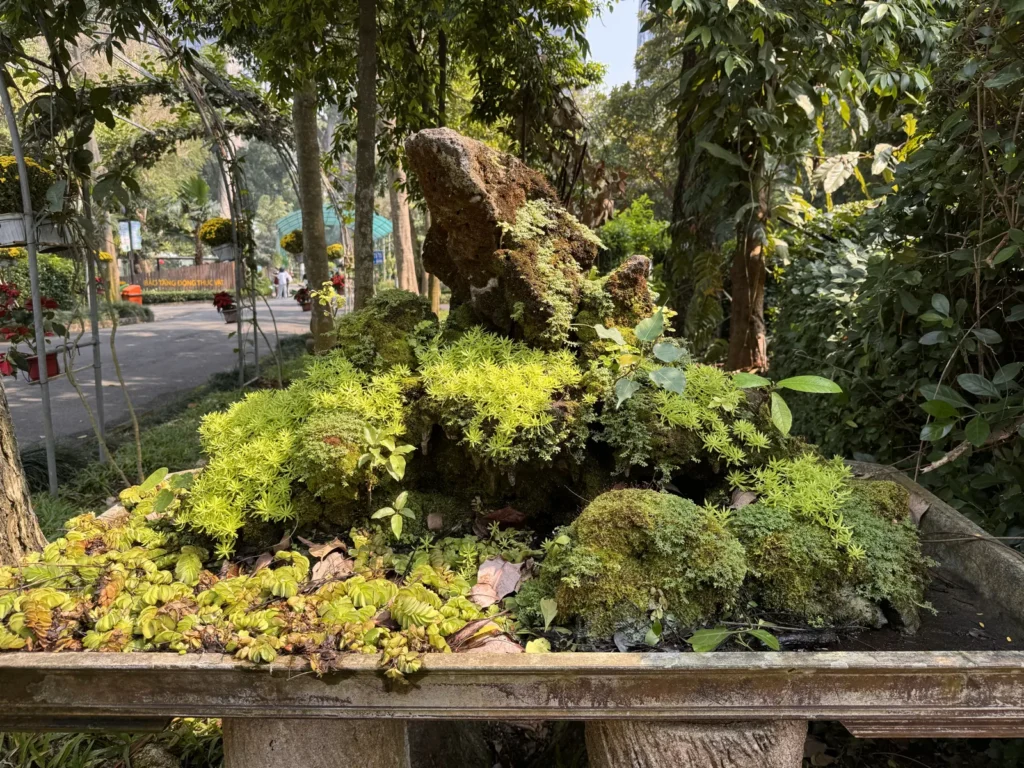
The idea travelled from China to Japan centuries ago, and the philosophy stuck to it the whole way. Bonsai isn’t about forcing nature into a shape. It’s the opposite. The old gardeners say a person can help nature toward its best self, but can’t invent nature. So you work with the tree. You wait. You cut a little, then you live with the result for a season before you cut again.
That patience is the part I love. It’s also, if I’m honest, the part that makes bonsai feel like such a fitting Father’s Day subject. A good dad does the same thing: small, steady corrections, years of them, no rushing.
We met a man who’d been shaping bonsai for over 50 years
He didn’t speak much English, and my Vietnamese is rusty, so most of the conversation was him pointing and me nodding. Some things don’t need translating.
What stayed with me was the care in how he worked. Slow, deliberate, studying the tree from a few angles before he made a single cut. He clearly knew these trees the way you know something you’ve lived alongside for decades. Watching him, you start to understand that a bonsai is never really “finished.” You just keep tending it, year after year, and that patience is the whole craft.
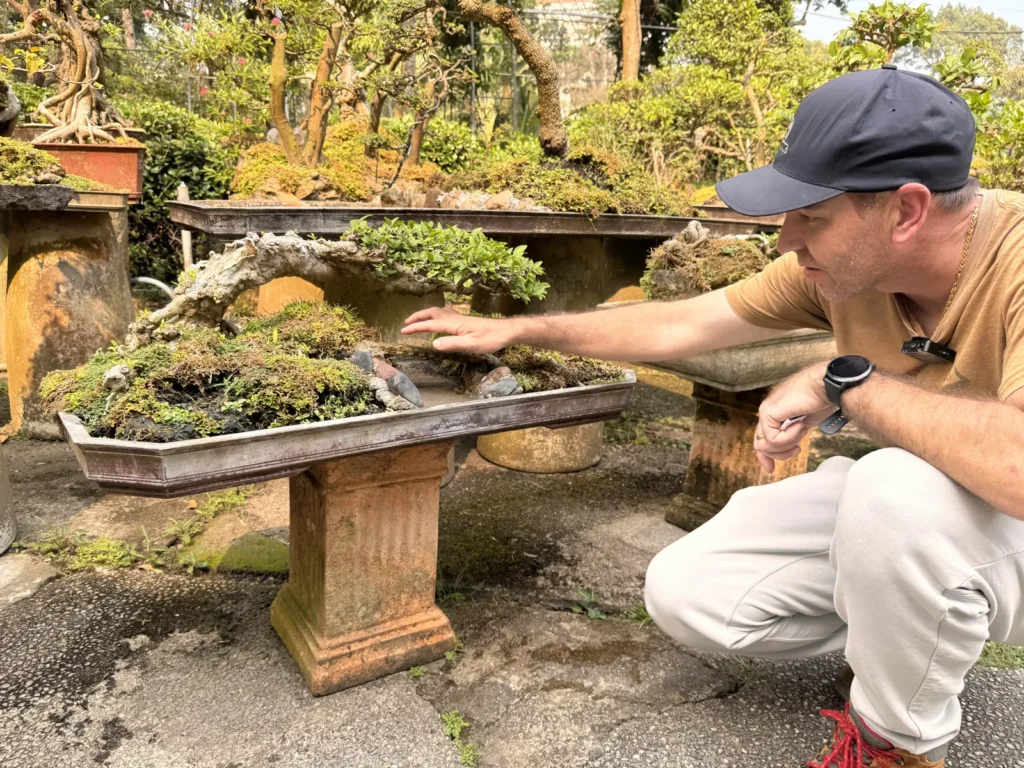
I didn’t buy anything from him. He’s a gardener, not a shop, and the trees there aren’t for sale. But meeting someone who has given a lifetime to this art left me wanting to do right by it back home in Vancouver. That’s the frame of mind I was in when we picked out the pots I want to tell you about next.
What makes a bonsai beautiful?
If you’re new to this, here’s a quick field guide so you know what you’re looking at, and what to look for if you ever buy one.
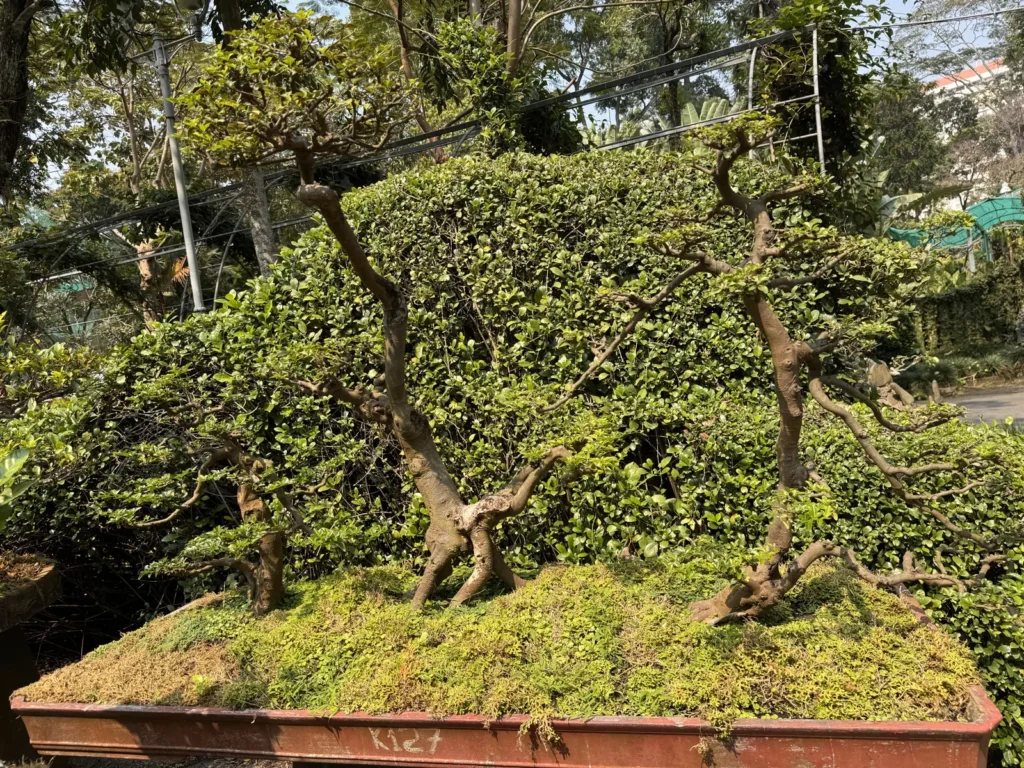
A well-made bonsai is judged on a few things:
- The roots (the nebari). You want roots that spread out evenly around the base, like the tree is gripping the ground. They should flare out and sit just above the soil. Good roots are the first sign of an old, healthy tree.
- The trunk. It should taper, thick at the bottom and narrowing as it rises, with a couple of gentle bends that give it movement. A trunk that goes straight up like a broom handle looks young and a bit dull. A trunk with a story in it is what you’re after.
- The branches. The first main branch usually sits about a third of the way up, and the branches get smaller and closer together toward the top. They’re never perfectly symmetrical, because real trees aren’t either.
- The canopy. The foliage is shaped into soft pads, almost like clouds, with gaps that let light through.
The old Vietnamese standard sums it up in four words: cổ, kỳ, mỹ, văn. Age, character, beauty, and spirit. Age you can see in the bark. Character is what makes one tree unlike any other. Beauty is the balance of the whole thing. And spirit is the part you can’t measure, the feeling it gives you. The best little trees have all four.
The pot is part of the art, not just a container
Here’s what most beginners miss, and what that artisan understood in his bones: the pot is half the picture.
A tree and its pot are supposed to look like they belong together, the way a frame belongs to a painting. There are real rules of thumb for this:
- The pot should be roughly two-thirds to three-quarters the height of the tree (or, for low spreading trees, about as wide as the tree is tall).
- It should be about as deep as the trunk is wide at its base. Shallow enough to keep the tree small, deep enough to keep it healthy.
- Quiet colours suit leafy green trees, so the tree stays the star. A pot with more character can lift a flowering or fruiting tree.
- Drainage is a choice, not a rule. Some bonsai pots have a hole in the base for trees that hate sitting in water. Plenty of others are made solid on purpose, so you can plant them up with water and stone, or moss and a water-loving plant, and keep a small reservoir at the bottom. Neither one is “more correct.” It depends how you want to plant it. Both kinds are sitting on the shelf, so you can choose for the way you like to plant.
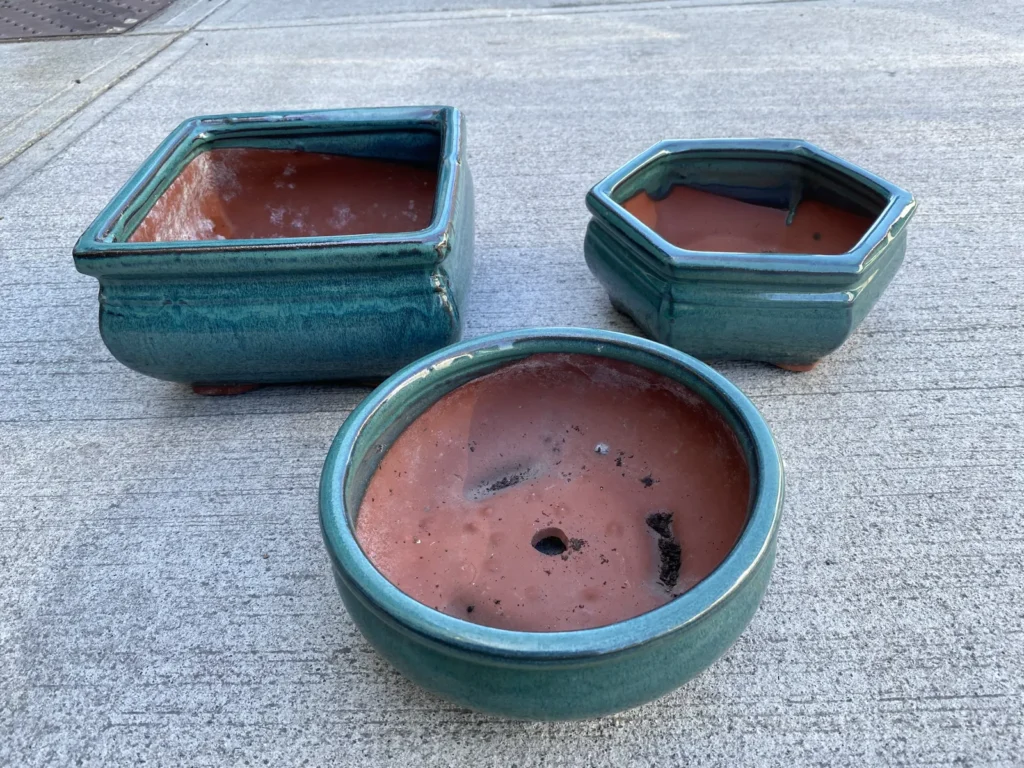
This is exactly why I went hunting for the right pots in Vietnam, and why I’m fussy about what I bring into the shop.
What we brought back: handmade bonsai pots from Vietnam
The handmade bonsai pots now at DH Garden Centre were handpicked, one at a time, on that February trip. They come from Bát Tràng, the old pottery village just outside Hanoi that has been making ceramics for hundreds of years. The potters there still throw and finish a lot of this work by hand, the way families in the village have done for generations.
Most of them wear a deep green glaze that pools darker in the corners, with warm terracotta showing through at the rim. Some are plain and quiet, the way a classic bonsai pot should be. A few are dressed up: fine gold brushwork on a near-black ground, or raised flowers and a little bird worked right into the clay. Oval ones, low rectangles, a couple of taller pieces for an upright tree.
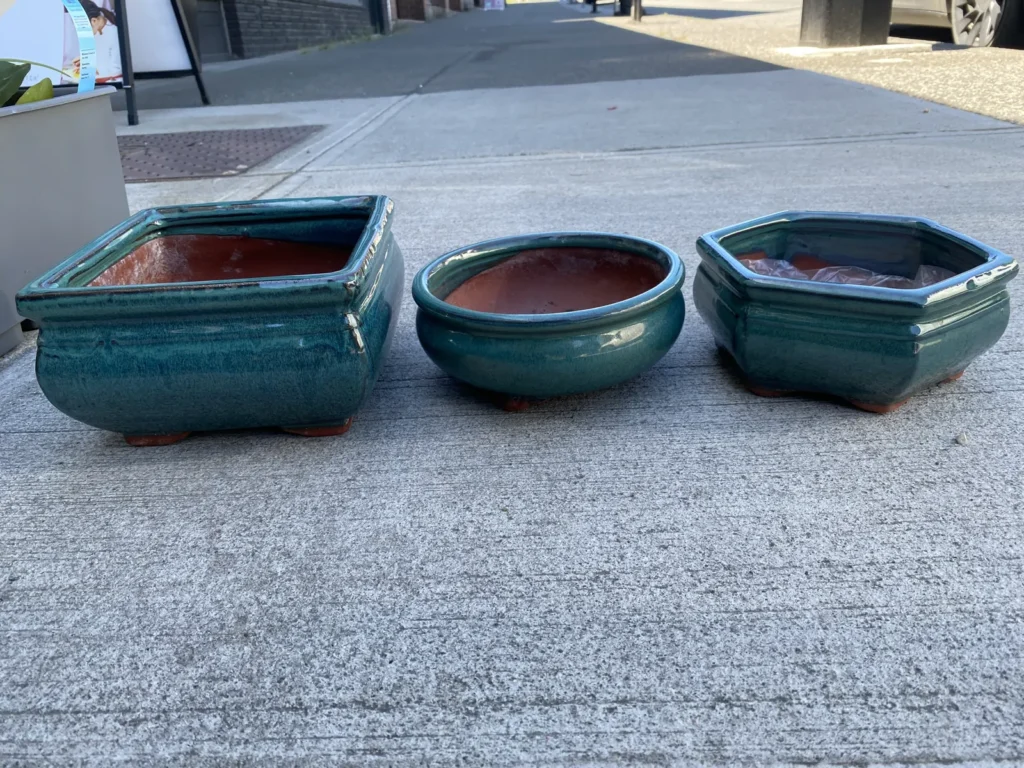
Because they’re handmade, no two are identical. You’ll see small differences in the glaze, tiny marks where a thumb pressed the clay. I think that’s the whole charm. A machine-made pot is flawless and forgettable. These have a little life in them, which is the right home for a living tree.
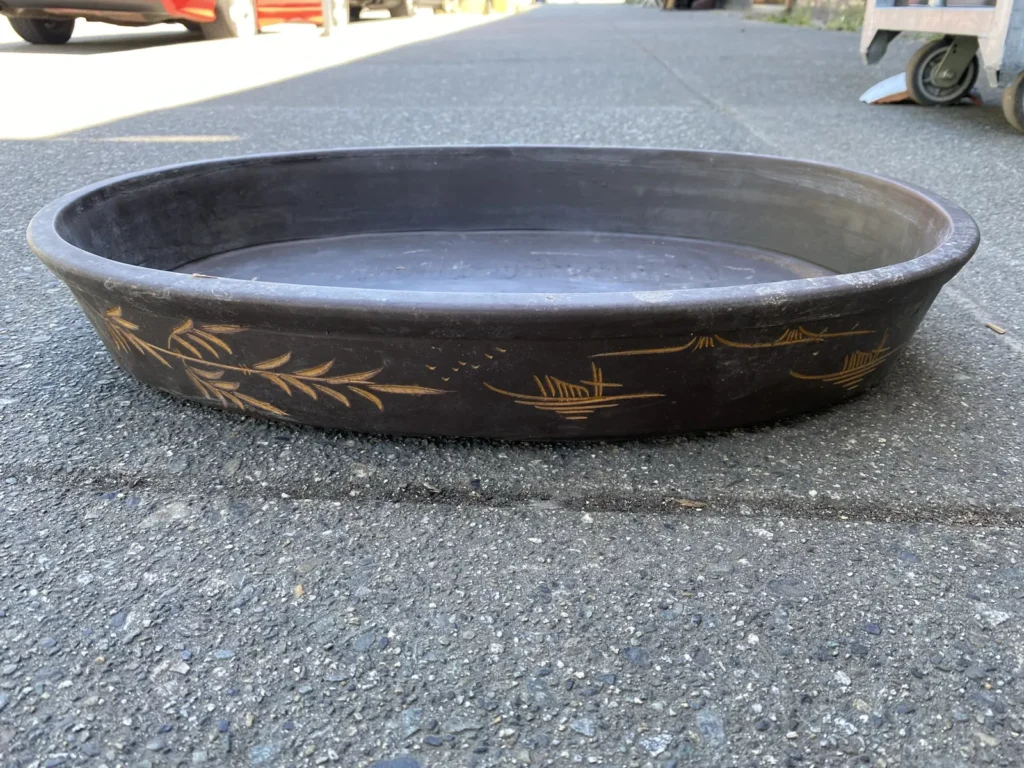
We only brought back a small number. This isn’t a giant container shipment, it’s a suitcase-sized batch chosen by hand, so when they’re gone for the season, they’re gone. If you’ve been meaning to repot a jade plant, a little juniper, or a starter bonsai, these are worth a look in person. You can see the rest of our Vietnamese handmade ceramics on our Vancouver plant pots page, or just come by the shop on West 10th.
If you liked the story behind these, you’ll probably like the one behind our handwoven bamboo baskets too. Same idea, real makers, very small batches.
A Father’s Day gift that keeps growing
Most Father’s Day gifts get used up or forgotten. A plant in a good pot does the opposite. It sits on the windowsill or the back deck and slowly becomes part of the house, and a well-made pot will outlast more than a few of the trees that pass through it. There’s something fitting about giving a dad a gift like that.
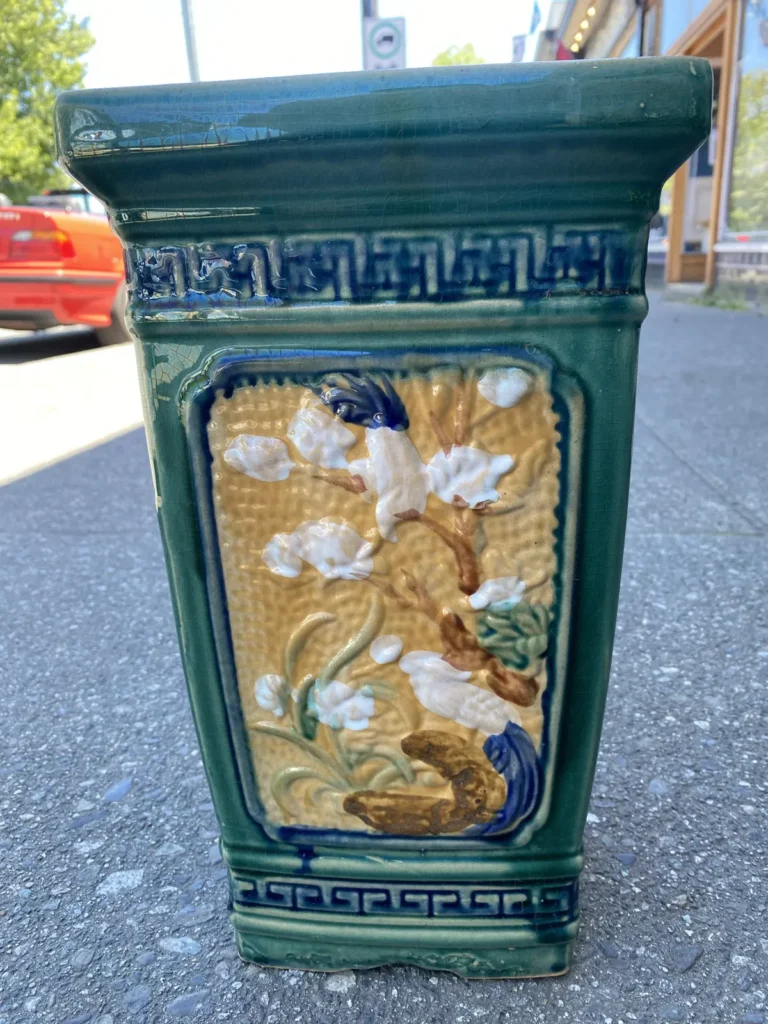
If your dad’s the type who’s always out in the garden, a handmade pot paired with a small starter tree is a gift he’ll still be fussing over next summer, and the one after that. If he’s not a gardener yet, a low-maintenance plant like a jade or a hardy little succulent in a beautiful Vietnamese pot is a gentle way in. Either way, the best thing is to come and see them in person. A pot like this is better in the hand than on a screen, and you can pick the one that catches your eye.
We’re open all seven days, 11 a.m. to 6:30 p.m., at 3742 W 10th Ave in Kitsilano. Father’s Day is Sunday, so there’s still time.
FAQ
What is a bonsai pot and how is it different from a normal plant pot?
A bonsai pot is shallower than a regular plant pot and chosen to suit the tree, so the two look like one piece. Many have drainage and wiring holes to keep the roots healthy in a tight space. Others are made solid, without a hole, to hold a little water and stone, which is handy for moss and water-loving arrangements. We can show you both in store.
How do I choose the right size bonsai pot?
A good starting rule: the pot should be about two-thirds to three-quarters the height of the tree, and roughly as deep as the trunk is wide at the base. If you already have a tree, it helps to bring its measurements (or the tree itself) so you can hold it up against the pots and see what looks right.
Are your handmade bonsai pots suitable for Vancouver weather?
Yes, these are ceramic and fine for indoor and covered outdoor use. For pots left outside through a Vancouver winter, ask us in store about frost care, since hard freezes can crack any ceramic if water pools and freezes inside.
Do you have bonsai pots in stock right now?
We brought back a small, handpicked batch from Vietnam, so stock is limited. The best way to see what’s available is to drop by the shop on West 10th, or check our Vancouver plant pots page.
Is a bonsai a good Father’s Day gift for a beginner?
It can be, if you pick a forgiving plant. A hardy little juniper or a jade plant in a handmade pot looks the part and won’t punish a few missed waterings. We keep a few low-fuss plants like these in store that sit nicely in one of the pots.
Keep reading


Have a plant question? Bring it to the counter.
DH Garden Centre is at 3742 West 10th Avenue in Kitsilano, Vancouver, open 11:00 to 6:30 every day. Bring the plant, or a photo of the spot you want to fill, and we will look at it with you. If you buy a pot here we repot the plant at the counter, soil included up to 5 litres.
