
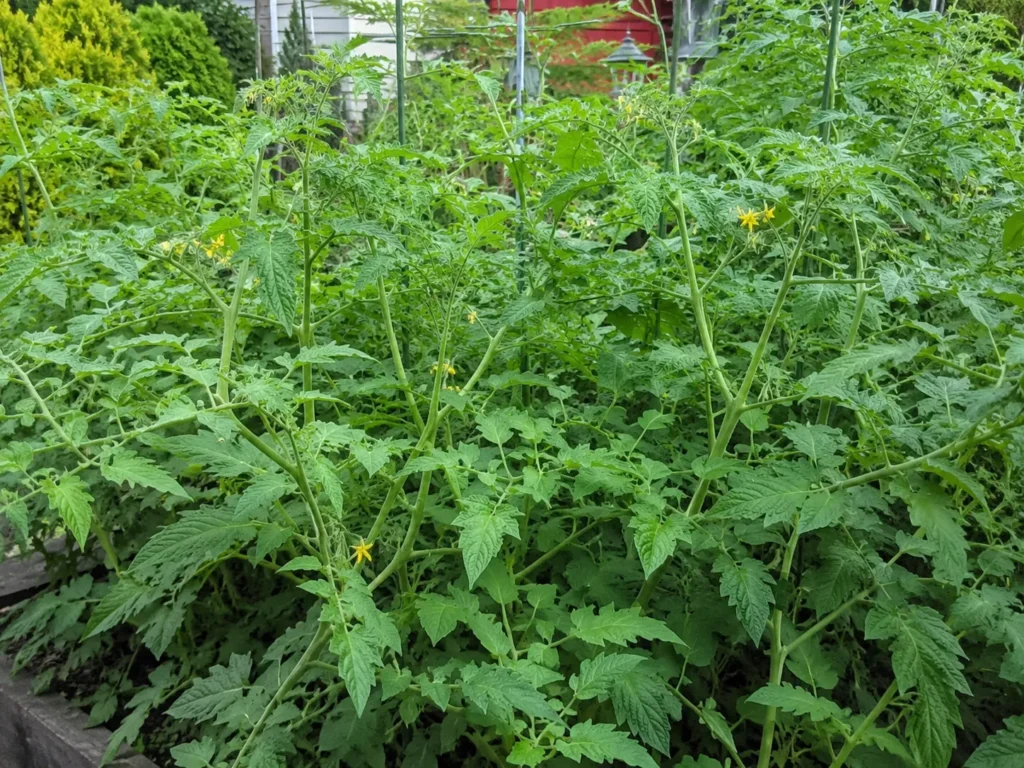
“My healthiest plant might have had one or two blooms. My sad tomato isn’t doing squat. If only mine looked like that.”
I hear some version of that every July. If you are here because you have a big, leafy tomato plant that just will not set fruit, I can probably picture yours right now. Tall. Green. Bushy. And almost empty.
I am Darrell, co-owner of DH Garden Centre in Kitsilano, and I have this exact conversation at the counter every summer. Someone walks in, shows me a photo of a gorgeous six-foot tomato plant, and asks what is wrong with it. Nothing is wrong with it. It is doing exactly what it was told.
The problem is what it was told.
Why does a leafy tomato plant produce no fruit?
A leafy tomato plant that makes plenty of foliage but no fruit is almost always getting too much nitrogen after flowering. Nitrogen tells the plant to build leaves. Once flowers appear, the plant needs less nitrogen and more phosphorus, the nutrient that turns blossoms into fruit. Change the food, and the plant changes its job.
That is the short answer. Here is the longer one, because understanding it will save you money every summer from now on.
The job change nobody tells beginners about
In May and June, leaves are the whole point. A young tomato needs a big green engine before it can carry a crop, so the balanced feed you used in spring made sense.
In July, the mission flips. A leafy tomato plant is not broken, it is just still doing its spring job. The plant should be setting fruit. But if you keep serving the same high-nitrogen meal, you are effectively telling it: keep building the engine, skip the harvest. The plant obeys. Plants always obey their food.
After more than 25 years of hands-on gardening here in Vancouver, I can tell you this is the single most common mid-summer mistake I see. And I love fixing it, because the fix is cheap, fast, and usually visible within a few weeks.
It is not your thumb. It is feeding the right thing at the right time.
Which tomato fertilizer should you use after flowering?
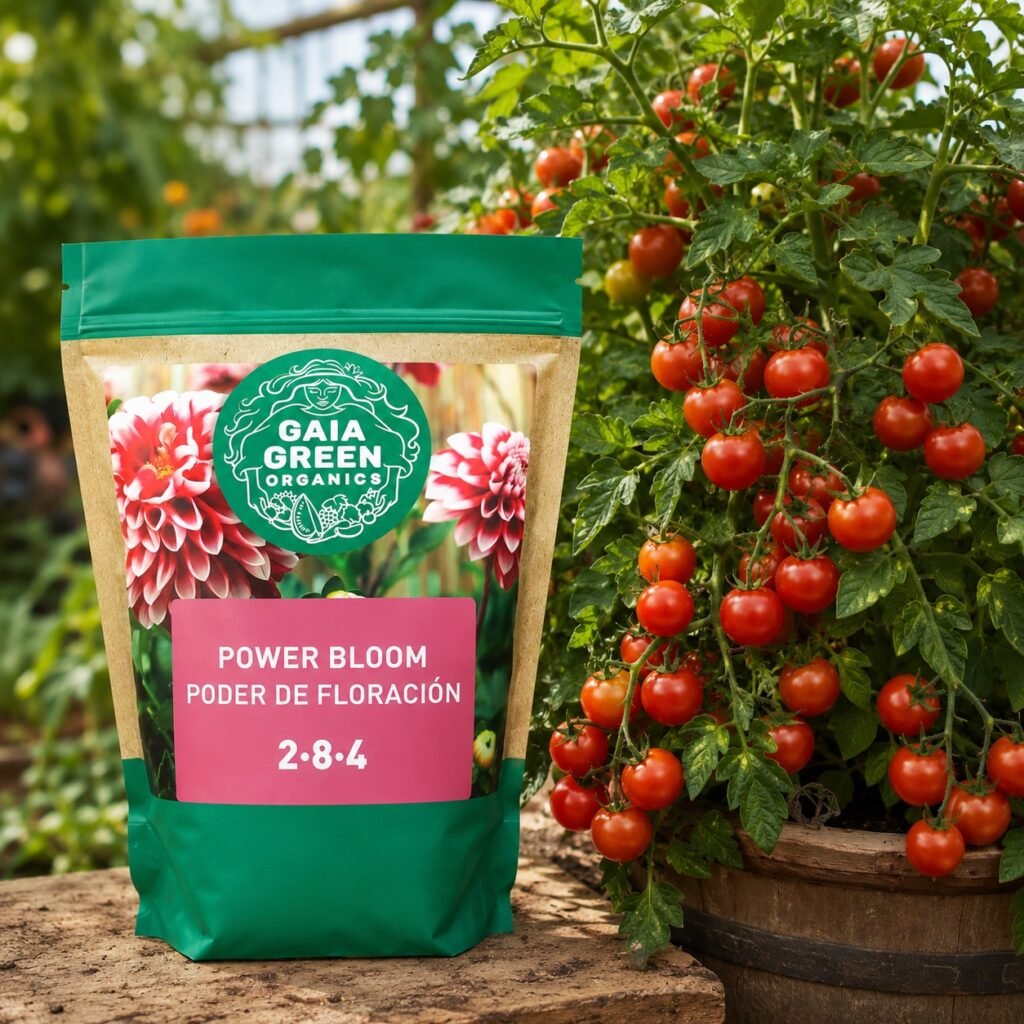
Once the first flowers open, switch to a low-nitrogen, high-phosphorus feed. I use Gaia Green Power Bloom 2-8-4 in my own garden. The middle number, phosphorus, supports flowers and fruit. The last number, potassium, builds strong roots and keeps the plant sturdy through heat. The low first number stops the leaf factory from taking over.
Gaia Green is made in Canada and approved for organic agriculture by Ecocert Canada, which matters to me because this is food you are going to eat.
One thing worth knowing: it comes as a dry granular blend and also as a powder, depending on the bag. Both are the same food. Use them the same way.
How to apply it (the two-minute method)
Top dressing sounds technical. It is not.
- Pull back any mulch from the base of the plant.
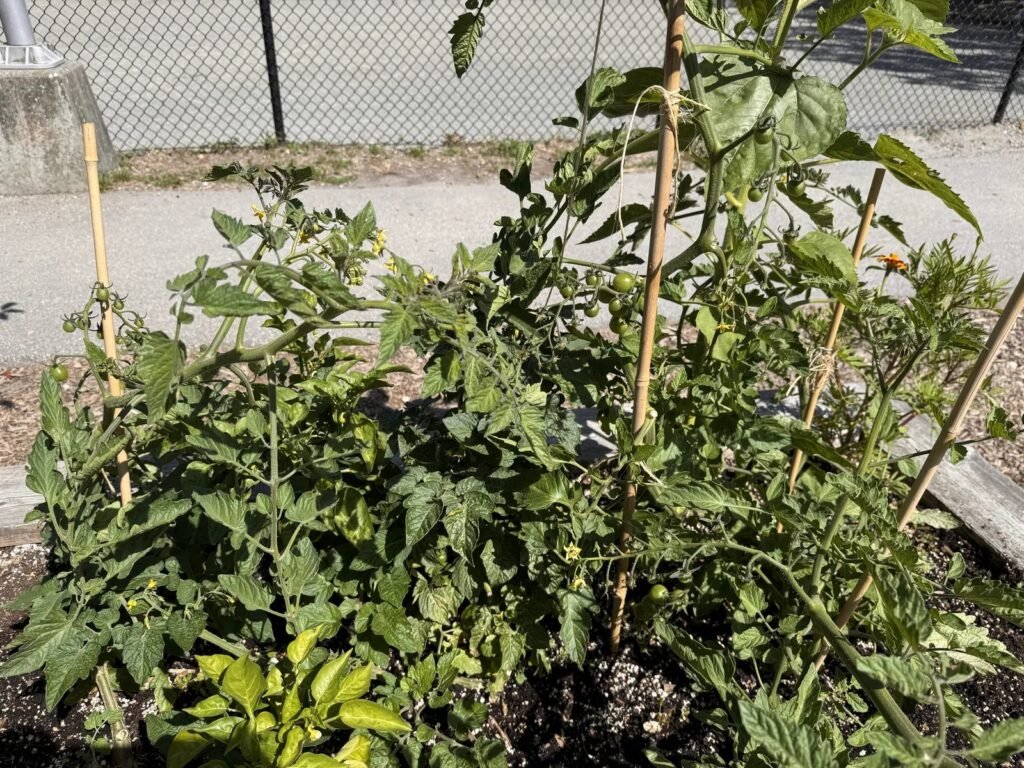
- Sprinkle the fertilizer evenly around the stem, roughly under the outer edge of the leaves. For pots, about 1 tablespoon (15 ml) per gallon (4 L) of soil. For beds, a small handful per plant. When in doubt, follow the rate on the bag.
- Scratch it into the top inch of soil with your fingers.
- Water deeply, then tuck the mulch back.
Repeat every 3 to 4 weeks. Give the last feed in early September, then stop, because late feeding pushes soft growth that fall frost will damage.
If you have ever been scared of burning your plants, this is the gentle route. Organic dry fertilizer releases slowly over weeks. It is very forgiving compared to the harsh blue stuff.
What results should you expect, honestly?
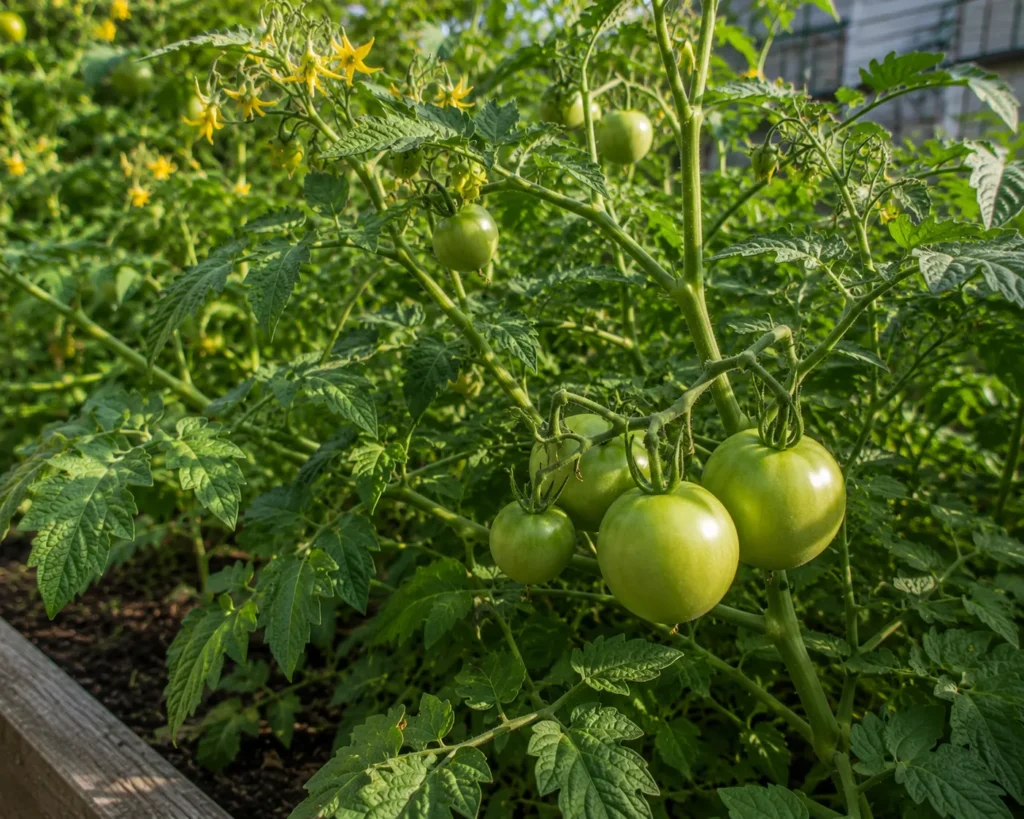
I will not promise you a magazine cover harvest, because I have no idea what your soil, light, or watering look like. What I can tell you from years of doing this: a hungry July tomato that gets switched to a bloom feed usually holds its next round of blossoms instead of dropping them, and fruit starts setting within a few weeks.
Most people who come back and tell me it worked are not chasing a magazine cover anyway. They just want enough for a real tomato sandwich, sliced thick, off the counter instead of the store shelf. That is a fair goal, and it is usually a reachable one.
And if everyone in your comments keeps telling you to just prune it, read this first. Pruning helps some tomatoes and hurts others, and it depends entirely on the type you grow. Here is the honest breakdown: your tomato pruning guide, determinate vs indeterminate.
The same feeding mistake quietly costs people their peppers and cucumbers too, not just tomatoes. If you grow those as well, this one covers all your fruiting vegetables: the fertilizer mistake ruining tomatoes, peppers, and cucumbers.
Get the full July feeding plan, free
I put the complete plan into a short guide: what to feed tomatoes, peppers, cucumbers, containers and herbs, exactly when, with a one-page cheat sheet you can screenshot. It is free, and it is written for beginners.
Prefer to just grab the fertilizer and go? The bundle we built around this method is here: See the Organic Summer Feeding Bundle.
Or come see us. Bring a photo of your tomato, the sadder the better. We will take an honest look together.
DH Garden Centre · 3742 W 10th Ave, Vancouver, BC V6R 2G4 · (604) 929-7335 · Open 7 days, 11:00 am to 6:30 pm · Find us on Google Maps
FAQ
How often should I fertilize tomatoes in summer?
Every 3 to 4 weeks with a dry organic feed, from first flowers until early September. Slow-release granular and powder feeds keep working between applications, so more often is not better. Always water deeply right after applying.
Can I use 2-8-4 fertilizer on peppers and cucumbers too?
Yes. Peppers, cucumbers, squash and flowering containers all follow the same rule: once they start blooming, they want less nitrogen and more phosphorus. Feed them the same 2-8-4 on the same 3 to 4 week schedule.
Is powder fertilizer different from granular?
Same food, finer grind. Apply powder the same way: sprinkle, scratch into the top inch of soil, water well. On windy days keep it close to the soil, and water right after so it settles in.
Can I fix a leafy tomato plant with no fruit mid-season?
Usually, yes. Stop the high-nitrogen feed, switch to 2-8-4, water deeply in the mornings, and give it two to three weeks. In my experience most plants respond as long as the switch happens by mid-summer.
Darrell Smith is a practical gardener and co-owner of DH Garden Centre in Kitsilano, Vancouver, with more than 25 years of hands-on gardening and landscaping experience.
Keep reading

Have a plant question? Bring it to the counter.
DH Garden Centre is at 3742 West 10th Avenue in Kitsilano, Vancouver, open 11:00 to 6:30 every day. Bring the plant, or a photo of the spot you want to fill, and we will look at it with you. If you buy a pot here we repot the plant at the counter, soil included up to 5 litres.
