How to Prune Raspberries and Blackberries for Maximum Harvest
A Practical Pruning Guide for Home Gardeners in Zone 8
Berry plants are some of the most rewarding crops in a home garden, but they are also among the most misunderstood. Many gardeners plant raspberries or blackberries with excitement, only to end up with tangled canes, small harvests, or inconsistent fruiting. In most cases, the issue is not soil, fertilizer, or weather, but incorrect pruning.
Pruning is not optional for raspberries and blackberries. It is the key factor that determines whether your plants produce a modest handful of berries or heavy, reliable harvests year after year. The challenge lies in the fact that not all raspberries are pruned the same way, and treating them identically often leads to disappointing results.
This guide breaks down berry pruning in a clear, practical way, so you understand not only how to prune, but why it works.
Why Proper Pruning Matters for Berries
Raspberries and blackberries are perennial plants with biennial canes. This means the root system lives for many years, but individual canes typically follow a two-year life cycle:
-
First-year canes (primocanes) focus on vegetative growth
-
Second-year canes (floricanes) produce fruit and then die
If old canes are not removed and new ones are not managed, plants become overcrowded, airflow decreases, disease risk increases, and fruit production drops sharply.
Proper pruning:
-
Directs energy into fruiting wood
-
Encourages strong lateral branches
-
Improves light penetration and airflow
-
Reduces disease and pest pressure
-
Makes harvesting easier
In short, pruning directly controls yield and plant health.

Understanding Raspberry Types Before You Prune
Before picking up pruners, it is essential to identify which type of raspberry you are growing. Pruning without knowing this is the most common mistake gardeners make.
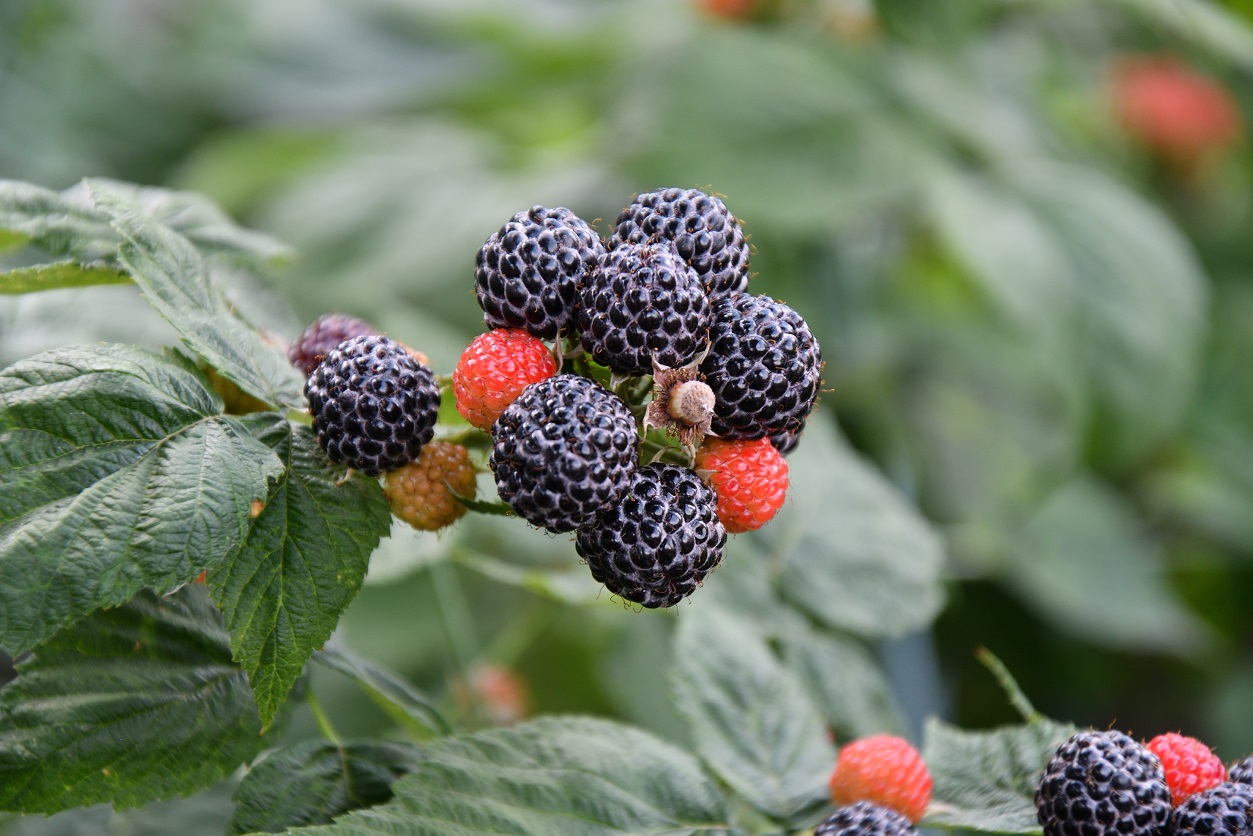
1. Black and Purple Raspberries (Blackcaps)
Black and purple raspberries fruit only on second-year canes. They behave differently from red raspberries and require summer tipping for best results.
How They Grow
-
First-year canes grow vigorously in spring and summer
-
These canes will not fruit their first year
-
In the second year, lateral branches produce fruit
How to Prune Black and Purple Raspberries
During the growing season, cut first-year canes back to 2–4 feet tall. This tipping encourages lateral branching, which dramatically increases fruiting sites the following year.
After fruiting, remove spent canes completely. Any canes that have already rooted at the tips should also be removed, as they will not produce again.
This method keeps the planting productive and prevents it from becoming overly dense.
2. Fall-Bearing (Everbearing) Raspberries
Fall-bearing raspberries are popular because they offer flexibility. They can be pruned to produce two harvests or one large fall harvest, depending on gardener preference.
Option A: Two Harvests Per Year
To get both summer and fall fruit:
-
Remove only the old, brown canes that have fruited twice
-
Leave the younger canes to fruit again
This method provides extended harvests but requires more selective pruning.
Option B: One Large Fall Harvest (Simplified Method)
Many gardeners in Zone 8 prefer this approach:
-
In winter, cut all canes down to ground level
-
New canes emerge in spring and fruit heavily in fall
This method produces larger, higher-quality fruit and simplifies maintenance. It is especially practical for home gardens and small spaces.

3. Summer-Bearing Raspberries
Summer-bearing raspberries fruit once per year on second-year canes. First-year canes focus on growth and need height management.
How to Prune Summer-Bearing Raspberries
-
Cut first-year canes back to 4–5 feet tall
-
This prevents weak, floppy growth
-
Encourages strong lateral branches for next year’s fruit
After harvest, remove all spent canes completely to make room for new growth.
Blackberries: Similar Rules, Bigger Growth
Blackberries follow a pruning pattern very similar to summer-bearing raspberries but tend to grow more vigorously.
Blackberry Pruning Basics
-
Fruit forms on second-year canes
-
First-year canes can grow very tall if left unmanaged
Cut first-year blackberry canes back to 4–5 feet to encourage lateral branching and prevent tangled growth. After fruiting, remove old canes entirely.
This approach strengthens the plant structure and significantly increases fruit production.
A Universal Pruning Method (If You Are Unsure)
If you are unsure what type of raspberry you have, there is a safe, simplified approach:
-
Prune first-year canes to 4–5 feet tall
-
Allow fruiting on second-year canes
-
Observe when fruit appears
The only potential trade-off is missing a fall harvest if the plant is everbearing, but this method allows you to identify the variety clearly the following season while maintaining plant health.
Best Time to Prune in Zone 8 (Vancouver Area)
For most berry plants in Zone 8:
-
Winter to early spring is ideal for structural pruning
-
Avoid heavy pruning once active growth begins
-
Summer tipping is done during the growing season for blackcaps
Because winters are mild, pruning can often be done earlier than in colder regions, but timing should still respect dormancy and growth cycles.
Common Berry Pruning Mistakes
Many gardeners reduce harvests unintentionally by making these errors:
-
Treating all raspberries the same
-
Leaving old fruiting canes in place
-
Not tipping vigorous first-year growth
-
Pruning too lightly out of fear
-
Allowing plants to become overcrowded
Berry plants are resilient. Even if mistakes happen, they recover quickly with proper care.
Final Thoughts: Pruning Is an Investment
Berry pruning can feel intimidating at first, but it is a skill that improves rapidly with practice. These plants are forgiving, and every season provides feedback that helps refine technique.
The reward for thoughtful pruning is clear:
-
Healthier plants
-
Better airflow
-
Easier harvesting
-
Consistently larger yields
With a basic understanding of cane types and timing, pruning becomes a simple, satisfying part of berry growing.