
Most houseplants do not die from cold in winter. They die from excess water. This article explains why winter watering is different, common mistakes, and how to water plants safely during low light months.
Plant Lesson #1 – Why Winter Watering Kills Plants
Every winter, we see the same concern.
“My plant was fine all summer. Then winter came, and it started to decline.”
The assumption is often cold.
But in most Vancouver homes, cold is not the real problem.
Water is.
Most houseplants that die in winter are not thirsty.
They are slowly drowning.
Winter changes how plants use water
In winter, everything slows down.
Light is weaker.
Days are shorter.
Growth pauses or becomes minimal.
Roots respond to light, not calendars. When photosynthesis slows, roots absorb water more slowly. The soil stays wet longer. Oxygen levels drop. Roots suffocate. Rot begins quietly, below the surface.
This is why watering “the same as summer” causes damage in winter.
Not because the plant is weak, but because conditions have changed.
Mistake #1: Watering on a fixed schedule
Watering every seven days, every ten days, or every Sunday feels disciplined. In winter, it is risky.
The calendar does not know your plant.
Only the soil does.
Two identical plants can dry at very different rates depending on light exposure, pot size, soil mix, and room temperature. In winter, scheduled watering often means watering too soon.

Mistake #2: Watering when the soil is still wet
Surface dryness is misleading. The top layer can feel dry while the lower soil remains cold and wet.
Before watering, check deeper.
Insert your finger several centimetres into the soil.
If it feels cool and moist, do not water.
In winter, roots die from excess moisture, not dryness.
Mistake #3: Using cold water
Cold water shocks roots.
It further slows root activity and reduces oxygen uptake.
Always use room-temperature water.
Let tap water rest before watering. This allows temperature to stabilize and helps sensitive plants avoid stress.

Mistake #4: Watering at night
At night, temperatures drop and absorption slows. Soil remains wet for longer periods, increasing the risk of rot.
Morning or midday watering is safer in winter. It gives the plant time to process moisture while temperatures and light are slightly higher.
How to water plants properly in winter
Winter watering is not about frequency.
It is about observation.
Water less, but water intentionally.
Before watering:
-
Check soil moisture below the surface
-
Confirm the pot has drainage holes
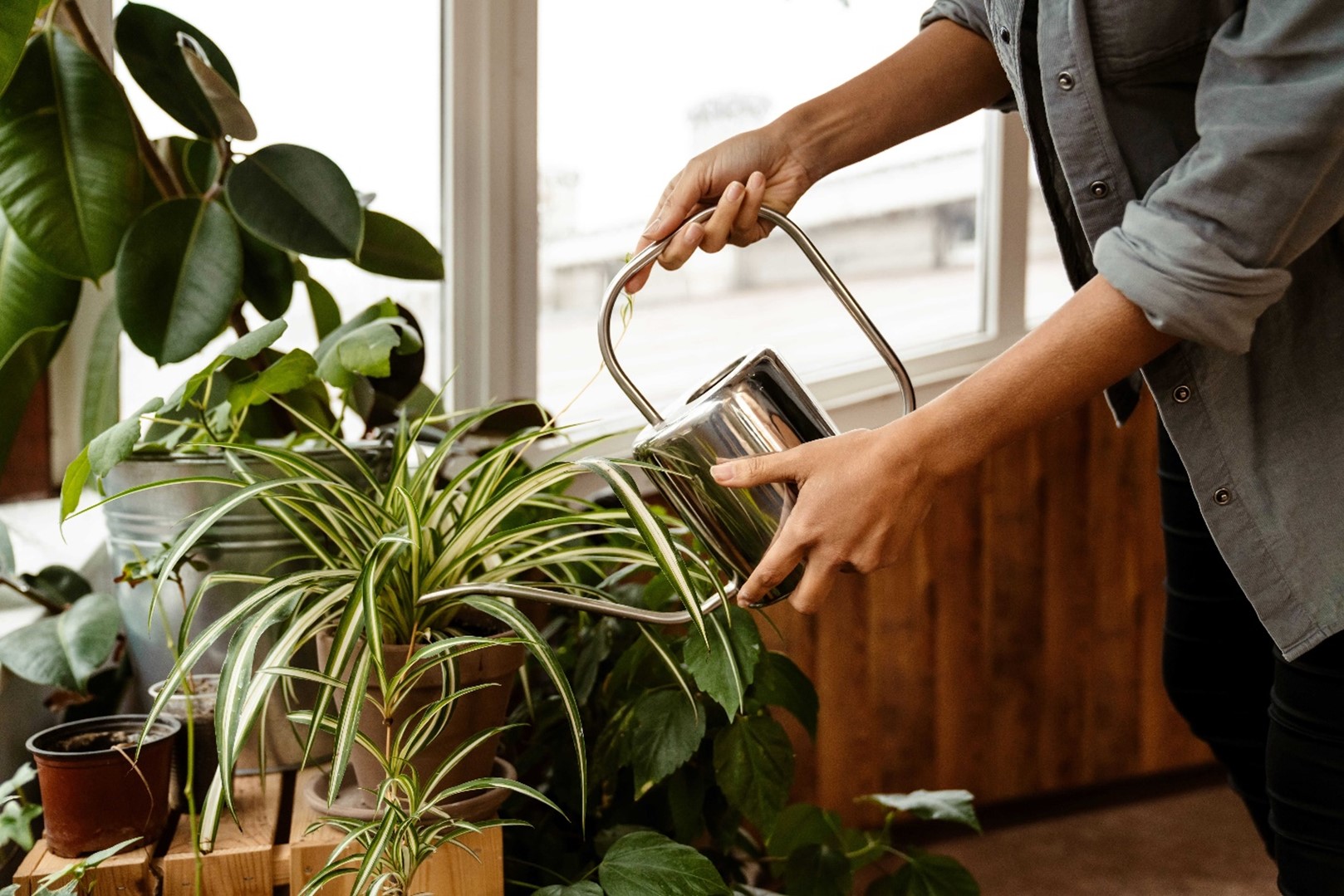
When watering:
-
Use room-temperature water
-
Water slowly and evenly
-
Stop when water drains from the bottom
After watering:
-
Empty the saucer
-
Never allow roots to sit in standing water
Drainage matters more in winter than in any other season.
Warning signs of winter overwatering
These signals are often mistaken for thirst, but they mean the opposite:
-
No new growth, yet soil stays constantly wet
-
A sour or musty smell from the soil
-
Drooping leaves while the soil is moist
-
Yellowing leaves with soft stems

When these signs appear, adding more water makes the problem worse.
Pause.
Let the soil dry.
Allow roots to breathe again.
Winter is not the enemy
Winter is a test, not a threat.
Plants that are watered correctly during winter often return stronger in spring. Root systems recover. Growth resumes naturally when light increases.
Less water in winter is not neglect.
It is restraint.
And restraint is often the most caring thing you can offer a plant during its quiet season.
