
Plant Lesson #2 – Why Onions Fail Even When You “Did Everything Right”
A very common frustration
Most people who fail with onions fail in silence.
They watered carefully.
They planted on time.
They waited patiently.
And when harvest day comes, there is no bulb.
Only thin green stems, or onions that never decided to become onions at all.
It feels unreasonable. Onions are everywhere. Cheap. Ordinary. Reliable.
If anything should grow easily, it should be onions.
But onions are not difficult plants.
They are exact plants.
The simple idea most people miss
Here is the one thing that quietly decides success or failure:
Onions do not form bulbs because of care.
They form bulbs because of light.
When an onion seed goes into the soil, nothing underground is in a hurry.
The plant focuses upward first. Leaves emerge. More leaves follow.
Those leaves are not decoration.
They are the plant’s energy system.
Each leaf captures light.
Each leaf produces carbohydrates.
Each leaf later becomes one layer of the onion bulb.
No leaves means no layers.
No layers means no meaningful onion.
For a long time, the plant does not thicken underground at all. It waits.
When the day gives the signal
At a certain point in the season, something invisible happens.
The length of the day reaches a threshold.
That light duration tells the onion plant: now.
Only then does the plant begin sending energy downward.
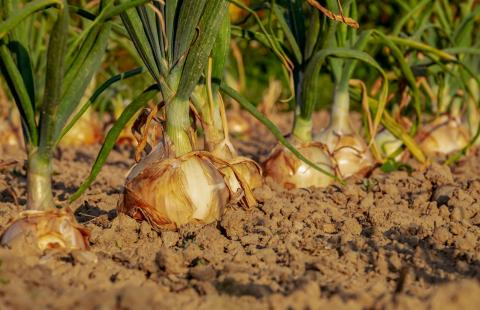
Sugars move from the leaves into the base.
The bulb begins to swell, layer by layer.
This process is not emotional.
It is not negotiable.
It is built into the plant.
And this is where many gardens quietly go wrong.
Not all onions listen to the same day
Onions are divided by how much daylight they need before bulbing begins.
Some varieties bulb with relatively short days.
Some wait for medium-length days.
Others require very long summer days.
These differences exist because onions evolved in different latitudes.
Closer to the equator, day length changes less.
Further north, summer days stretch long.
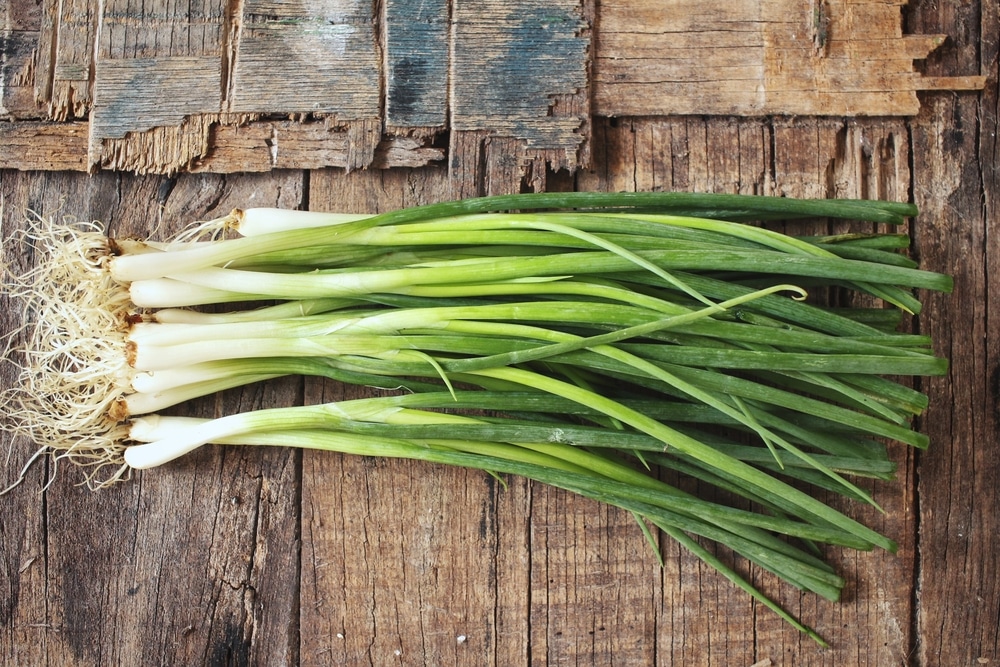
If you grow an onion that expects long days in a place where days never get long enough, the plant never receives the signal. It keeps making leaves. You harvest green onions instead of bulbs.
If you grow an onion that expects short days in a place where days lengthen too quickly, the plant bulbs early. Before enough leaves exist. The result is a small, underdeveloped onion.
The plant did not fail.
It followed instructions perfectly.

Seeds, sets, and transplants are not the main issue
Many people blame how they started their onions.
Seeds feel slow.
Sets feel convenient.
Transplants feel safer.
But starting method is secondary.
What matters more is whether the variety matches your daylight conditions.
Seeds give you the most control and variety. They require patience, but they rarely surprise you.
Sets often cause confusion because many are long-day types sold everywhere, regardless of climate.
Transplants save time but still demand correct variety selection.
None of these methods can override day length.

The quiet shift in understanding
Once you understand how onions think, frustration softens.
You stop adding fertilizer to solve a light problem.
You stop adjusting watering for a timing problem.
You stop assuming effort equals results.
Instead, you choose onions that belong where you live.
When that match is right, onions grow without drama.
Leaves build steadily.
Energy moves downward at the right moment.
Bulbs form quietly, exactly as they were meant to.
A different way to see failure
Most plants do not fail because we ignore them.
They fail because we misunderstand them.
Onions are honest teachers. They respond to light, not intention.
Once that lesson settles in, gardening becomes calmer.
Less force.
More observation.
And suddenly, onions stop being mysterious.
