
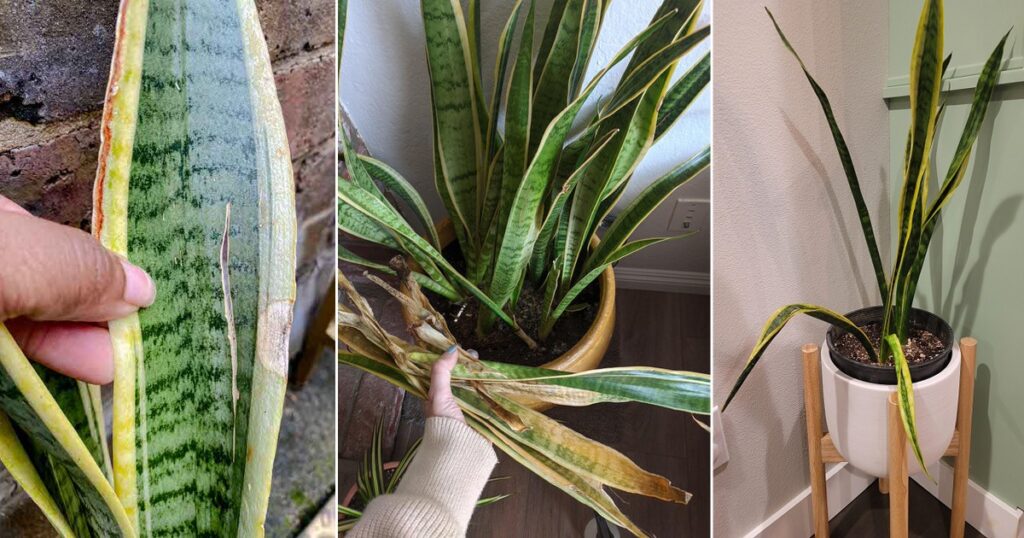
Discover the 10 most common snake plant problems and learn how to fix drooping, yellow, wrinkled, or slow-growing snake plants with expert advice from DH Garden Centre.
When a “Low-Maintenance” Plant Starts Struggling
Snake plants (Sansevieria, now Dracaena) have a reputation for being nearly indestructible. However, when something is wrong, they communicate stress very clearly through drooping leaves, yellowing, narrow growth, or complete stagnation.
At DH Garden Centre, we often see customers confused because they believe snake plants thrive on neglect alone. While they are tolerant, they are not immune to poor conditions.
This guide breaks down the 10 most common snake plant problems, explains why they happen, and provides clear, practical solutions you can apply immediately.

1. Snake Plant Not Growing at All
Why It Happens
Snake plants are slow growers, but no growth for an entire year usually indicates stress.
Common causes:
-
Insufficient light
-
Nutrient deficiency
-
Cold temperatures
How to Fix It
-
Move the plant closer to a bright window
-
Provide indirect to direct sunlight
-
Feed once per month during the growing season
-
Do not fertilize in winter
Snake plants need light to photosynthesize, despite myths claiming they thrive in darkness.

2. Too Little Light Causes Weak, Narrow Leaves
Symptoms
-
Thin, stretched leaves
-
Pale or washed-out color
-
Unstable growth
Explanation
In low light, snake plants stretch toward brightness, resulting in narrow foliage. Once this happens, the leaf cannot recover.
Solution
-
Cut affected leaves at the base
-
Move the plant to a brighter location
-
South- or west-facing windows are ideal
-
Grow lights can substitute for natural light if needed
3. Drooping Leaves from Overwatering
The Most Common Snake Plant Problem
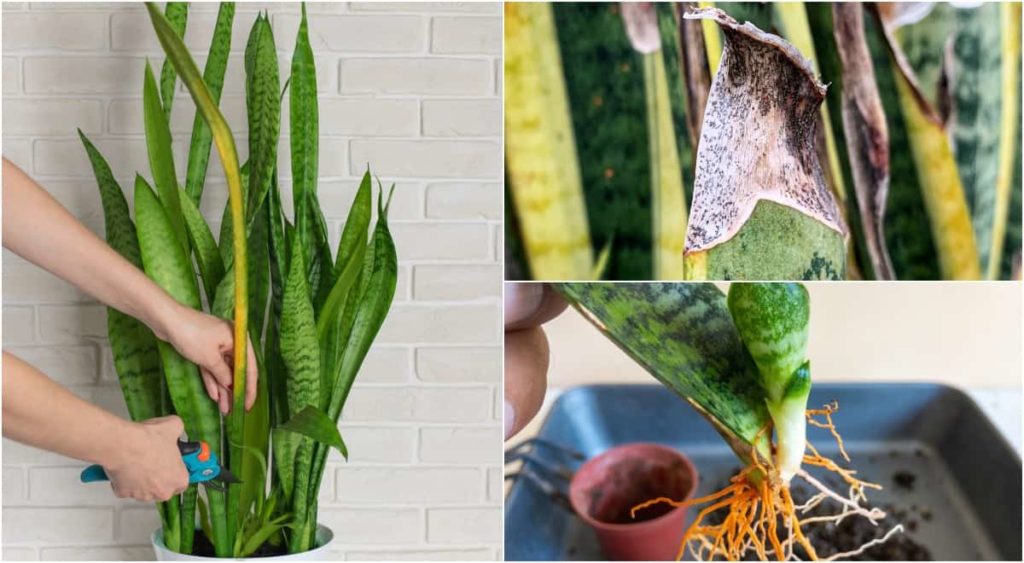
Drooping leaves almost always indicate overwatering.
Snake plants store water in their leaves. Excess moisture causes cells to swell and weaken, leading to collapse.
Correct Watering Rule
-
Water only when soil is completely dry
-
Never water on a schedule
-
Check soil depth, not just the surface
In temperate climates, watering every 6–8 weeks is often sufficient.
4. Yellow Leaves: Multiple Possible Causes
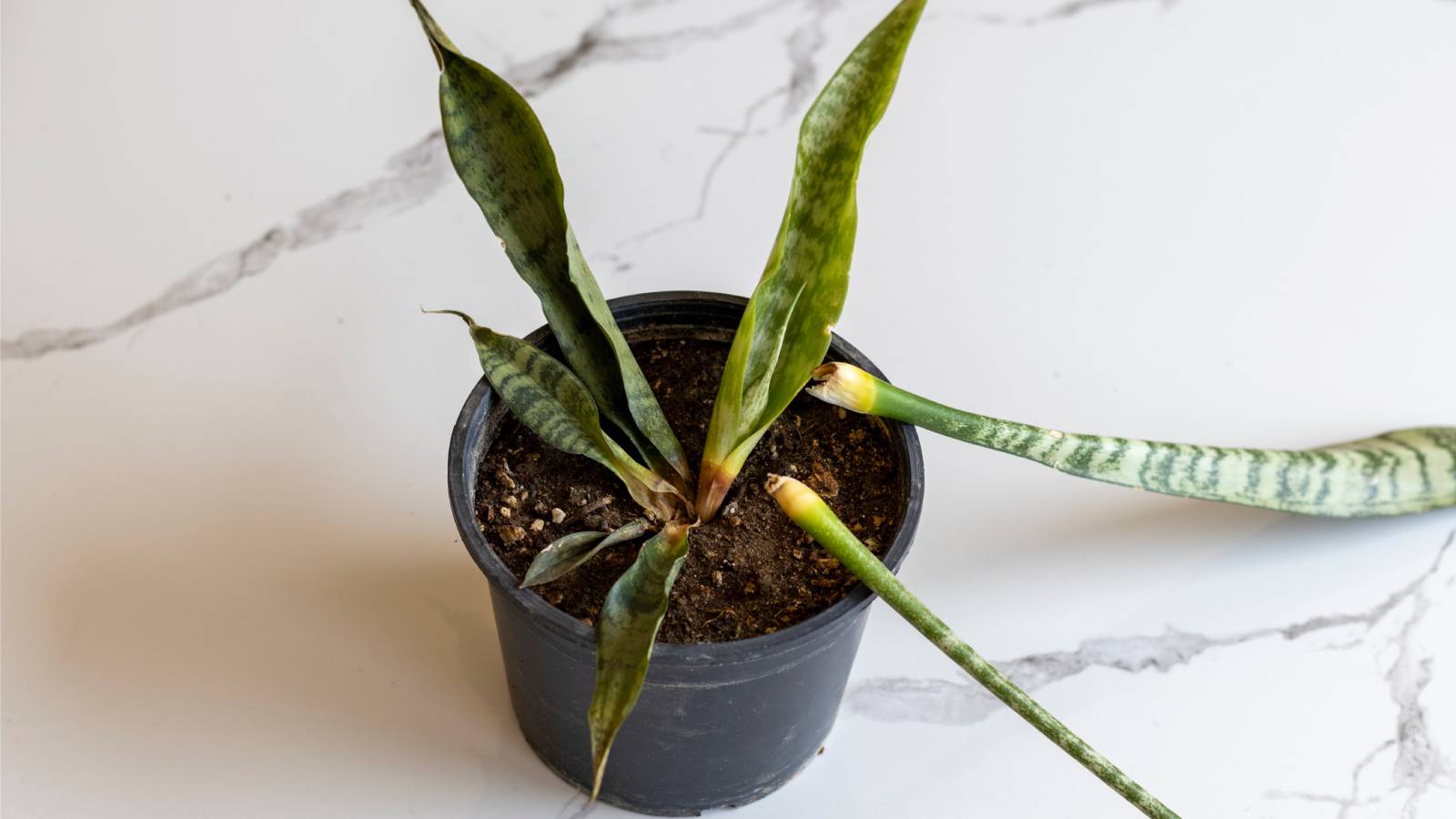
Yellowing is one of the most confusing snake plant problems because several issues cause similar symptoms.
Cause 1: Overwatering
-
Leaves feel soft or mushy
-
Roots may be rotting
Fix: Allow soil to dry or repot into fresh, fast-draining mix.
Cause 2: Nutrient Deficiency
-
Pale yellow leaves
-
Slow growth
Fix: Apply balanced houseplant fertilizer monthly in spring and summer.
Cause 3: Over-Fertilization
-
Sudden yellowing after feeding
-
Burned roots
Fix:
-
Remove plant from soil
-
Rinse roots gently
-
Repot with fresh soil
-
Reduce fertilizer strength permanently

5. Pest Damage: Spider Mites and Thrips
Spider Mites
-
Fine webbing in leaf joints
-
Yellowing, distorted leaves
Thrips
-
Misshapen growth
-
Tiny specks on white paper when shaken
What to Do
-
Isolate affected plants immediately
-
Rinse leaves thoroughly
-
Apply neem oil weekly
-
Increase humidity temporarily
-
Severe infestations may require disposal
Early detection is critical to prevent spread.

6. Misshapen or Twisted Leaves
Possible Causes
-
Pest damage
-
Severe underwatering
-
Inconsistent watering
Solution
-
Water thoroughly when soil is dry
-
Ensure full root saturation
-
Avoid partial surface watering
Snake plants tolerate drought, but extended dehydration causes structural damage.
7. Brown Spots on Leaves
Cause 1: Fungal Disease
-
Caused by soggy soil
-
Soft tissue around spots
Fix:
-
Remove affected leaves
-
Replace soil
-
Reduce watering
-
Apply fungicide if needed
Cause 2: Poor Water Quality
-
Hard or chlorinated tap water
Fix:
-
Use filtered or rainwater
-
Flush soil occasionally

8. Cold Stress and Temperature Damage
Snake plants originate from tropical West Africa and dislike cold conditions.
Danger Zone
-
Below 12°C / 55°F
-
Drafty windows or cold floors
Symptoms
-
Brown spots
-
Stalled growth
-
Nutrient uptake failure
Fix
-
Keep plant in stable indoor temperatures
-
Avoid winter drafts
9. Wrinkled Leaves from Underwatering
Wrinkling indicates dehydration, not disease.
How It Happens
-
Months without watering
-
Hot, dry environments
Recovery
-
Water thoroughly
-
Ensure full soil saturation
-
Leaves may recover if damage is not severe
10. Root Rot: The Hidden Killer
How to Identify
-
Black or dark brown roots
-
Mushy texture
-
Foul smell
Healthy roots should be firm and pale.
Treatment
-
Remove plant from pot
-
Cut away rotten roots
-
Repot in fast-draining soil
-
Reduce watering frequency
Roots regrow quickly when conditions improve.
The Importance of Proper Soil Mix
Snake plants require oxygen at the roots.
Ideal Soil Mix
-
5 parts quality compost
-
3 parts perlite or pumice
Avoid pure compost. Dense soil suffocates roots and causes rot.
Frequently Asked Questions (FAQ)
How often should I water a snake plant?
Only when the soil is completely dry. This may be every 1–2 months depending on climate.
Can snake plants survive low light?
Yes, but they grow better and healthier with brighter light.
Should I mist my snake plant?
No. Misting is unnecessary and may increase fungal risk.
Why are my snake plant leaves falling over?
Usually due to overwatering or insufficient light.
Why Trust DH Garden Centre?
At DH Garden Centre, we focus on:
-
Practical plant care
-
Long-term plant health
-
Honest, science-based advice
-
Sustainable indoor gardening
We help plant owners understand why problems occur, not just how to mask symptoms.
Struggling with your snake plant?
Visit DH Garden Centre for:
-
Proper soil mixes
-
Moisture meters
-
Fertilizers suited for houseplants
-
Expert advice tailored to your home environment

Whether you’re shopping for plant lovers, hunting for meaningful plants, or simply looking to add a touch of green to your own holiday décor, DH Garden Centre has everything you need for a joyful, vibrant, and beautifully green Christmas.
Visit DH Garden Centre today: where the holidays grow brighter, one plant at a time.
