
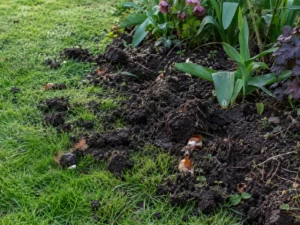
You can put a hundred tulip bulbs in the ground on a Saturday in October and lose a third of them by Monday. The squirrel was on the fence the whole time you worked. Fresh soil turned over a bulb is a marker it reads from across the lawn, and the digging usually starts before the trowel has dried out.
The bulbs squirrels do not eat are simply the ones that taste wrong. Narcissus, allium, fritillaria, muscari, snowdrop and leucojum all carry either a bitter alkaloid or a strong onion smell, so a squirrel that bites one drops it and stops working that bed. Tulips and large Dutch crocus have neither of those defences, which is why they go first.
Why a squirrel digs one bulb and walks past another
Squirrels are not hunting for tulips specifically, which is why the bulbs squirrels do not eat are protected by taste rather than by luck. In autumn they are caching food and checking any patch of loose soil that looks like somebody else already buried something there. Your new bed is both at once, which is why a garden that has been quiet all summer suddenly gets turned over in one night.
What decides the outcome is the second or two after the first bite. A tulip bulb is starch and water with nothing unpleasant in it, closer to a small potato than to anything a squirrel would refuse. A narcissus bulb contains lycorine and related alkaloids, which are bitter and make an animal feel unwell. An allium is loaded with the same sulphur compounds that make you cry when you cut an onion.
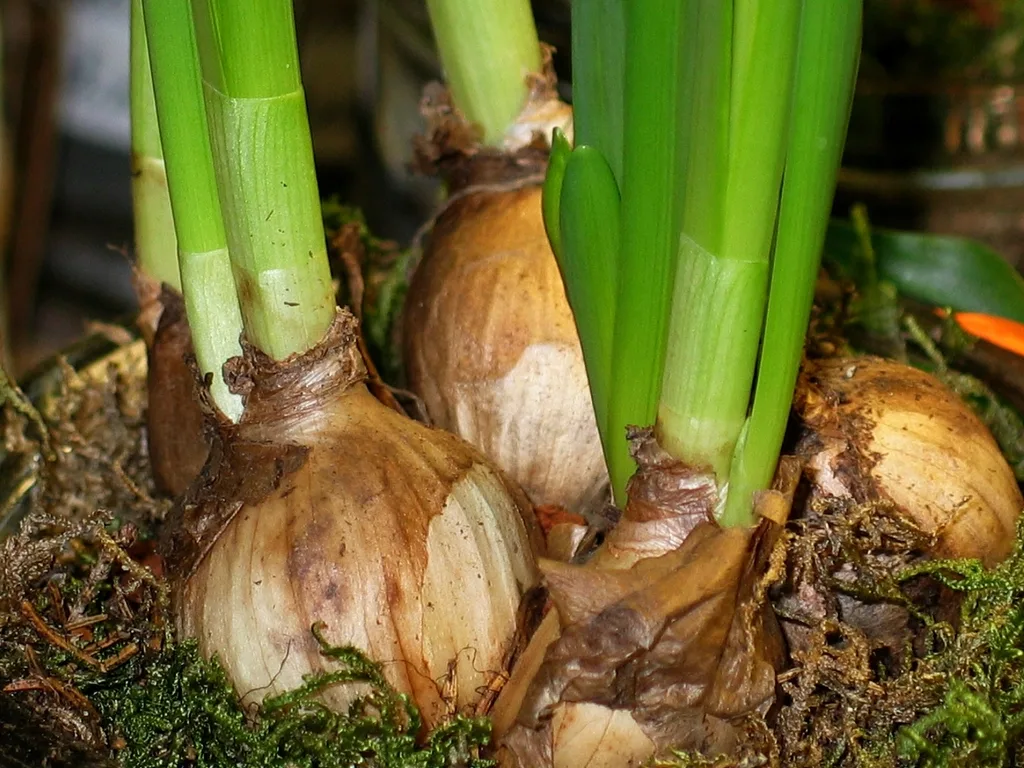
So the animal learns fast, and it learns by area. One bad bulb in the corner of a bed is often enough for it to leave the rest alone that season. That is why variety choice does more work than anything you spread on the surface.
The bulbs squirrels do not eat, variety by variety
Nothing on the list of bulbs squirrels do not eat is untouchable. A curious squirrel will dig anything once to find out what is under there. The difference is that it does not come back for a second go, and a hole with the bulb still in it can be pushed shut with your boot.
Narcissus and daffodils
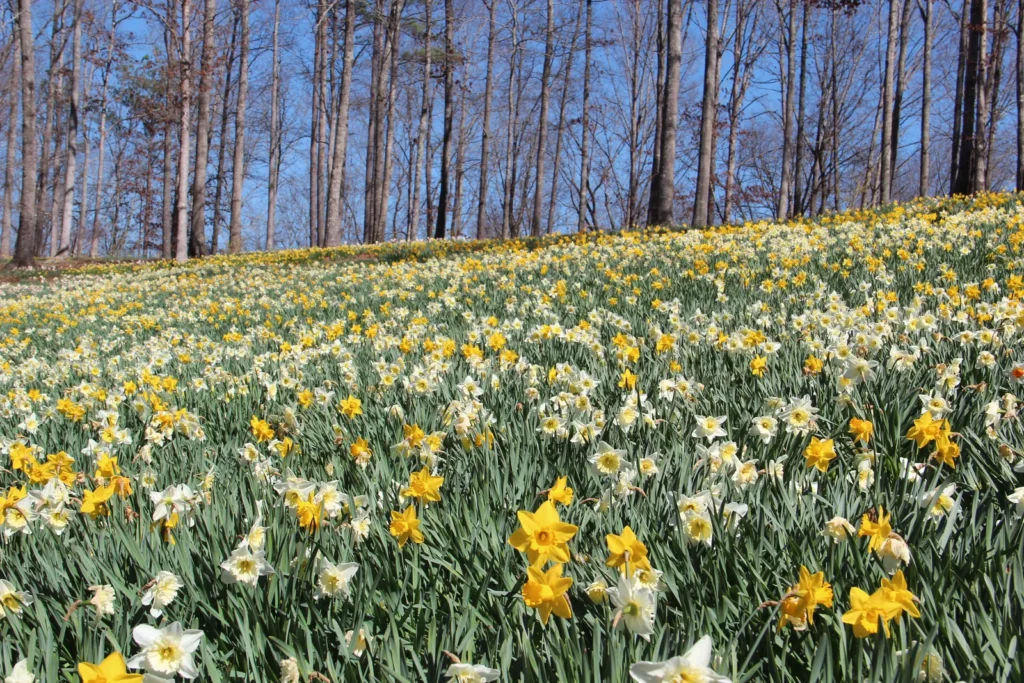
Narcissus is the strongest group of bulbs squirrels do not eat in the whole spring catalogue. Every part of a narcissus, bulb included, carries lycorine, and animals sort that out on the first taste. Tete a Tete gives you a short early clump that is happy in a pot or at the front of a border. Jetfire runs a little later with swept back petals and an orange cup. Both multiply instead of fading, so the clump is wider in year three than it was in year one.
Alliums
Ornamental onions, and they smell like it the moment you nick the skin, which is exactly why they sit on every list of bulbs squirrels do not eat. Purple Sensation throws a globe of small purple florets on a tall stem in May, which is exactly when the tulips are collapsing and the bed starts to look tired. Squirrels leave the bulbs alone in autumn and the flower heads dry into something worth leaving standing through June.
Fritillaria
Crown imperial has a musky, foxy smell that a lot of people notice from a metre away, and it is one of the few bulbs that seems to put animals off the surrounding soil as well. The smaller snake head fritillary is quieter to plant and just as untouched. Both want ground that drains, so if you garden on heavy soil it is worth opening the clay up first.
Muscari, scilla and chionodoxa
The small blue bulbs are rarely bothered. Muscari has an odd habit of sending up leaves in autumn, which alarms people every year and is completely normal. Scilla and chionodoxa do the same job earlier and hold up to weather that flattens bigger flowers.
Snowdrops and leucojum
Both share a family with narcissus and carry the same class of alkaloid, so both belong on any list of bulbs squirrels do not eat. Leucojum aestivum is the taller one, white bells with a green tip, and it will stand in a damp corner where most bulbs sulk. Snowdrops are the ones that come up through frozen ground in February when nothing else is moving.
The near misses
Hyacinth is usually left alone, thanks to the oxalate crystals in the bulb, though it is not in the same class as narcissus. Crocus tommasinianus matters too, because ordinary Dutch crocus is one of the most reliably stolen bulbs in a Canadian garden while tommasinianus is dug far less often. If you want crocus, plant that one.
What do squirrels dig up the most?
Tulips first, by a wide margin, and large Dutch crocus a close second. Both are mild, starchy and sit shallow enough to be easy work. Lily bulbs get taken too. If you lost bulbs last autumn and you are honest about what was in that bed, it was almost certainly one of those three.
Does planting daffodils around tulips protect the tulips?
Not enough to plan a bed around it. A daffodil in the next hole does not hide the smell of disturbed soil, and a squirrel working along a row will take the tulip and leave the daffodil standing beside it. Ringing tulips with narcissus looks tidy and changes very little.
How to build a bed that still comes up whole
Start with the proportion rather than the list of bulbs squirrels do not eat. If you want a spring bed you are not repairing every October, give most of the space to bulbs squirrels do not eat, which means narcissus, allium and the small blue ones, and treat tulips as the part you accept you may replant. That single decision does more than any spray.
Then plant properly. Firm the soil back down hard with the flat of your hand so there is no loose crumb sitting proud of the bed, and water once so the surface knits together. Loose soil is the advertisement. Clearing away papery bulb skins helps too, because the smell of a fresh bulb on the surface is what brings them over in the first place.
If tulips matter to you and you refuse to give them up, mesh laid flat over the bed and pegged hard at every edge is the one barrier worth the trouble. We covered that side of it fully in our guide to stopping squirrels digging up bulbs, so there is no sense repeating it here. It is also worth reading whether squirrels actually eat tulip bulbs or just carry them off, because the answer changes what you do next.
What this looks like in March
Nothing dramatic happens in November. You will not know whether it worked until the first mild week of the new year, when narcissus noses start coming through and the count is either right or it is not.
The gardens that come up whole are usually not the ones that fought hardest. They are the ones planted with bulbs squirrels do not eat in the first place. Tete a Tete and Jetfire open first, muscari fills in underneath, and by the time the allium heads come up in May the bed has been going for three months without anybody touching it.
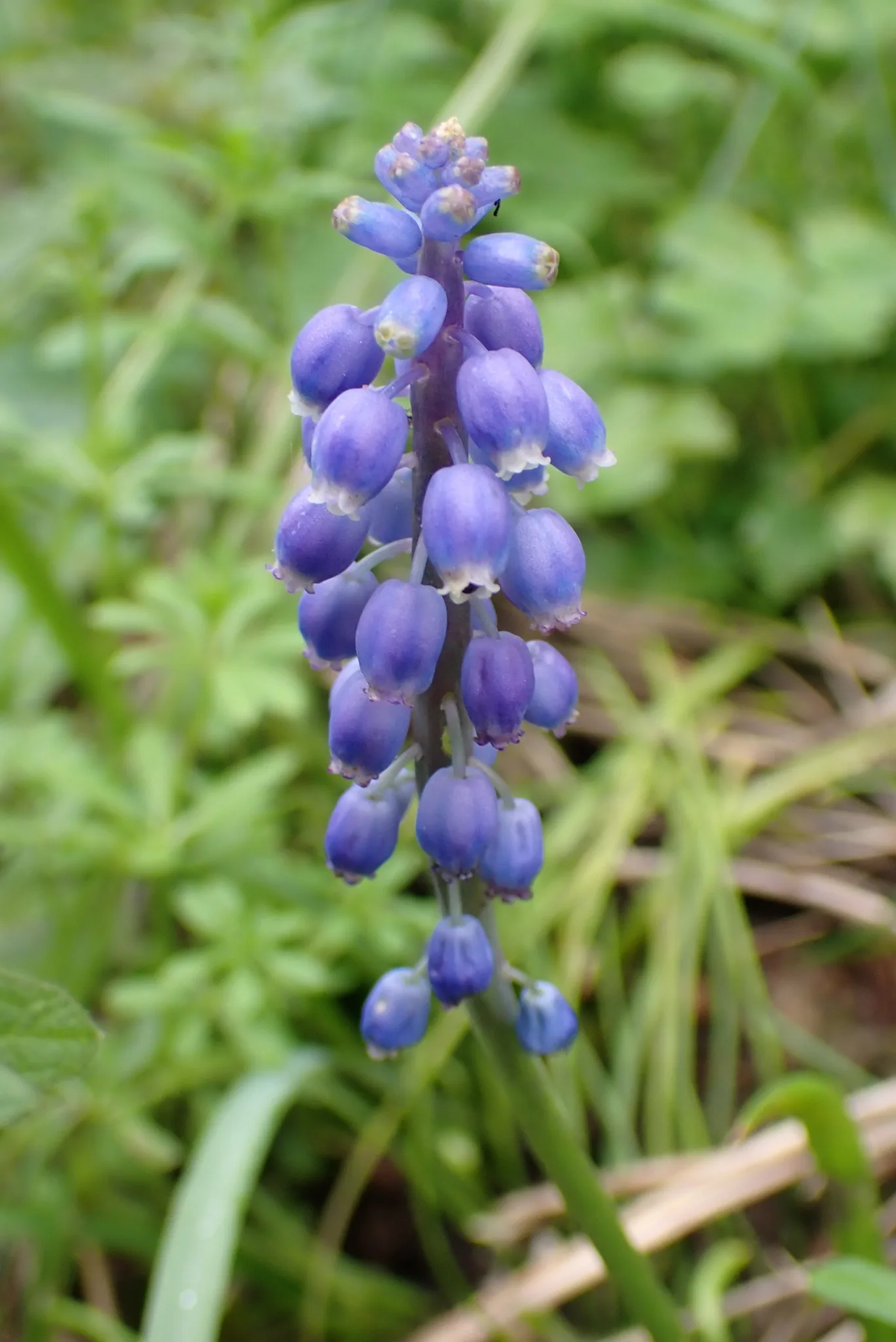
That is the reasoning behind the five varieties we grouped together for exactly this problem, which is narcissus Tete a Tete, narcissus Jetfire, allium Purple Sensation, muscari Night Eyes and leucojum aestivum. Not one of them is on the squirrel menu, and together they cover February through to the end of May.
Getting them in the ground in time
Bulbs go in once the soil has cooled but before it locks up, and that date lands differently depending on where you are standing. If you are not sure, read when to plant tulip bulbs zone by zone.
Bulbs reach us in small lots and we cannot reorder a variety once the season is running, so what comes off the truck is what there is. Reserving your varieties now means they are set aside under your name and handled before they go out, rather than picked over on a shelf in late October by whoever gets there first. If you want to see what is in the squirrel resistant collection, the list is there to read through with no rush.
If you would rather watch than read, Darrell covers the bulbs Darrell reaches for first in autumn in a short video on our channel.
Why the bulbs squirrels do not eat are worth the switch
Work out what a dug bed really costs and the answer is not just the bulbs. It is the Saturday afternoon, the compost you worked in, the kneeling, then a second afternoon in November replacing what went missing. Do that three autumns running and you have paid four times for one spring bed. The bulbs squirrels do not eat are the version you buy once.
The wearing part is the watching. For two weeks after planting you keep glancing out of the kitchen window to see whether the soil has been turned over again. People try pepper, mesh, netting and coffee grounds, and rain takes most of it off within days. Fighting an animal that lives on your street full time takes the pleasure out of the job.
Then there is March. A spring bed is the part of your garden other people see from the pavement, and it is what you point at when someone comes to the door. A bed with holes in it is the one you apologise for. A bed that came up whole is the one your neighbour asks about.
What we do here is choose for it. The collection is built around narcissus, allium, muscari and leucojum, because those are the groups that get left alone. Every bulb is pressed at the neck and checked for mould before it is packed. Darrell has more than 25 years of hands on gardening and landscaping behind him.
Fill a bed with bulbs squirrels do not eat and next March is a count of what came up rather than a count of what is missing. Plant against the animals instead and you may be doing the same repair job every autumn for years.
Frequently asked questions
Are there any bulbs squirrels do not eat at all?
There is no bulb an animal will refuse under every condition, so it is safer to talk about what they leave alone rather than what they cannot touch. Narcissus, allium, fritillaria, muscari, snowdrop and leucojum are the groups that get dug up least in Canadian gardens, and in most beds they simply sit there undisturbed from October until spring.
Do squirrels dig up bulbs in pots as well as beds?
Yes, and often sooner, because a pot is a small target with soft soil and no lawn around it. The same variety rules apply. If you want tulips in a container, a piece of mesh cut to the pot rim and pressed down until the shoots appear works, and narcissus in the same pot needs nothing at all.
Will squirrels come back after the bulbs have rooted?
The risk drops sharply once the ground cools and the bulbs anchor. The dangerous window is the first two or three weeks after planting, while the soil still smells fresh and moves easily. After a hard frost most of the digging stops, until the shoots appear in spring.
Does anything sprinkled on the soil actually work?
Chilli and pepper based products can buy you a few days, but rain takes them off and they need putting back on. They are worth using over a newly planted tulip bed as a short term measure. Across a whole season they cost more effort than choosing varieties the animals ignore.
DH Garden Centre
3742 West 10th Avenue, Vancouver, BC V6R 2G4
Open daily, 11:00 to 18:30
604-929-7335
If you are anywhere near Kitsilano, bring a photo of the bed you lost last year and come and talk it through with us. It is easier to point at the right bulbs with the bed in front of us.
Keep reading

Have a plant question? Bring it to the counter.
DH Garden Centre is at 3742 West 10th Avenue in Kitsilano, Vancouver, open 11:00 to 6:30 every day. Bring the plant, or a photo of the spot you want to fill, and we will look at it with you. If you buy a pot here we repot the plant at the counter, soil included up to 5 litres.
