
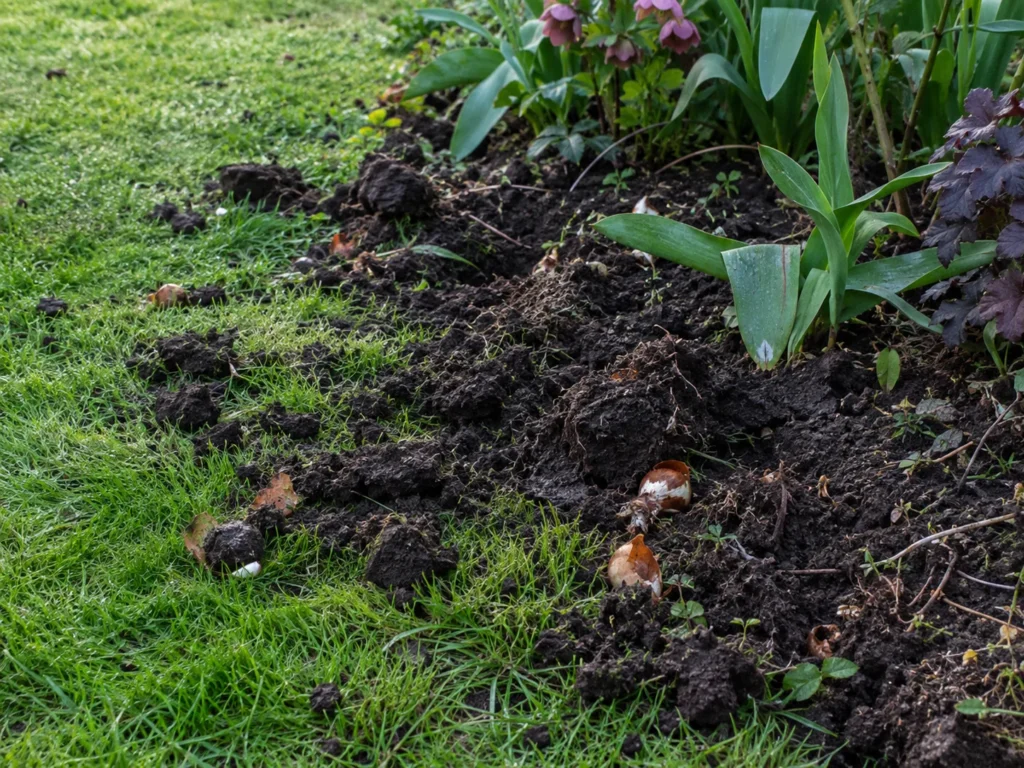
You know the morning. Kettle in your hand at the kitchen window, and something is digging in the exact spot where a bulb went in the day before yesterday.
So, do squirrels eat tulip bulbs. Yes, they do, and tulips are close to the top of the list. A tulip bulb is starchy, mild and moist, with none of the bitter alkaloids that protect narcissus, and it usually sits shallow enough to reach with a few minutes of work. Some get eaten on the spot and some get carried off and reburied somewhere useless to you.
Why tulips get hit before anything else
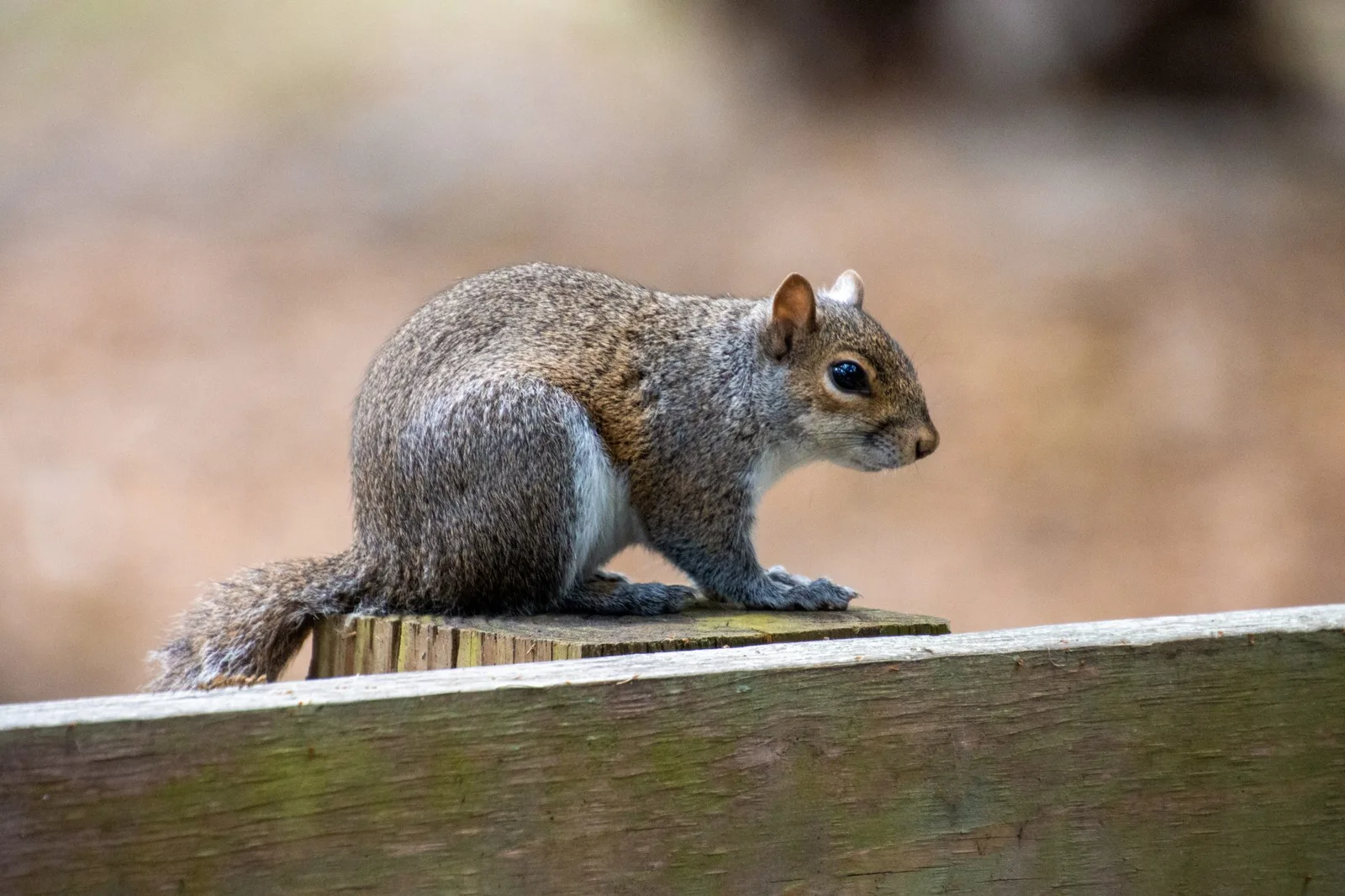
Autumn is caching season, and that is the first half of the answer to do squirrels eat tulip bulbs. A squirrel spends October burying food and checking every patch of loose soil that looks like a spot somebody else already used. A bed you turned over yesterday reads as both a larder and a lead, which is why a garden that was quiet all summer gets worked over in a single night.
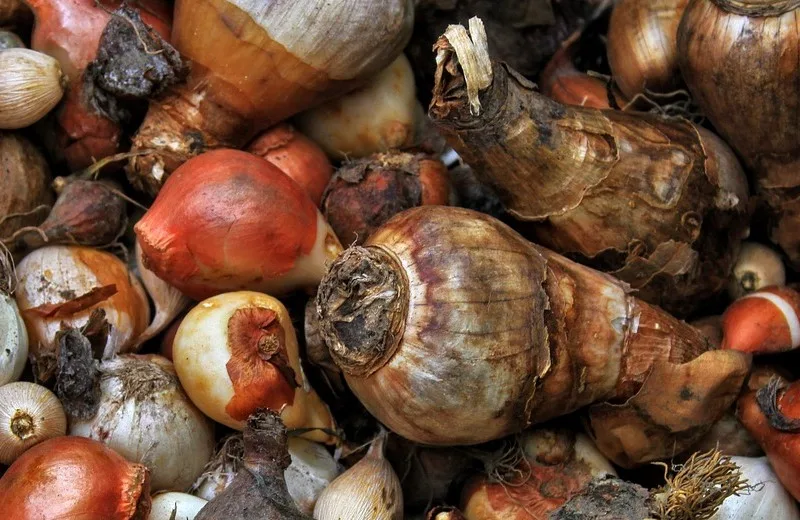
Then there is the taste. A tulip bulb is more or less a small parcel of starch and water. Narcissus carries lycorine, which is bitter and makes an animal feel unwell. Allium carries the sulphur compounds you smell when you cut an onion. Tulips carry nothing that puts an animal off, so there is no lesson learned and no reason to stop.
Depth is the third piece. Tulips are usually planted around 15 to 20 cm deep, which is well within reach, and the soil above a fresh planting is loose for weeks. Bulbs planted in September into warm ground stay findable for longer than bulbs planted into cold October soil that settles fast.
Do squirrels eat tulip bulbs, or bury them somewhere else?
Both, and when people ask do squirrels eat tulip bulbs, the split matters. Some bulbs get chewed on the spot and you find the skins on the lawn. Others get carried a few metres and reburied, which is why people sometimes get a single stray tulip flowering in the middle of the lawn in April while the bed itself has gaps.
For your purposes it hardly matters which of the two is happening, because the outcome is the same. A bulb that has been lifted, dropped and reburied at the wrong depth rarely gives you the flower you paid attention to when you chose it.
Which other bulbs are at risk?
Large Dutch crocus, technically corms rather than bulbs, gets taken just as readily. Lily bulbs. Some hyacinth in a bad year, though oxalate crystals put most animals off. Narcissus, allium, fritillaria, muscari, snowdrop and leucojum are the groups that get left alone, and that gap is the basis of a bed that comes up whole.
Is it squirrels, or something else digging?
Squirrels dig neat conical holes, usually five to ten centimetres across, and they scatter soil in a fan across the path or lawn. Voles work underground and leave the surface intact, so you find missing plants in spring with no holes. Skunks and raccoons tear wider, messier strips while hunting grubs.
What actually works, in order of effort
If do squirrels eat tulip bulbs is your question, choosing what to plant is the first lever and the easiest one. If most of the bed is narcissus, allium and small blue bulbs, and tulips are the smaller part you accept as replaceable, the whole problem shrinks to something you stop thinking about. There is a full breakdown in our guide to the spring bulbs squirrels leave alone.
The second lever is how you finish the planting, and it changes the answer to do squirrels eat tulip bulbs in your own garden more than people expect. Firm the soil back down hard with the flat of your hand, water once so the surface knits, and pick up every papery skin you dropped while you worked. Loose crumbly soil and a bulb skin on the path are an advertisement.
The third is a physical barrier, and it is the only thing that reliably protects tulips specifically. Metal mesh laid flat over the bed and pegged down at every edge works, and loose wire on the surface does not. We wrote that side up properly in our guide to stopping squirrels digging up bulbs, so it is worth reading before you buy anything.
One thing that does not work, and people try it every year, is ringing tulips with daffodils. A daffodil in the next hole does not hide the smell of disturbed soil. The squirrel takes the tulip and leaves the daffodil standing beside it.
Should you give up on tulips?
No, and I would not. Plant them if you love them, whatever the squirrels on your street turn out to do with tulip bulbs. The change worth making is knowing which half of the bed you are replanting every few years and which half you are done with. Tulips are the replanting half in most Canadian gardens.
That is what the narcissus and allium mix we set aside for beds like this is for. Narcissus Tete a Tete and Jetfire open first, muscari fills in through April, allium Purple Sensation holds the bed through May, and leucojum takes the damp corner where most bulbs sulk. Put those in the ground and the bed you planted in October is the bed you get in March.
Planting time matters more than you think
Timing shifts the answer to do squirrels eat tulip bulbs, because a tulip that goes in early, into ground that is still warm, sits in loose soil for weeks and gets found. A tulip that goes in once the soil has cooled roots quickly and the bed settles. If you are unsure when your ground is ready, we set out the timing zone by zone across Canada, including the spade test that beats any calendar date.
Come March, the reward for all this is pleasantly boring. You walk out with a coffee and count what came up instead of counting what is missing.
Our bulbs land here in small lots and we cannot reorder a variety once the season is running, so the varieties that go quickly are simply gone for the year. Reserving now means your packs are set aside under your name and checked by hand before they leave, instead of being picked over on a shelf in late October. If you want to look through what we grouped into the squirrel resistant collection, it is all there to read at your own pace.
If you would rather watch than read, Darrell covers the sun and shade mistake that costs people their tulips in a short video on our channel.
The real cost behind do squirrels eat tulip bulbs
Add the whole thing up and the bulbs are the smallest line in it. There is the Saturday you spent planting, the compost you dug in, the sore knees, then a second afternoon in November putting replacements into the same holes. Most people who ask do squirrels eat tulip bulbs are asking after the second time.
Then there is the fortnight of watching. Every morning you check the window to see whether the soil has been turned over in the night. People try pepper, hair, coffee grounds and mesh, and the rain here takes most of it off within a week. It is a low grade nuisance that takes the pleasure out of a job you were looking forward to.
March is where it actually lands. The front bed is the part of your garden that other people see, and it is what you point at when a neighbour stops at the gate. A bed with gaps in it is the one you explain away. A bed that came up whole is the one somebody asks you about.
So we choose stock for beds like yours rather than for the prettiest catalogue page. The mix is built on narcissus, allium, muscari and leucojum, the groups that get left alone. Each bulb is checked at the neck for softness and mould before it is packed. Darrell has more than 25 years of hands on gardening and landscaping behind him.
Answer do squirrels eat tulip bulbs by changing what goes in the ground, and next March you walk out with a coffee and count what came up. Answer it by fighting the animal and you may be doing the same repair every autumn for years.
Frequently asked questions
Do squirrels eat tulip bulbs after they have started growing?
The main risk is in the first few weeks after planting, while the soil is loose and fresh. Once the ground has cooled and the bulbs have rooted, the digging mostly stops. In spring squirrels are more interested in the shoots and the flower buds, and rabbits and deer usually do more damage at that stage than squirrels do.
Will a tulip still flower if a squirrel dug it up and I put it back?
Often yes, as long as the bulb itself is not chewed and the basal plate at the bottom is undamaged. Replant it at the same depth, firm the soil down and water it once. A bulb that is soft, split or missing a chunk is not worth putting back, because it is more likely to rot than to flower.
Are tulips in pots safer than tulips in the ground?
Usually less safe. A pot is a small target with soft soil and no lawn to cross. If you want tulips in a container, cut a piece of mesh to sit on the soil surface inside the rim and lift it off when the shoots appear. Narcissus and muscari in the same pot need no protection at all.
Do coffee grounds or dog hair keep squirrels off tulip bulbs?
Not for long. Both work on smell, and smell washes out in the rain that arrives here every October. Chilli based products last a little longer and need reapplying after every downpour. They are fine as a short term cover over a new tulip bed, but they are not something to build a whole spring garden around.
DH Garden Centre
3742 West 10th Avenue, Vancouver, BC V6R 2G4
Open daily, 11:00 to 18:30
604-929-7335
If you are in Kitsilano and you lost half a bed last autumn, come by and tell us what you planted and where. Five minutes with somebody who has seen the same thing in a hundred gardens saves you a season of guessing.
Keep reading
Have a plant question? Bring it to the counter.
DH Garden Centre is at 3742 West 10th Avenue in Kitsilano, Vancouver, open 11:00 to 6:30 every day. Bring the plant, or a photo of the spot you want to fill, and we will look at it with you. If you buy a pot here we repot the plant at the counter, soil included up to 5 litres.
