
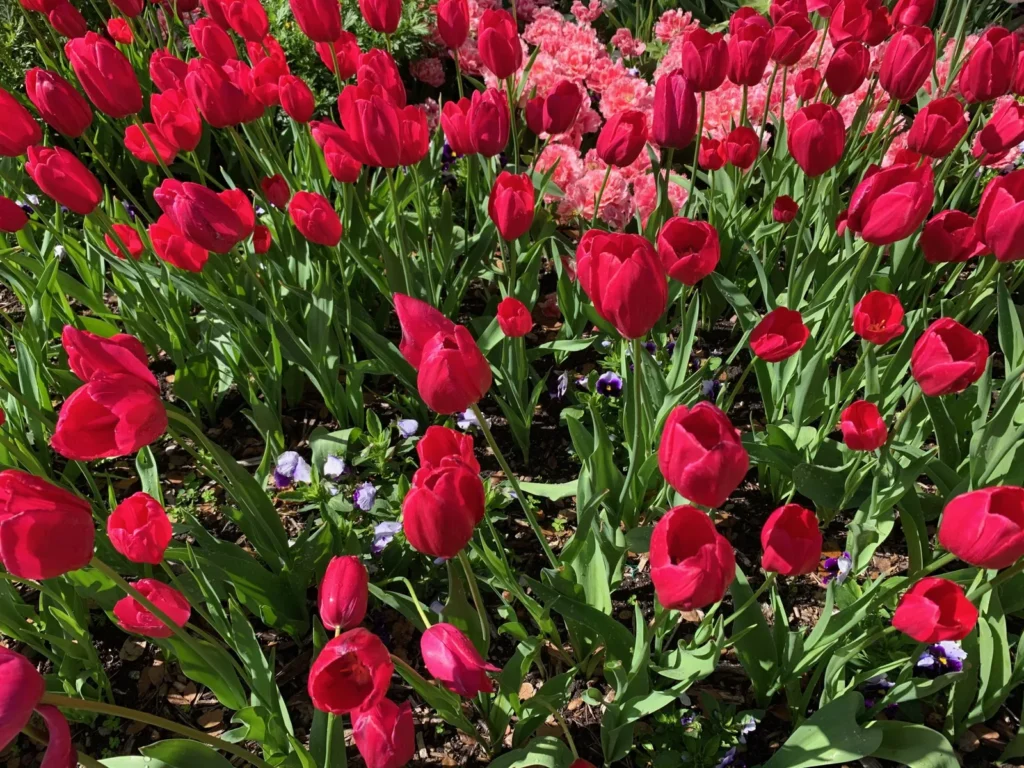
You did everything the packet said. They were spectacular the first April, decent the second, and this year the tulips did not come back beyond a row of floppy green leaves and one flower at the end that looked embarrassed to be there.
Tulips did not come back for a lot of people this spring, and in most cases it is not something you did.
Short answer: if your tulips did not come back, the most common reason is the tulips themselves. Modern hybrid tulips are bred for one outstanding first spring and they decline after that. The fixable causes, in order, are shallow planting, wet ground, foliage removed too early, rodents, and shade.
Six reasons the tulips did not come back
If your tulips did not come back, work down this list in order. The reasons at the top account for most of the cases we hear at the counter when tulips did not come back, and the ones lower down are real but less common.
1. They were hybrids bred for one big spring
This is the answer most of the time when tulips did not come back. The large glossy tulips in catalogue photographs were selected for the size and colour of the first flower, and that breeding costs the bulb its ability to rebuild itself fully after blooming. Instead of remaking one fat bulb, it splits into several small offsets, and an offset below a certain size makes leaves and no flower.
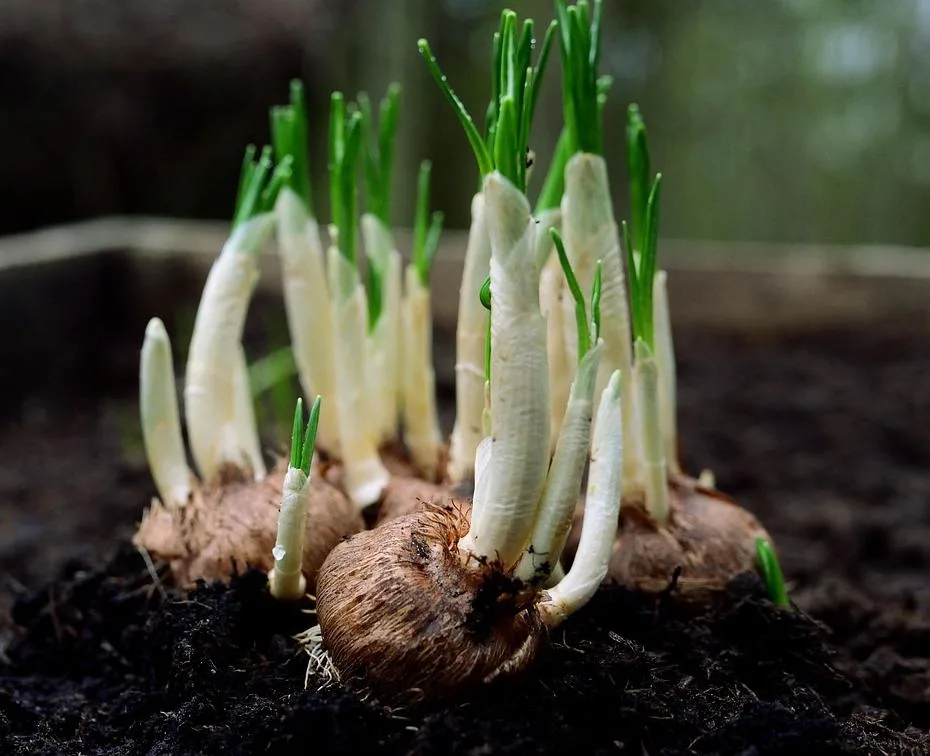
There is a geography reason on top of the breeding one. Wild tulips come from the dry steppes of central Asia, where the dormant bulb bakes hard and dry all summer. A watered Canadian bed, or a coastal garden that never really dries out, does not give them that ripening period.
2. They were planted too shallow
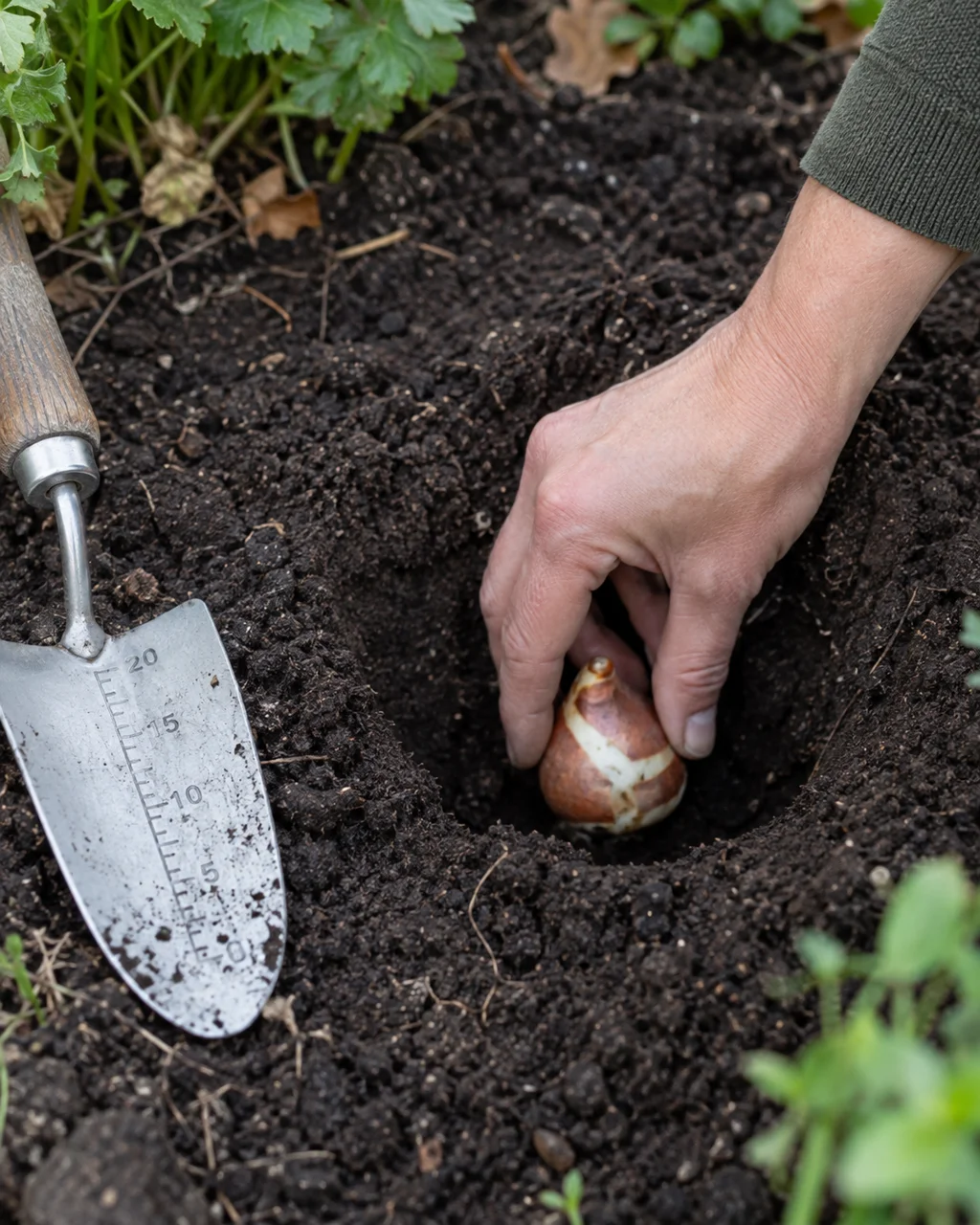
A tulip bulb wants roughly 15 cm (6 in) of soil above it, and around 20 cm (8 in) if you would rather not be asking next April why the tulips did not come back. Most people plant at the depth a trowel naturally makes, which is closer to 8 or 10 cm.
Shallow bulbs run hotter and drier in summer, get heaved by freeze and thaw cycles, split into offsets faster, and sit right where a squirrel can smell them. Depth is the simplest thing you can change this autumn if the tulips did not come back.
3. The ground stayed wet through winter
Tulips rot in soil that stays saturated. It happens silently, underground, and you get no warning at all, just an empty patch in April and no idea why the tulips did not come back. Heavy clay, a low corner of the garden, a bed at the bottom of a downspout, or a pot with a blocked drainage hole will all do it.
If your beds are heavy, improving the drainage in that clay soil matters more than anything you buy in a bag. Coarse compost worked in, or simply raising the bed a few inches, changes the result.
4. The leaves were cut off too early
The foliage after flowering is not leftover mess, it is the bulb charging itself for next year, and cutting it green is one of the commonest reasons people find the tulips did not come back. Cut it back while it is still green, mow it off in the lawn, or tie it into those neat little knots people used to do, and the bulb goes into summer underfed.
Leave the leaves until they yellow and pull away easily, which is usually about six weeks after the flower finishes. Do deadhead the spent flower itself, so the plant is not putting the season into making seed.
5. Something ate them
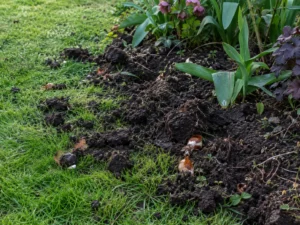
Squirrels dig freshly planted bulbs in autumn, drawn by the smell of disturbed soil as much as by the bulb. Voles work underground through winter and eat bulbs from below, leaving nothing to see at all. A tulip is a food item to both of them, unlike narcissus, which is toxic to rodents and gets ignored.
If you suspect this one, the signs are usually a shallow scrape with the bulb gone, or a bulb that has simply vanished with the soil undisturbed. Our guide to stopping squirrels digging up bulbs covers what actually holds them off.
6. The spot got shadier than it used to be
Gardens change slowly enough that you stop noticing. A hedge put on two feet, a neighbour’s maple filled out, a fence went up. Tulips need full sun to build a flowering sized bulb, and a bed that was sunny when you planted it five years ago may now be getting half the light it did.
A large tree in the same bed makes it worse in a second way. It takes the water and the feed first, and whatever is planted underneath gets what is left.
Why did my tulips come up blind, with leaves but no flowers?
Blind tulips mean the bulb did not reach flowering size. That happens when the bulb split into small offsets, when the leaves came off before it could recharge, or when the plant sat too shallow or too shaded last summer. The plant is alive and cannot afford a flower.
Occasionally an offset will catch up if you leave it alone in good conditions for a season or two, feed the bed with a balanced fertiliser in early spring, and let the leaves run their course. More often it stays blind. If a whole patch has gone blind at once, that is the hybrid decline pattern rather than anything local to your garden.
Can I get the tulips I already have to come back next year?
Sometimes. Deadhead as soon as the petals drop, leave every leaf until it yellows off, feed the bed in early spring, and stop watering that spot once the foliage dies down so the bulbs get a dry summer. If drainage is the problem, lift them in summer, store them dry, and replant deeper in autumn.
Be realistic about what that buys you. Good aftercare stretches a hybrid tulip by a season or two. It will not turn a variety bred for one spectacular spring into a permanent planting.
What to plant if you want them back
If a returning display matters more than one perfect first April, two groups do the job.
Darwin Hybrid tulips. Big, tall, classic tulip shape, and considerably more persistent than the ordinary display hybrids. Give them full sun, sharp drainage and 20 cm of depth and they keep going for several springs rather than one.
Species tulips, sometimes sold as botanical tulips. Tulipa tarda, clusiana, turkestanica, sylvestris. Small, early, tough, and in a hot dry spot they return and slowly spread.
Everything else in the spring bulb world is easier than tulips on this front. Narcissus, muscari, alliums, crocus and camassia all come back and multiply, and most of them are ignored by rodents into the bargain. The full head to head is in our comparison of tulips vs daffodils and which one comes back.
If you want height that returns without any of this argument, the tall bulbs we grouped for the back of a border are alliums and eremurus, which stand above everything else in May and come back wider each year.
Do the replanting this autumn, not next spring
Whatever the reason your tulips did not come back, the repair happens in October, not in April when you notice the problem. Plant deeper than feels natural, pick a spot that drains and gets sun, and choose varieties that suit the job you are asking of them. Our zone by zone guide to when tulip bulbs go in has the dates from the coast through to the prairies.
Then next spring you get flowers where you had leaves, and the year after that you still do.
Our bulbs come in small lots and we cannot reorder partway through the season, so what arrives in the crates is what there is. Putting your name on packs now holds them on better terms than waiting until they are out on the shelf, and the deadline that matters is not one we set, it is the ground freezing in late autumn. If you want to see what we chose for cold ground and tall spring colour, heights and bloom windows are listed beside each pack.
If you would rather watch than read, Darrell covers why the leaves have to yellow before you touch them in a short video on our channel.
What it costs when tulips did not come back
When tulips did not come back, the bulbs are the smallest part of the bill. There is the bed you planned around them, the afternoon in October, the second lot you bought to fill the gaps, and then the same result the following April. People often replace the bulbs twice before anybody tells them that hybrid decline is normal behaviour rather than a mistake in their care.
The worse part is not knowing which of six things went wrong. You search, every page offers a different single answer, so you correct one thing at a time and wait a year to see whether it worked. Blind tulips give you no information at all, just leaves, which is a slow way to learn anything.
It is also a public failure, in a small way. A front bed is seen by everybody who walks past, and the person who admired it two springs ago will ask why the tulips did not come back. If you planted it with somebody, the empty version is harder than it should be.
We can be straight with you about which part is fixable. Darrell has more than 25 years of hands on gardening and landscaping and has seen all six of these more than once, and it is usually possible to tell from the leaves alone whether you are looking at hybrid decline, shallow planting or a shade problem. Packs are checked by hand before they go out. Spoken for early is on better terms than picked off the shelf later.
Fix the depth, the drainage and the variety this autumn and next April is usually flowers rather than foliage. Repeat the same planting and you will be saying the tulips did not come back again next April.
Frequently asked questions
How many years should tulips last before they stop flowering?
Expect one strong spring, a good second and a thinner third from most display hybrids. Light, free draining soil in full sun stretches that. Darwin Hybrids and species tulips run considerably longer, often five years or more in the right spot. If your tulips did not come back after two springs, that is normal behaviour rather than a mistake in your care.
Should I dig up tulip bulbs after they finish flowering?
Only if the bed stays wet in summer, or if you need the space for annuals. Otherwise leave them. If you do lift them, wait until the foliage has yellowed, dry them in a shaded airy place, remove loose soil, store them somewhere cool and dry and replant in autumn. Wet storage is what ruins lifted bulbs.
Will fertiliser bring blind tulips back?
It helps a little and it will not perform miracles. Use a balanced granular fertiliser or bone meal worked into the bed in early spring as shoots appear, and again after flowering. Feeding supports a bulb that is close to flowering size. It cannot rebuild an offset that is far too small, or reverse the breeding in a display hybrid.
Are tulips in pots more likely to fail?
Yes, on both counts that matter. Pots swing further between wet and frozen than open ground does, and a blocked drainage hole rots the bulbs quickly. Most gardeners treat potted tulips as a one season display and replant fresh bulbs each autumn, which is honest about how they actually behave.
Come and see us in Kitsilano
Bring a photograph of the bed if you like. It is usually possible to tell from the leaves alone whether you are looking at hybrid decline, shallow planting or a shade problem. Darrell has been working on Vancouver gardens for more than twenty five years and he has seen all six of these more than once.
DH Garden Centre
3742 West 10th Avenue, Vancouver, BC V6R 2G4
Open daily, 11:00 to 18:30
604-929-7335
Keep reading
Have a plant question? Bring it to the counter.
DH Garden Centre is at 3742 West 10th Avenue in Kitsilano, Vancouver, open 11:00 to 6:30 every day. Bring the plant, or a photo of the spot you want to fill, and we will look at it with you. If you buy a pot here we repot the plant at the counter, soil included up to 5 litres.
