
Discover the five most damaging bonsai beginner mistakes and how to avoid these common bonsai mistakes. A complete expert guide for beginners who want healthier, stronger, long-lasting bonsai trees.
Bonsai is one of the most rewarding yet humbling forms of horticulture. Every new grower begins with excitement, inspiration, and the dream of crafting a miniature masterpiece. But the reality is less glamorous: bonsai demands patience, timing, discipline, and an understanding of how trees respond to stress.
In this guide, we dive deep into the five bonsai beginner mistakes that almost every newcomer makes. These common bonsai mistakes often lead to weakened trees, stalled growth, and in many cases, the death of what could have been a stunning bonsai with years of potential.
This expert breakdown ensures you skip the painful learning curve and start with a strong foundation, saving your trees, your time, and your enthusiasm.
1. Repotting Bonsai at the Wrong Time
(bonsai beginner mistakes, common bonsai mistakes)
One of the most destructive bonsai beginner mistakes is repotting a tree at the wrong time. Many beginners receive a tree in a nursery pot and immediately want to transfer it into a bonsai pot because it “looks more like a bonsai.” The intention is good, but the timing is disastrous.
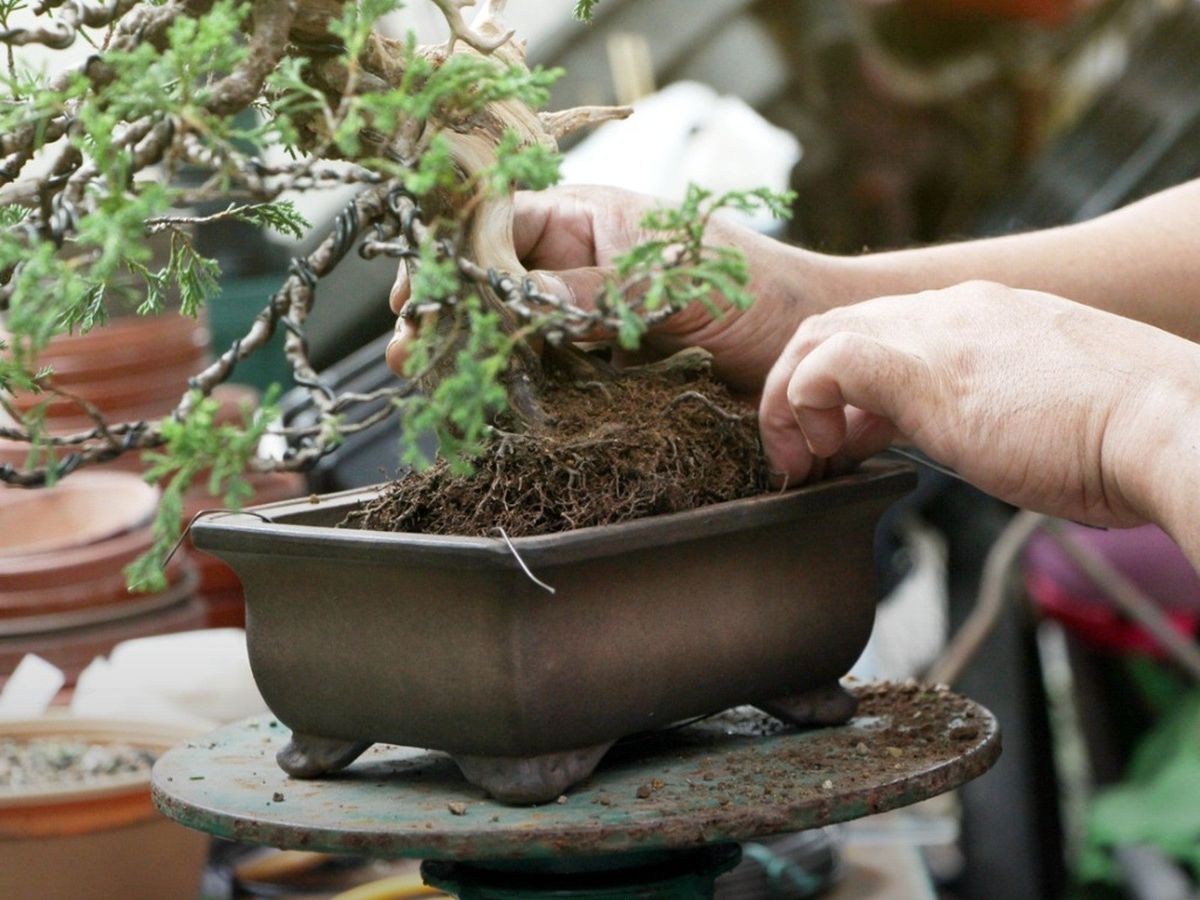
Why timing matters
Trees operate in seasonal cycles. Repotting outside the correct window interrupts their natural rhythm and exposes them to severe stress.
Ideal repotting time:
• Early spring
• When buds begin to swell
• Before leaves fully open
This is when the tree’s energy is rising, root tips are preparing for growth, and recovery is fastest.
What happens when you repot in summer?
• Heat stress intensifies shock
• Roots fail to regenerate
• Soil dries too quickly
• Leaves wilt and drop
• Tree collapses within days
Repotting during the heat of summer, especially after aggressive root pruning, is one of the leading causes of sudden bonsai death.
Use proper bonsai soil
A common bonsai mistake is using regular garden soil or potting mix. These soils:
• Retain too much water
• Become compacted
• Suffocate roots
• Cause rot
A proper bonsai mix (akadama, pumice, lava rock) ensures oxygen flow and drainage.
2. Pruning Too Much, Too Fast, or at the Wrong Time
Beginners often get excited when shaping their tree and jump straight into heavy pruning. But pruning is surgery. Done carelessly, it invites disease, stress, and irreversible decline.
The dangers of excessive pruning
Large cuts expose the tree to bacterial infections. Without wound sealant, sap loss increases, and the tree becomes vulnerable to rot and dehydration.
Signs your tree is stressed from over-pruning
• Yellowing leaves
• Weak new growth
• Sudden leaf drop
• Slow recovery
• Dieback on branches
Pruning in the middle of summer, when heat and dehydration are already challenges makes the problem worse.
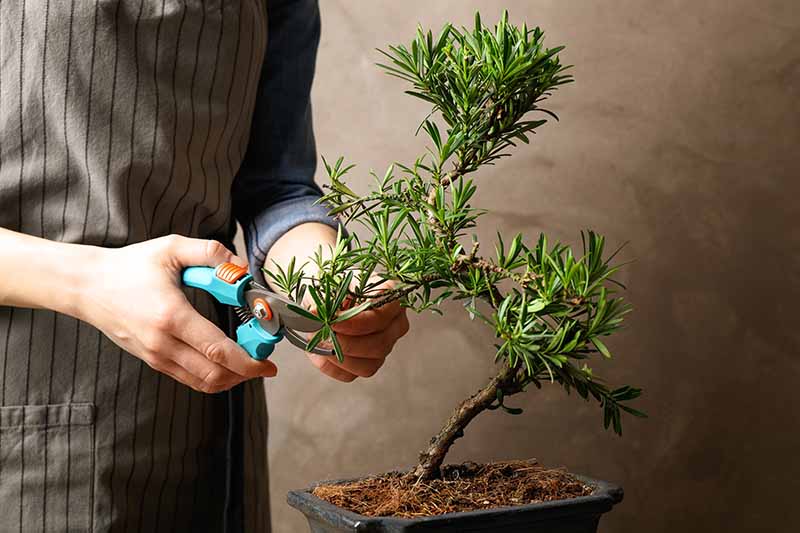
Correct pruning strategy
• Remove small amounts at a time
• Perform structural pruning in early spring or late winter
• Always seal large cuts
• Know the species (some back-bud better than others)
This alone eliminates a major portion of common bonsai mistakes committed by beginners.
3. Overwatering and Underwatering: The Most Confusing Bonsai Beginner Mistake
Watering sounds simple but bonsai watering is an art. Too much water suffocates the roots. Too little water dehydrates the tree. Most beginners swing between both extremes.
Why overwatering is deadly
• Roots sit in stagnant moisture
• Oxygen cannot reach the root system
• Fungal spores multiply
• Root rot develops
• Tree begins declining from the bottom up
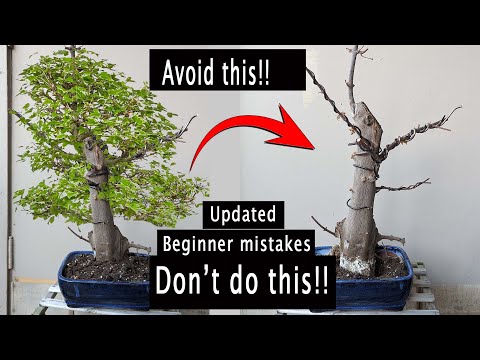
Sadly, beginners often believe they’re “taking care” of the plant by watering daily. In reality, they are drowning it.
How to check moisture correctly
Insert a finger 1–2 inches into the soil:
• If moist → do not water
• If slightly damp → wait
• If dry → water deeply
Your climate dictates how often watering is needed.
• Humid areas = water less
• Hot, dry climates = water more
Watering by “schedule” is a common bonsai mistake. Water by condition, not by habit.
4. Keeping Your Tree in a Tiny Pot (Stick-in-a-Pot Syndrome)
This mistake deserves its own category because it ruins long-term development.
Beginners often buy a tiny seedling in a small pot and assume that simply placing it into a bonsai pot will magically turn it into a mature bonsai.
Reality check:
A bonsai becomes big and beautiful before it ever sits in a bonsai pot.
If a young tree stays in a tiny pot:
• The trunk cannot thicken
• The roots cannot expand
• Growth becomes stunted
• The tree remains stick-like for years
This is why experienced growers train bonsai in large nursery pots first, allowing roots and trunk girth to develop for several years.
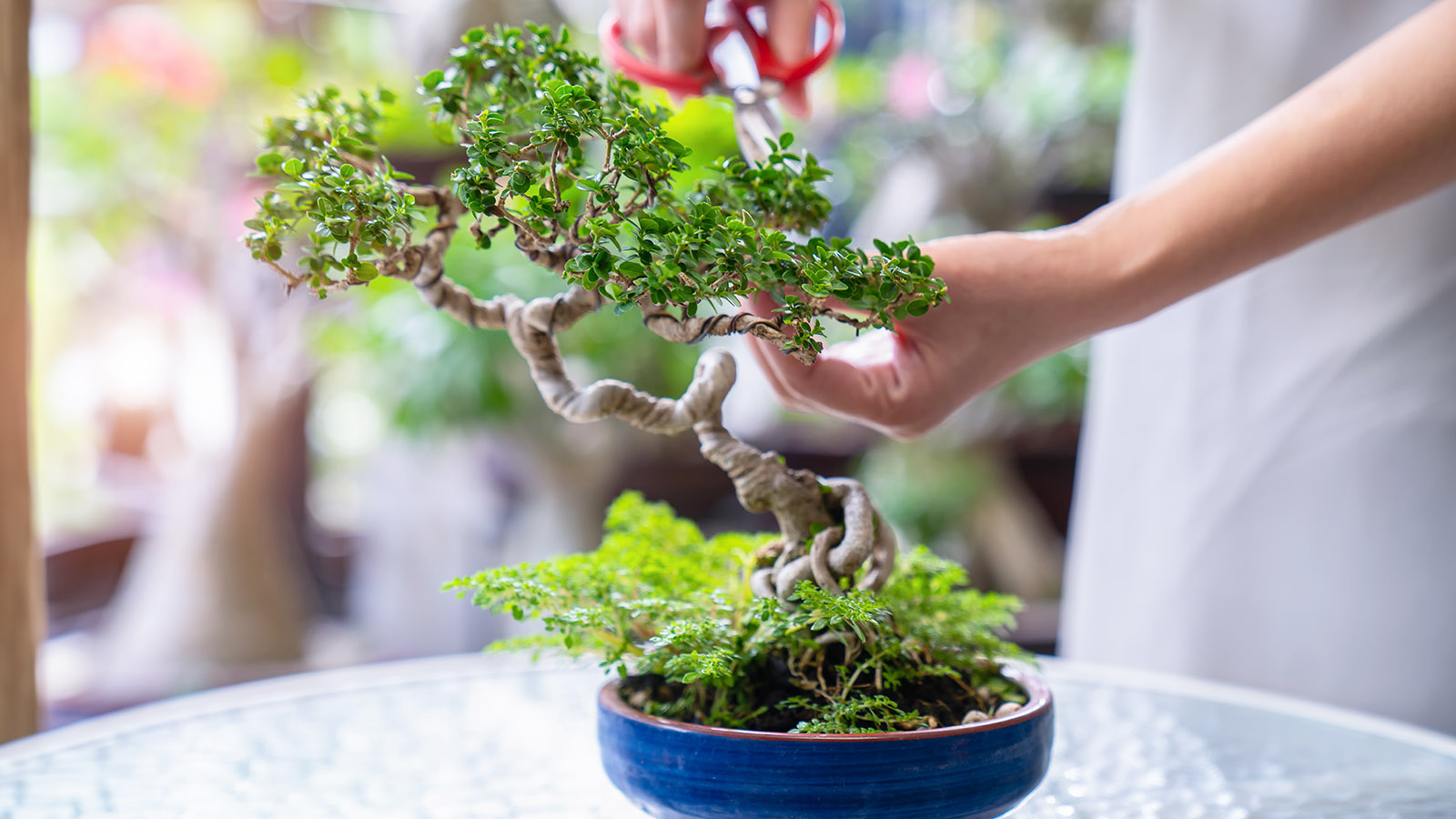
Training sequence for proper bonsai development
-
Young seedling → larger nursery pot
-
Grow out the trunk
-
Expand the root system
-
Increase pot size gradually
-
Only move to a bonsai pot when the structure is established
Skipping this stage ensures your bonsai forever remains a “stick in a pot” , one of the most universal bonsai beginner mistakes.
5. Placing the Bonsai in the Wrong Location (Killer Mistake)
Light is the lifeblood of bonsai. Putting an outdoor tree indoors is often a death sentence.
The most common location mistakes
• Keeping a juniper indoors
• Placing an outdoor species on a dark shelf
• Giving insufficient sunlight
• Ignoring seasonal light changes
• Assuming grow lights can replace real sunlight
Most bonsai are outdoor species. They require:
• Direct sunlight
• Wind exposure
• Seasonal temperature changes
Indoor bonsai exist, but even they need bright windows or strong grow lights to survive.
How to choose the right location
• Junipers, pines, maples → outdoor only
• Tropicals (ficus, jade, serissa) → indoors with light
• Shade-tolerant species → filtered light
Failing to match species to environment is one of the deadliest common bonsai mistakes beginners make.
Why These Bonsai Beginner Mistakes Matter
Each mistake comes down to one root cause: impatience.
Bonsai is slow horticulture. Trees grow on their own schedule, not ours.
Avoiding these mistakes sets the foundation for:
• Stronger trees
• Faster development
• Fewer losses
• Better design results
• Long-term enjoyment
Your bonsai journey becomes smoother, more educational, and more deeply satisfying.
If you’re starting your bonsai journey and want to avoid wasting years on preventable errors, make sure you:
• Learn your species’ seasonal cycle
• Repot only at the right time
• Prune strategically
• Water intelligently
• Match tree to environment
Mastering these fundamentals separates frustrated beginners from successful bonsai artists.
Want more guides like this?
Reach out, subscribe, or explore our upcoming advanced bonsai tutorials to elevate your skillset.
FAQ: Bonsai Beginner Mistakes
1. What is the most common bonsai beginner mistake?
Overwatering and repotting at the wrong time are the top causes of bonsai failure.
2. Can you prune bonsai in summer?
Light pruning is acceptable, but heavy structural pruning should be done in early spring or late winter.
3. Why did my bonsai die after repotting?
Likely due to repotting outside the correct window (summer or fall), removing too many roots, or using the wrong soil.
4. Can a bonsai live indoors?
Only tropical species thrive indoors. Outdoor species will weaken and eventually die if kept inside long-term.
5. How do I thicken a bonsai trunk?
Grow the tree in a larger nursery pot for several years before placing it into a bonsai pot.
6. How often should I water my bonsai?
Water when the soil is dry, not by schedule. Climate and soil type determine the frequent.

Whether you’re shopping for plant lovers, hunting for meaningful plants, or simply looking to add a touch of green to your own holiday décor, DH Garden Centre has everything you need for a joyful, vibrant, and beautifully green Christmas.
Visit DH Garden Centre today: where the holidays grow brighter, one plant at a time.
