
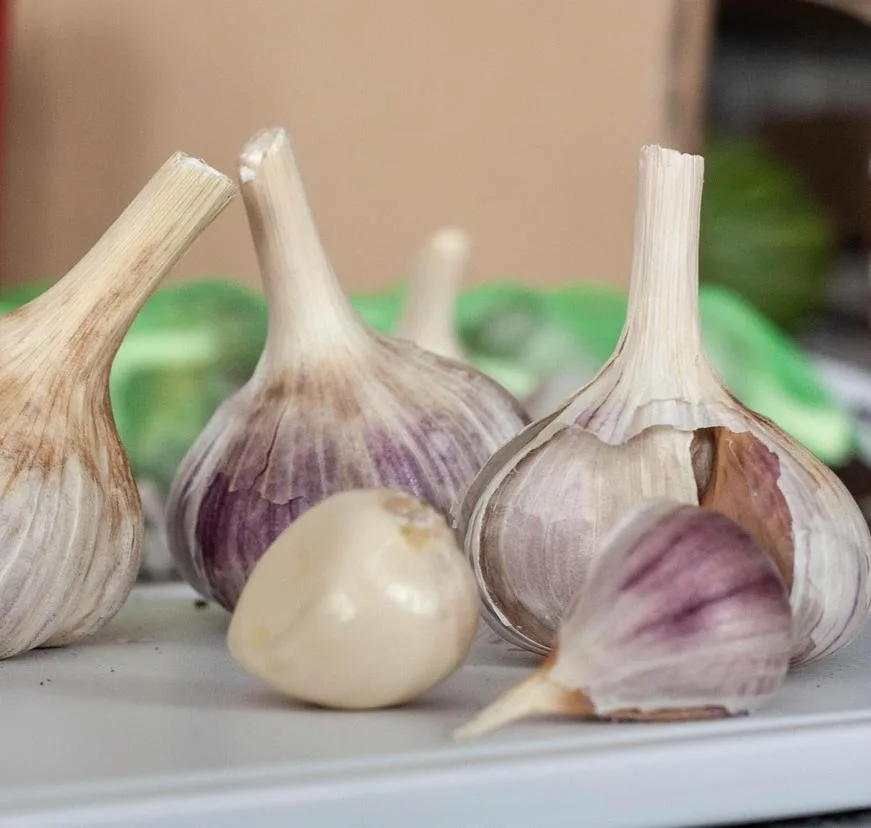
Most people crack the heads open a week before planting, tip everything into one bowl with no thought for garlic clove size, and plant the lot.
Then in July half the row comes up small, and garlic clove size is the reason nobody thinks of.
Does garlic clove size matter?
Yes, and it is one of the few things in the garden with a fairly direct line from cause to effect. Garlic clove size in October largely decides head size the following July. A big clove carries more stored food and puts out a bigger root system, so it builds a bigger bulb.
A small clove usually gives you a small head, which is the whole garlic clove size argument in one line. Same bed, same watering, same day of harvest.
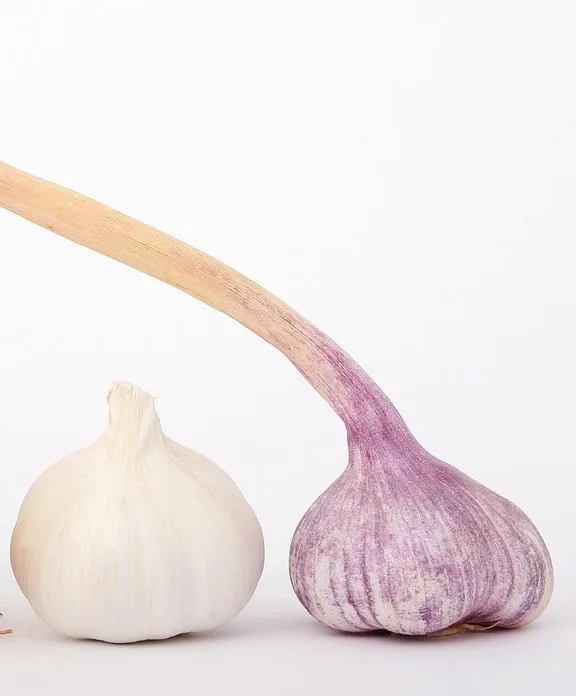
I am Darrell, and I have grown garlic in Vancouver for over twenty five years. Sorting by garlic clove size is the step I see skipped most often, and it costs nothing to do properly. It takes about ten minutes at the kitchen table.
What is actually happening inside the clove
A clove is a storage organ, so garlic clove size is really a measure of how much is stored in it. Everything the plant needs to get going, before it has a single root in the soil, is packed in there already.
Through the autumn and winter that stored food funds root growth. A larger clove funds more roots. By the time spring arrives and the plant starts building leaves, the big clove is working from a wider base and can pull more water and nutrients out of the ground. Come July, that shows up as a heavier head with more cloves in it.
It is not a strict rule. Soil, weeds, drainage and weather all get a vote. But if you sort by garlic clove size and plant a bed of large cloves next to a bed of small ones, the difference at harvest is not subtle.
Which cloves to plant and which to cook
Break each head apart on planting day and lay the cloves out so you can see the range in garlic clove size.
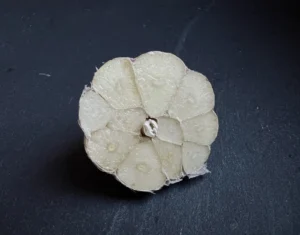
On a hardneck head the cloves sit in a single ring around the central stalk, and they are reasonably even. Even so, there will be a few noticeably fatter ones and usually one or two runts. Keep the fat outer cloves for the ground.
Softneck heads make the choice more obvious, because they carry layers. The outer ring is big, the inner cloves are small and fiddly, and those inner ones are not worth a spot in the bed.
Anything at the small end of the garlic clove size range goes in the kitchen. That is not a waste. It is the same garlic, and you were going to buy garlic to cook with anyway.
If you want to be exact about it, sort into three piles: large, medium and too small to bother. Plant the large ones in your best ground, plant the mediums at the end of the row where you will not mind if they come up modest, and cook the rest.
Should you break garlic heads apart before planting day?
Leave them whole until the day you plant, or the evening before at the earliest. The papery skin on each clove is what stops it drying out and what protects the base plate where the roots emerge. Cracked heads left sitting on a counter for a week lose moisture and start planting behind.
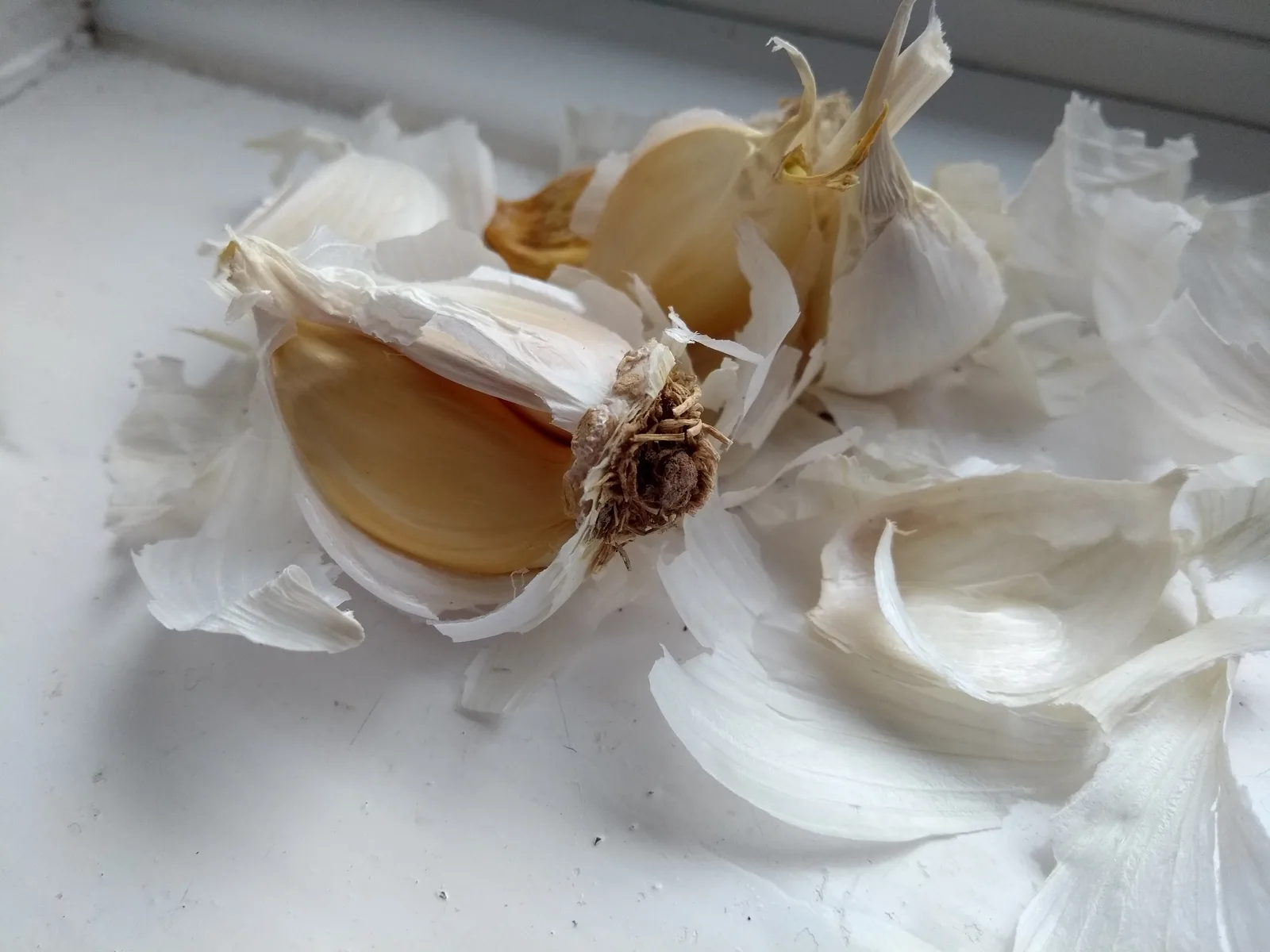
There is one more reason to wait. Once a head is broken up you lose track of which clove came from which bulb, and if you were planning to keep your strongest variety separate, that information is gone.
Handle the cloves gently while you are sorting. If the skin peels off one, plant that one anyway rather than throwing it out, but put it in the ground the same day.
What about the size of the whole bulb you buy?
This is where seed garlic differs from a supermarket head. Growers who sell garlic for planting grade their bulbs by size, and garlic clove size follows bulb size fairly closely, so a larger seed bulb has larger cloves inside it. That is the whole point of buying planting stock rather than eating stock.
Pick a bulb up. It should feel heavy for its size and firm the whole way round. Press gently at the shoulders. If it gives, that bulb has already started breaking down inside and the cloves in it will be soft. Turn it over and check the base plate is dry and hard rather than spongy.
We open every box by hand before anything is packed, and a soft bulb comes out at that point rather than turning up on your kitchen table. Nobody can run that check for you through a screen, which is why we order in small lots rather than having a warehouse ship straight to your door.
The hardneck varieties we picked for Canadian winters come as nine seed bulbs, which gives you enough large outer cloves for a small bed and leaves the small ones for the pan.
Where clove size does not save you
Sorting for garlic clove size will not rescue a bed that drains badly, and it will not fix garlic planted at the wrong time of year. It also will not do much if the cloves go in at the wrong depth for your zone, which is a separate job worth getting right. That one is covered in how deep to plant garlic across Canadian zones.
Nor will it help if the stock itself is the wrong type. Softneck garlic grown in a warm climate does not respond to a Canadian winter the way hardneck does, whatever size its cloves are. If you have not settled that yet, start with hardneck compared with softneck garlic.
Space is the other thing sorting cannot buy you. If your bed is already full, the small cloves are a good reason to run a pot instead, and growing garlic in containers works better than most people expect. Garlic is also one of the crops that fits neatly alongside the other fall vegetables you plant and then leave alone.
Save your own, and the sizes climb
Here is the part that makes garlic satisfying over a few years.
Garlic clove size compounds if you save your own stock. Come July, keep your biggest and healthiest heads back from the kitchen. Store them somewhere cool, dry and airy, and replant their outer cloves in October. You are selecting for size every single season, and the stock adapts to your particular soil at the same time.
Three or four years of that and your heads are noticeably better than the ones you started with. It costs you nothing except the discipline to put the best heads aside instead of eating them, which is harder than it sounds in August.
Next July, if you get this right
You will be lifting heads with a fork in the middle of July, brushing the soil off, and hanging them in the garage where the whole place smells of garlic for a week. In June, before that, you will have cut the curled scapes off the hardnecks and cooked them.
Seed garlic reaches us in small lots and there is no reordering a variety partway through the season, because the growers harvest once a year.
Have a look at the seed garlic we set aside for this planting window and pick the varieties that suit how you cook.
If you would rather watch than read, Darrell covers why the timing of your planting shows up in the size of the head in a short video on our channel.
What garlic clove size is quietly costing you
Nobody sends you an invoice for planting the runts. The cost of ignoring garlic clove size turns up in July, as a row of small heads that took the same nine months, the same weeding and the same bed as a row of big ones. You paid full price for the ground and got half the crop.
The mental cost is the part people underestimate. You did the work, you did not obviously do anything wrong, and the result is mediocre with no explanation attached. So you go looking, and the internet hands you twenty theories. Being unable to name what went wrong is worse than the small heads.
Then there is the bed you were going to be pleased with. Garlic ends up in other people’s kitchens more than most crops. Over the fence, into a jar with oil, home with a friend after dinner. A tray of marble sized heads is not something you hand anybody, so you keep them and say nothing.
The part we control, we do by hand. Seed garlic arrives in small lots, the boxes are opened on the bench, and every bulb is weighed in the hand and pressed at the shoulders before it is packed, because bulb size and garlic clove size run together. Darrell has more than 25 years of hands on gardening and landscaping behind him, and he has sorted a great many heads across a kitchen table.
Sort properly and you are lifting heavy heads next July, with your best ones set aside to plant again in October. Tip the whole bowl into the bed without looking and you may spend a season paying for ten minutes you did not take.
Frequently asked questions
Can I plant the small garlic cloves anyway?
You can, and they will grow. Expect small heads, or in some cases a single round bulb with no cloves in it at all. If bed space is tight, cook them instead. If you have room to spare, plant them close together in a corner and harvest them young as green garlic in spring, which is a good use for them.
How many cloves are in a head of hardneck garlic?
Usually four to eight, sitting in one ring around the central stalk. Softneck heads carry more, often ten to twenty, but arranged in layers with small inner cloves. That is why nine hardneck seed bulbs plant out to roughly forty to sixty usable cloves, depending on the variety and how strictly you sort them.
Does a bigger clove mean a longer time to harvest?
No. Garlic harvest timing is set by the season and your climate, not by the size of the clove you planted. Both a large and a small clove will be ready around the same time in July, when the lower leaves have gone yellow and brown. The large one is simply heavier when you lift it.
Do garlic rounds count as a failure?
Not entirely. A round is a single undivided bulb, usually the result of a small clove or a season without enough cold. Eat it, or replant it in autumn and it will normally divide properly the following year. Plenty of growers deliberately grow rounds from bulbils to build up a clean stock.
Come and pick one up
If you are near Kitsilano or anywhere on the Vancouver Westside, come in and hold a seed bulb next to a supermarket head. The weight difference makes the point about clove size faster than a thousand words of mine.
DH Garden Centre
3742 West 10th Avenue, Vancouver, BC V6R 2G4
Open daily, 11:00 to 18:30
604-929-7335
Keep reading
Have a plant question? Bring it to the counter.
DH Garden Centre is at 3742 West 10th Avenue in Kitsilano, Vancouver, open 11:00 to 6:30 every day. Bring the plant, or a photo of the spot you want to fill, and we will look at it with you. If you buy a pot here we repot the plant at the counter, soil included up to 5 litres.
