
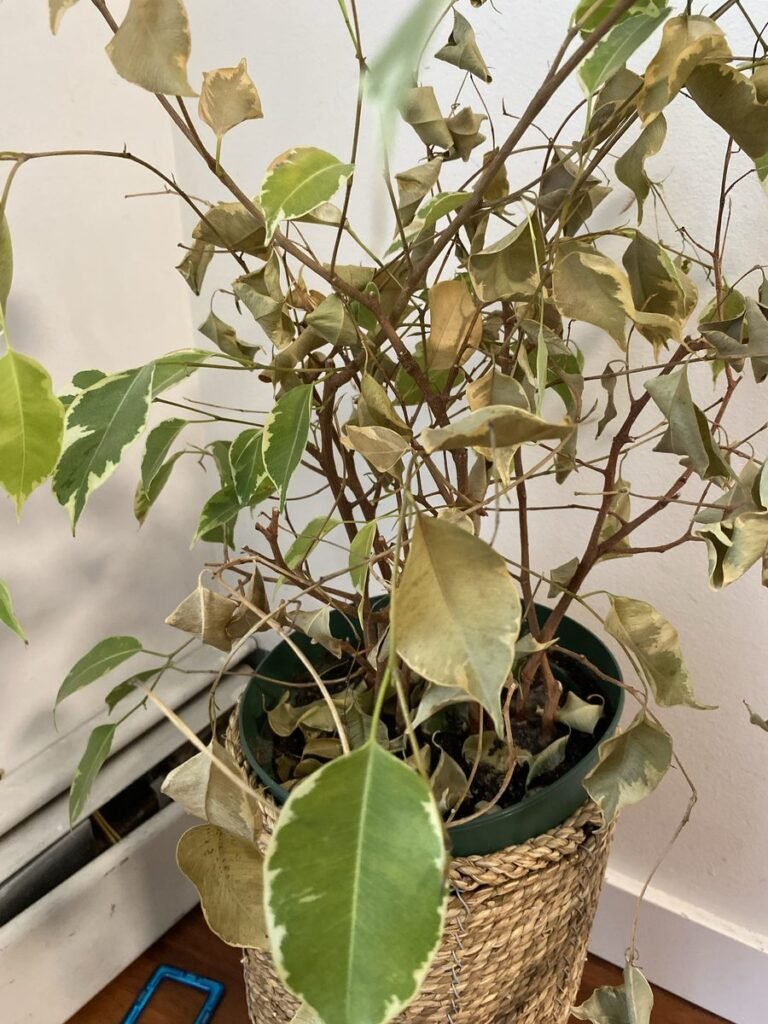
A customer emailed us a photo last week that we see versions of every winter. Her ficus was dropping leaves so fast that the pot looked like a forest floor. Almost every leaf left on the plant was pale or curled. She was ready to say goodbye to it.
A few days later she sent a second message: “A few days after I removed the old leaves like you suggested, new green shoots started to appear!”
If your ficus is dropping leaves right now, there is a very good chance it can do the same thing. Here is what we told her, and what twenty five years of looking at stressed ficus trees has taught us at the shop.
Why is my ficus dropping leaves?
A ficus drops leaves in response to sudden change. It is a survival reflex, not a death announcement. A move to a different light level, heat from a nearby vent, or soil that swings between bone dry and soaked can each trigger it. Remove the source of stress and keep conditions steady, and most ficus trees grow their leaves back.
The ficus in question here is Ficus benjamina, the weeping fig, and in our experience it is the most dramatic leaf dropper of any common houseplant. That drama works in your favour, though. A plant that reacts this fast to stress also responds fast to stability.
The 5 sudden changes that make a ficus drop its leaves
When someone brings a struggling ficus into the shop, we run down this list. One of these five is almost always the answer.
1. Low light to high light
A ficus that lived in a dim corner and suddenly lands in a bright window will shed the leaves it grew for low light and start over. The plant is not failing. It is rebuilding its leaves for the new conditions. It just looks terrible while it happens.
2. High light to low light
The same thing in reverse. Moving a ficus from a bright spot to a dark one, even for a few weeks in a garage or a hallway, tells the plant to let go of leaves it can no longer feed.
3. Heat from a heater or vent
This was the trigger in our customer’s photo. Her ficus sat right beside a baseboard heater. The warm, dry air pulls moisture out of the leaves faster than the roots can replace it, and the constant temperature swings read as one long emergency to the plant. In Vancouver homes, where heaters run half the year against big cool windows, this is the trigger we see most.
4. Soil drying out too far between waterings
A ficus likes the top quarter of the pot to dry out, and no more. When the whole root ball dries, the plant cuts its losses and drops foliage. If the pot feels feather light when you lift it, this is your cause.
5. Soil that never dries at all
Constantly wet soil suffocates roots, and dying roots cannot support a full head of leaves. This one is sneakier because the plant above the soil looks thirsty, so it gets watered even more. If the soil smells sour or stays dark and heavy for a week or more, stop watering, not the opposite.
A real rescue from our inbox
Back to our customer’s tree. It had two of the five triggers going at once: heat from the baseboard heater, and old leaves the plant was still spending energy on.
The advice we sent her was short:
- Scratch the bark lightly with a fingernail. Green underneath means the branch is alive. Brown means trim that branch back until you find green.
- Remove the leaves that are already gone, so the plant stops wasting energy on them.
- Move the plant away from the heater into steady, bright, indirect light, and then do not move it again.
- Water with lukewarm water, only when the top quarter of the soil feels dry. Cold water on warm roots is one more shock the plant does not need.
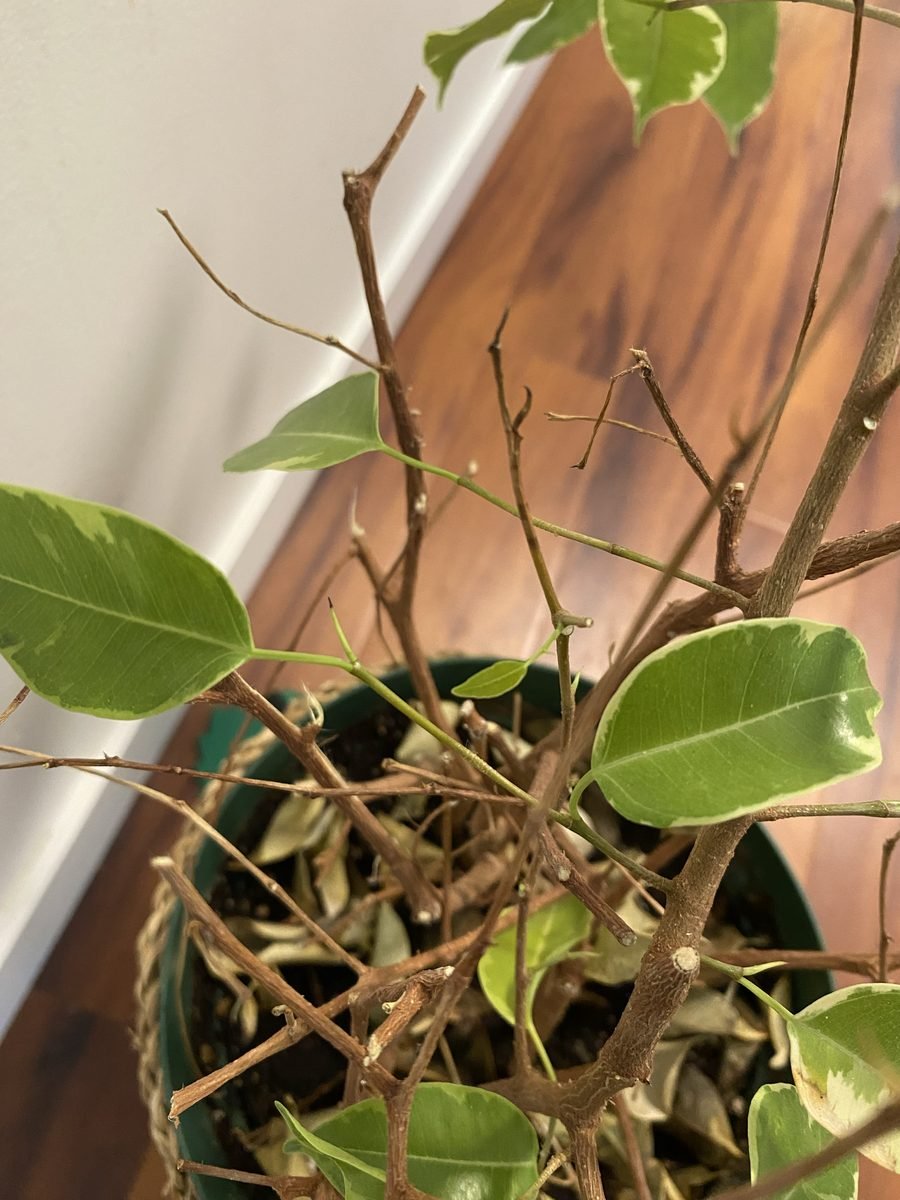
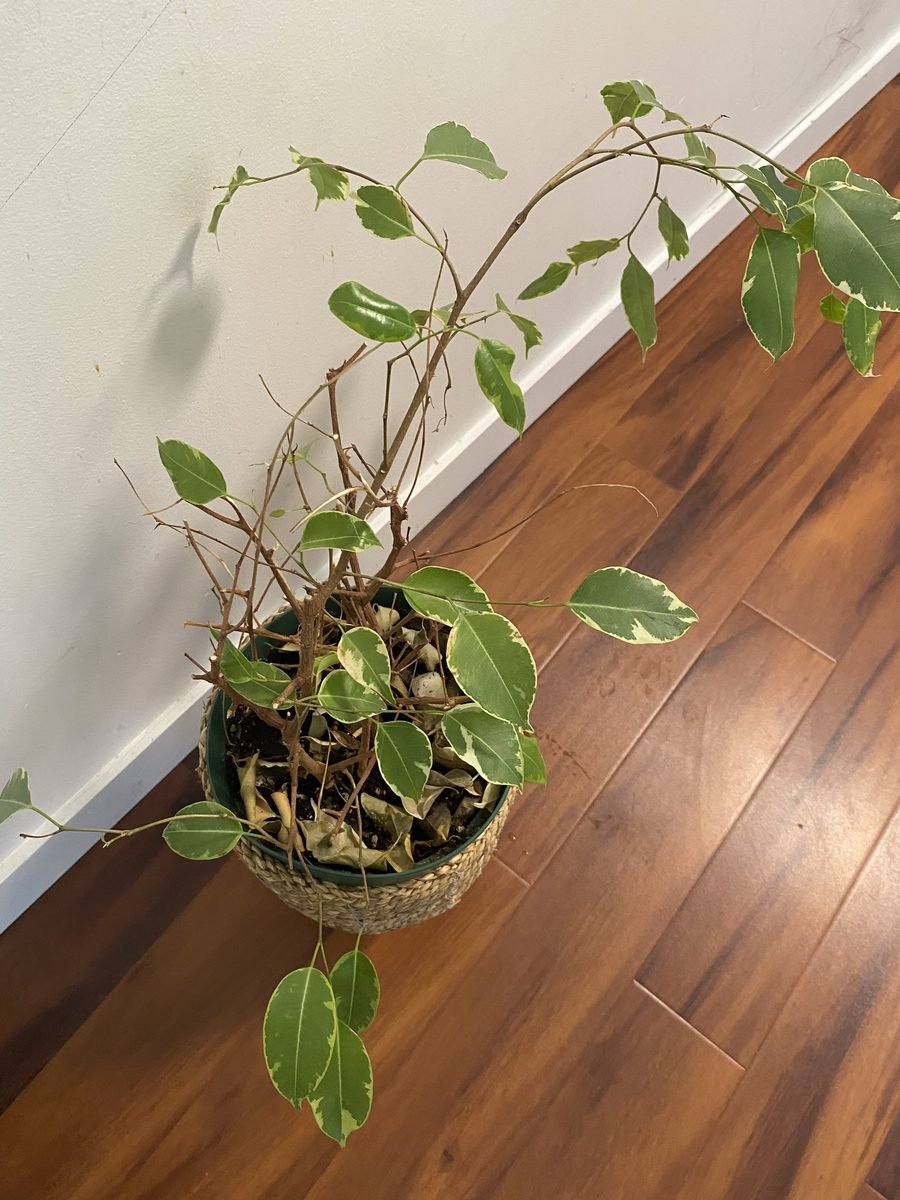
A few days later, new shoots appeared on the pruned branches. Not weeks. Days. The remaining leaves stayed green, and the plant is now rebuilding.
How do I know if my ficus is still alive?
Scratch a stem lightly with your fingernail. If the layer under the bark is green and slightly moist, that branch is alive and can grow new leaves. If it is brown and dry, trim the branch back a few inches at a time until you reach green. A ficus with green stems and no leaves at all can still recover fully.
The recovery routine, in one paragraph
Pick the brightest spot in the room that gets no direct hot sun, place the ficus there, and commit to it. No more moving. Water with lukewarm water when the top quarter of the soil is dry, which in most Vancouver living rooms means checking once a week with a finger pushed two to three inches down. Hold the fertilizer until you see steady new growth. Then be patient. The plant decides the schedule from here.
When the pot is part of the problem
One thing we check on every rescue: the pot itself. A ficus in a plastic nursery pot tucked inside a woven basket or a ceramic cover with no drainage hole is sitting above a hidden puddle after every watering. That alone can keep soil permanently wet, which is trigger number five on the list above.
If that is your setup, either lift the inner pot out to drain in the sink after each watering, or repot into a ceramic pot with a real drainage hole, about two inches wider than the root ball. We stock handmade ceramic pots with proper drainage at the shop in Kitsilano, and you can browse them on our Vancouver pottery page.
Overwatering damage looks different on different plants. If yours is a money tree rather than a ficus, we walk through that exact rescue step by step in How to Save an Overwatered Money Tree, Step by Step.
FAQ
How long does it take a ficus to grow its leaves back?
With stable light, steady watering, and no more shocks, expect the first new shoots within one to three weeks and a respectable head of leaves over two to three months. The customer in this story saw new shoots within days, but her tree still had many healthy leaves helping it recover.
Should I fertilize a ficus that is dropping leaves?
No. Fertilizer pushes growth the stressed roots cannot support yet. Wait until the plant has been putting out steady new growth for a few weeks, then feed at half strength.
Should I repot a ficus while it is dropping leaves?
Only if the pot has no drainage or the soil stays wet for more than a week. Otherwise repotting adds one more shock. Stabilize first, repot later.
Will leaves grow back on completely bare branches?
If the scratch test shows green under the bark, yes. Bare but living branches will bud again once conditions are steady. Branches that are brown and brittle under the bark will not, so trim those back to living wood.
Save the checklist before you need it
Most of the plants we help rescue got into trouble slowly, through watering guesswork and small changes nobody noticed. We put the exact checklist we use, written for Vancouver homes and light, into a free guide: The Vancouver Plant Care & Repotting Guide. Download it, and the next sudden change will not catch you or your plants off guard.
And if you would rather have a second pair of eyes on your plant, bring it in, or just bring a photo. A quick look usually tells us whether it can come back and what to do first.
DH Garden Centre
3742 W 10th Ave, Vancouver, BC V6R 2G4 · (604) 929-7335
Open 7 days, 11:00 a.m. to 6:30 p.m., often later
Find us on Google Maps
Keep reading



Have a plant question? Bring it to the counter.
DH Garden Centre is at 3742 West 10th Avenue in Kitsilano, Vancouver, open 11:00 to 6:30 every day. Bring the plant, or a photo of the spot you want to fill, and we will look at it with you. If you buy a pot here we repot the plant at the counter, soil included up to 5 litres.
