

Two bags come home from the shop in October. Both go in the same bed, on the same afternoon, at the same depth. The following April both flower and the bed looks the way the pictures promised.
Three springs later, in the plainest tulips vs daffodils test there is, one bag is still going and the other has turned into leaves with no flowers on them.
Short answer: in the tulips vs daffodils question, daffodils win on coming back. Narcissus naturalize, multiply and keep flowering for decades in Canadian gardens. Most modern hybrid tulips give one strong spring, a decent second, then fade. Two tulip groups are the exception, and they are worth knowing by name.
Tulips vs daffodils, the comparison in one table
| Tulips (modern hybrids) | Daffodils (narcissus) | |
|---|---|---|
| Comes back each year | One strong spring, then declining | Yes, for decades |
| Multiplies on its own | Rarely, and usually into non flowering offsets | Yes, splits into offsets and widens the clump |
| Squirrels and voles | Dug up and eaten | Left alone, the bulbs are toxic to rodents |
| Deer | Eaten | Left alone |
| Tolerates part shade | Poorly, wants full sun | Reasonably, will flower under deciduous trees |
| Tolerates damp ground | Poorly, rots | Better, though still wants drainage |
| Bloom window | Early to late spring depending on group | Early to mid spring, some late types |
| Colour range | Very wide, including near black and true red | Yellow, white, cream, apricot, pink tones |
| Scent | Mostly none | Many are strongly scented |
| Where it earns its place | A planned display you refresh | A permanent backbone you plant once |
Read that table and the practical answer to tulips vs daffodils falls out of it. Daffodils are infrastructure. Tulips are decoration. Plant them with different expectations and the tulips vs daffodils question stops being a disappointment.
Do tulips come back every year the way daffodils do?
Usually not. The whole tulips vs daffodils difference sits here, because most modern hybrid tulips are bred for the size and colour of the first flower, and that breeding costs the bulb its ability to rebuild itself fully after blooming. Daffodils were never selected against in that way, so they keep flowering and dividing year after year without help.
There is a second reason behind tulips vs daffodils, and it is about geography rather than breeding. Wild tulips come from the dry continental steppes of central Asia, where the summer bakes the dormant bulb hard and dry. A Canadian garden bed that gets watered through July, or a coastal one that never really dries out, does not give the bulb the ripening period it evolved to expect. The bulb splits into several small offsets instead of rebuilding one large one, and small offsets produce leaves without flowers.
Daffodils came from a milder, damper part of the world, western Europe and the Iberian peninsula, and they are far more forgiving about what happens to them in summer.
Which tulips actually behave like daffodils?
Two groups. Darwin Hybrid tulips, which are large, tall and classically tulip shaped, and hold up for several years in good drainage. And species tulips, also sold as botanical tulips, which are the small wild originals and the closest thing to a permanent tulip you can plant in a Canadian garden.
Darwin Hybrids are the ones to reach for if you want the big glossy tulip look without replanting every autumn. They came from a cross between Tulipa fosteriana and the old Darwin garden tulips, they carry a heavy flower on a strong stem, and in a sunny spot with drainage they keep performing for several springs rather than one, which is as close as tulips vs daffodils gets to a tie. Plant them deeper than the packet suggests, around 20 cm rather than 15, and they last longer still.
Species tulips are a different look entirely. Tulipa tarda, Tulipa clusiana, Tulipa turkestanica, Tulipa sylvestris, Tulipa bakeri. They are short, they open flat in sunshine and close at night, and they flower earlier than the big hybrids. In a hot dry spot, a gravel bed, a south facing strip along a wall, they come back and slowly spread. They are also cheap on space, so you can tuck them into places nothing else wants.
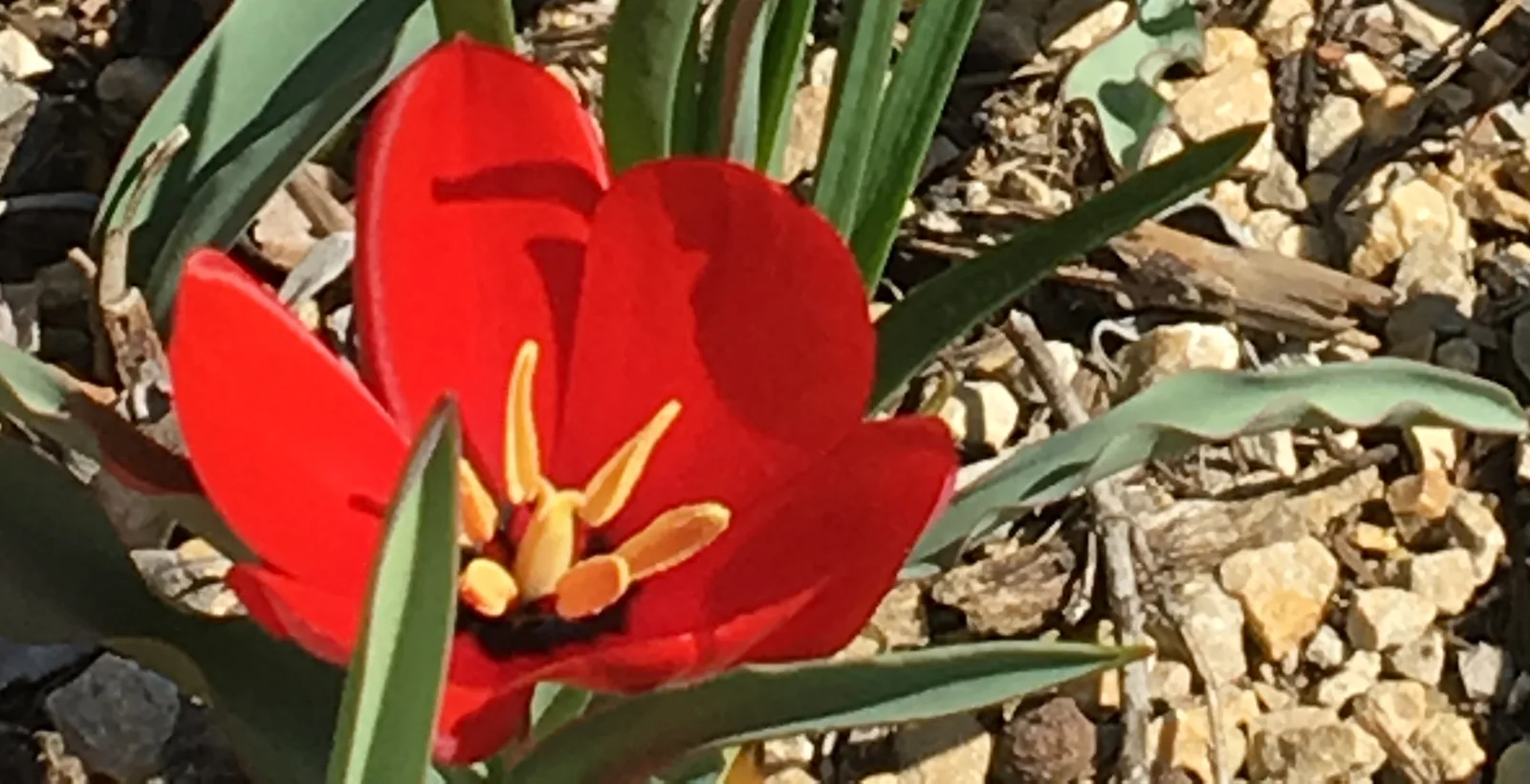
If a returning display matters more to you than one perfect first spring, that is how tulips vs daffodils resolves, so build around those two groups and treat the flashy hybrids as something you top up.
How the two behave in a Canadian winter
In the tulips vs daffodils comparison, cold is not what separates them. Narcissus are reliable down to about zone 3 and tulips to about zone 3 as well, so cold is not the deciding factor anywhere most people garden in this country. What decides it is water and rodents.
Wet ground is the quiet killer, and it separates tulips vs daffodils more sharply than any cold snap does. A bulb sitting in soil that stays saturated through a coastal winter rots without any sign above ground, and you find out in April when nothing appears. Tulips are noticeably less tolerant of that than narcissus. If your beds are heavy, deal with the drainage in clay soil before you decide the bulbs were the problem.
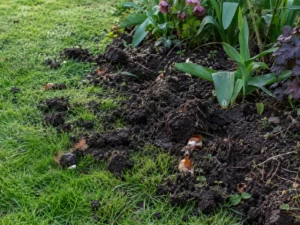
Rodents are the other split. Narcissus bulbs contain lycorine and other alkaloids, which makes them unpleasant to squirrels, voles and deer. Tulip bulbs, on the other hand, are edible and squirrels know it. If you have lost bulbs before, our guide on stopping squirrels digging up bulbs covers what works.
Planting depth and spacing, side by side
| Tulips | Daffodils | |
|---|---|---|
| Depth | 15 cm (6 in), or 20 cm (8 in) for longer life | 15 to 20 cm (6 to 8 in) |
| Spacing | 10 to 12 cm apart | 12 to 15 cm apart |
| Sun | Full sun | Full sun to light shade |
| Soil | Free draining, on the lean side | Free draining, tolerates more moisture |
| After flowering | Deadhead, leave foliage six weeks | Deadhead, leave foliage six weeks |
The depth line is the one people get wrong. Both go deeper than the small hole a trowel naturally makes, and with tulips the extra depth is one of the few things you control that genuinely extends how many years they keep flowering.
For the calendar, our zone by zone guide to when tulip bulbs go in has the dates from the coast through the prairies.
So which should you plant?
Both, in different roles. The tulips vs daffodils choice is really a choice about which job each one is doing in the bed.
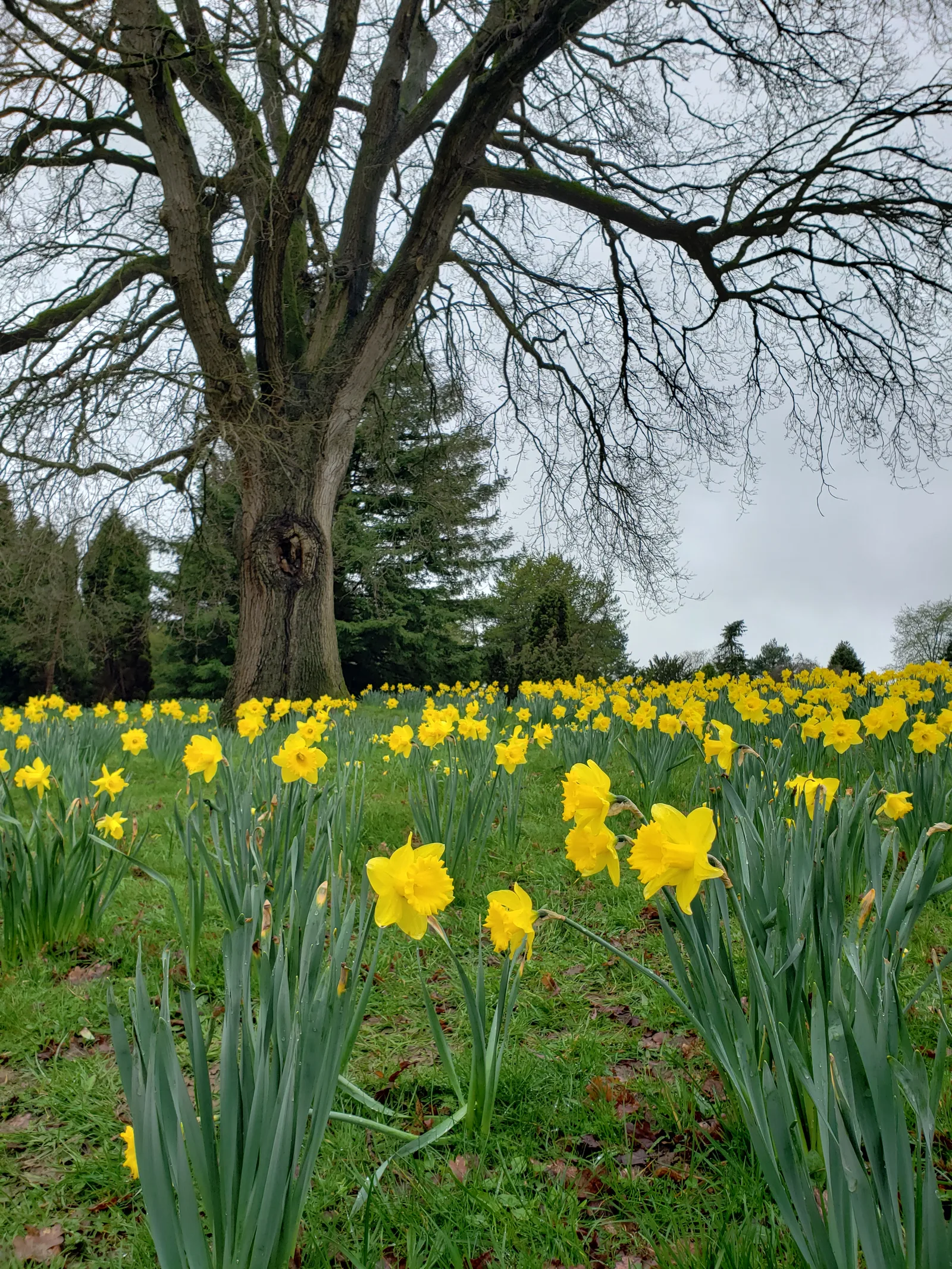
In practice tulips vs daffodils comes down to roles, so use narcissus as the permanent layer. Put them where you want spring to happen automatically for the next ten years, under deciduous trees, along a fence line, in rough grass at the edge of the lawn, in the awkward strip nobody weeds. Plant them once and stop thinking about them.
Use tulips where you want a specific effect in a specific spot, and choose Darwin Hybrids or species tulips if you would rather not repeat the purchase every autumn. Give them the sunniest, driest, sharpest draining ground you have.
The one combination we would avoid is planting big hybrid tulips as your permanent structure, then feeling let down in year three. That is not a failure, it is the plant doing what it was bred to do. If it has already happened to you, the reasons tulips did not come back go through them in order of how common they are.
Height is the other thing worth planning. If you want something that stands above both of them at the back of a border in May, the tall bulbs we grouped for the back of a bed are alliums and eremurus, and those return year after year the way narcissus do.
What this looks like in May
A bed with the right split in it does not have one week. The narcissus come first and come back wider every year without you doing anything. The tulips give you the colour you actually chose. Then the tall alliums open behind both of them just as everything else is finishing, and the bees find them within a day.
Our bulbs arrive in small lots and we cannot reorder partway through the season, so the varieties that come in are the ones there are. The tall spring bulbs we put together for the back of a border are listed with heights and bloom times if you want a look.
If you would rather watch than read, Darrell covers how to keep tulips coming back year after year in a short video on our channel.
Why the tulips vs daffodils decision is worth ten quiet minutes
Both bags cost about the same and they do completely different jobs over ten years. Plant big hybrid tulips as the permanent structure of a bed and you are buying that bed again every second or third autumn without ever deciding to. That is the expensive version of the tulips vs daffodils question, and it is expensive slowly, which is why so few people notice it happening.
The reading around tulips vs daffodils is not much help either. Catalogues describe everything as perennial. Some sources say tulips come back and some say they do not, and both are right depending on which group of tulip they mean. The argument is really about breeding and summer dryness rather than about cold.
This one has a long shadow at home. Narcissus planted once under a tree spread wider every year, and people end up lifting clumps and passing divisions over the fence. The bed becomes something handed down from your own younger self. Naturalizing bulbs in Canada is about as close as gardening gets to compound interest.
What we do is match the variety to the job. Darrell has more than 25 years of hands on gardening and landscaping on this coast and can tell you which of these has kept coming back in Vancouver gardens rather than in a catalogue. Every pack is checked by hand before it goes out.
Settle tulips vs daffodils before you plant and the bed carries itself for years, with the tulips as the part you refresh on purpose. Settle it by accident and year three is a row of leaves.
Frequently asked questions
Do daffodils really come back every year in Canada?
In most gardens, yes, and they widen into clumps as they go. They are hardy to roughly zone 3, rodents leave them alone, and they cope with the damp better than tulips do. The usual reason a daffodil clump stops flowering is overcrowding after many years, which you fix by lifting and splitting the clump in summer.
How many years will hybrid tulips last?
Plan on one excellent spring, a good second, and a noticeably thinner third. Some gardens get longer, particularly on light free draining soil in full sun. Public gardens generally treat the big display hybrids as annuals and replant every autumn, which tells you something about what they expect from them.
Can I plant tulips and daffodils in the same hole?
You can plant them in the same bed and even layer them, with the tulips slightly above the narcissus, since narcissus sit comfortably a little deeper. Just remember they are on different replacement cycles. When you lift and replace tired tulips you will be digging around narcissus that are perfectly happy where they are.
Are species tulips as showy as the big hybrids?
No, and that is the trade. They are shorter, smaller flowered and earlier, and they open flat in the sun rather than holding a goblet shape. What you get instead is a tulip that returns and slowly spreads. In a rock garden, a gravel path edge or a hot dry strip, they are the more sensible choice.
Come and see us in Kitsilano
If you are standing in front of two trays trying to decide, come in and ask. Darrell has been planting on this coast for more than twenty five years and he can tell you which of these has actually kept coming back in Vancouver gardens rather than in a catalogue.
DH Garden Centre
3742 West 10th Avenue, Vancouver, BC V6R 2G4
Open daily, 11:00 to 18:30
604-929-7335
Keep reading
Have a plant question? Bring it to the counter.
DH Garden Centre is at 3742 West 10th Avenue in Kitsilano, Vancouver, open 11:00 to 6:30 every day. Bring the plant, or a photo of the spot you want to fill, and we will look at it with you. If you buy a pot here we repot the plant at the counter, soil included up to 5 litres.
