
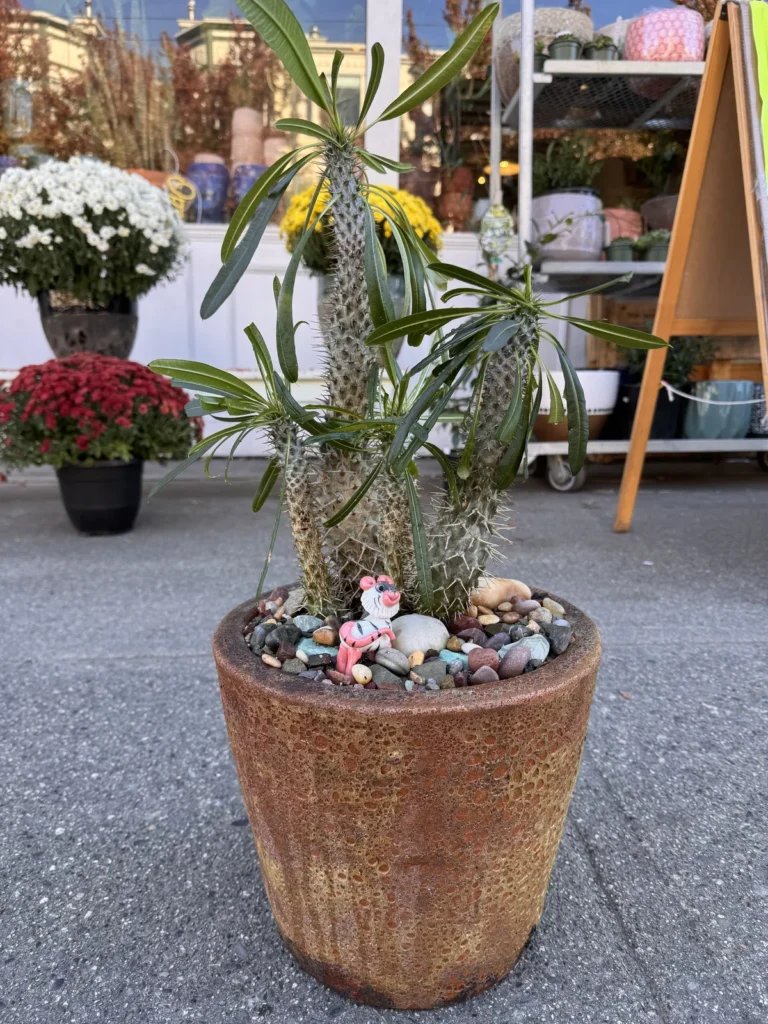
Standing water is what cracks pots here, and it collects long before the first freezing night. Ceramic pots outside in winter come through fine when that water can leave. Give it a way out and you have nothing to wrap and no space lost in the garage.
Here is what actually happens. Rain fills the soil. The pot sits flat on a wet patio, so the water has nowhere to go. One cold night arrives, the trapped water turns to ice, and ice needs more room. The wall of the pot gives way.
So which ceramic pots outside in winter actually survive here? Drainage decides it, more than the clay or the glaze does. This page covers water, one small lift, and the pots that belong indoors instead.
Four rules to protect pots from frost cracking in Vancouver
- Give every outdoor pot a working drainage hole.
- Raise pots off the ground so the water can leave the hole.
- Take the saucers away until spring.
- Bring thin decorative pots indoors and use them as cover pots.
That is the whole job for ceramic pots outside in winter. The rest of this page explains why each rule matters here.
Do ceramic pots outside in winter crack in Vancouver?
Some of them do. Most of those cracks are made in the wet weeks before the cold rather than on the freezing night itself.
Rain is the reason. October usually brings more than double the rain of September here, and every pot on your steps takes all of it. The local numbers are in the Environment and Climate Change Canada climate normals.
Water swells by about nine percent when it turns to ice. A pot packed with soaked soil has nowhere to put that extra volume, so the pressure goes out into the wall. The thinnest wall goes first. A hairline crack near the base is the usual result.
We are lucky with the cold part. Vancouver sits in one of the mildest planting zones in the country. Our freezing nights are few, and they are short.
The rain runs all winter, though. It is the part people plan for least, and it is the part that breaks ceramic pots outside in winter.
Why raise pots off the ground before anything else?
Because a drainage hole only works if the water has somewhere to go.
Set a pot flat on a paving slab and the hole is sealed against wet stone. The soil above it stays soaked, the base never dries, and the pot becomes a bowl with a lid underneath. Lift that same pot a centimetre or two and the water leaves in minutes.
Darrell puts it in one line. Raise pots off the ground so the water drains out of the hole. Air can then move under the base. That is what keeps ceramic pots outside in winter dry enough.
You do not need to buy anything special. Pot feet are tidy and they work. Two offcuts of cedar do the same, and so do two bricks.
Darrell walks through the drainage mistake here in under a minute.
One more habit is worth breaking. Take the saucer away from any pot that lives outside. Indoors it protects your floor. Outdoors it is a small pond under the roots from November onward.
If you are shopping for something new, look at the base before the glaze. A glazed pot with a real hole in the bottom handles our wet winters better than a sealed one. A sealed pot can look better in the shop and still fail on your step. There is also a short on why a pot needs a drainage hole.
Should I put gravel in the bottom of the pot?
No. This is the one that surprises people, because most of us were taught to do it.
A layer of gravel or broken pieces does not drain a pot faster. It does the opposite. Water will not move down from fine soil into a coarse layer until the fine soil is soaked. So the wet zone gets pushed up into the roots instead. Soil scientists call that a perched water table. Linda Chalker-Scott at Washington State University Extension lays it out in her paper on container drainage.
You also lose root space. Ceramic pots outside in winter end up wetter and smaller inside when you add gravel.
So what goes in the pot? Soil, and nothing else. No stones, no packing foam, no pine cones, no upturned bottles.
There is one exception we still use. A broken piece of clay pot can go over the hole, as long as the piece is curved. It sits there like a little dome, and the water still gets past. A flat piece plugs the hole and makes everything worse.
Use potting mix rather than soil dug out of the garden. Garden soil packs down hard in a container and holds water like a sponge. That is the exact thing you are trying to avoid.
Which pots should come inside before the first frost?
Thin decorative pots. Pick one up. If the wall feels light and thin, it is not built for outdoor winter here. Weight is the quickest test for ceramic pots outside in winter.
Those pots are still useful. Keep the plant in the plastic nursery pot it came in. Drop that into the decorative one and use it as a cover pot indoors. You get the look without asking a thin pot to survive a wet slab. Our guide on how to choose a pot for your plant in Vancouver goes further.
Bring in anything with no drainage hole at all. A sealed pot outdoors fills with rain and freezes solid.
The plants have their own list. Tender tropicals and most succulents want to be inside well before the cold. Our notes on overwintering plants indoors go through that in order. Cacti hate a cold wet pot. Here is a short on where to park a cactus when the weather turns.
Before you buy another outdoor planter, this one is worth a minute.
A heavy glazed pot beside your sofa does the same work as the one on the step. It can anchor a green corner at home through a grey Vancouver season.
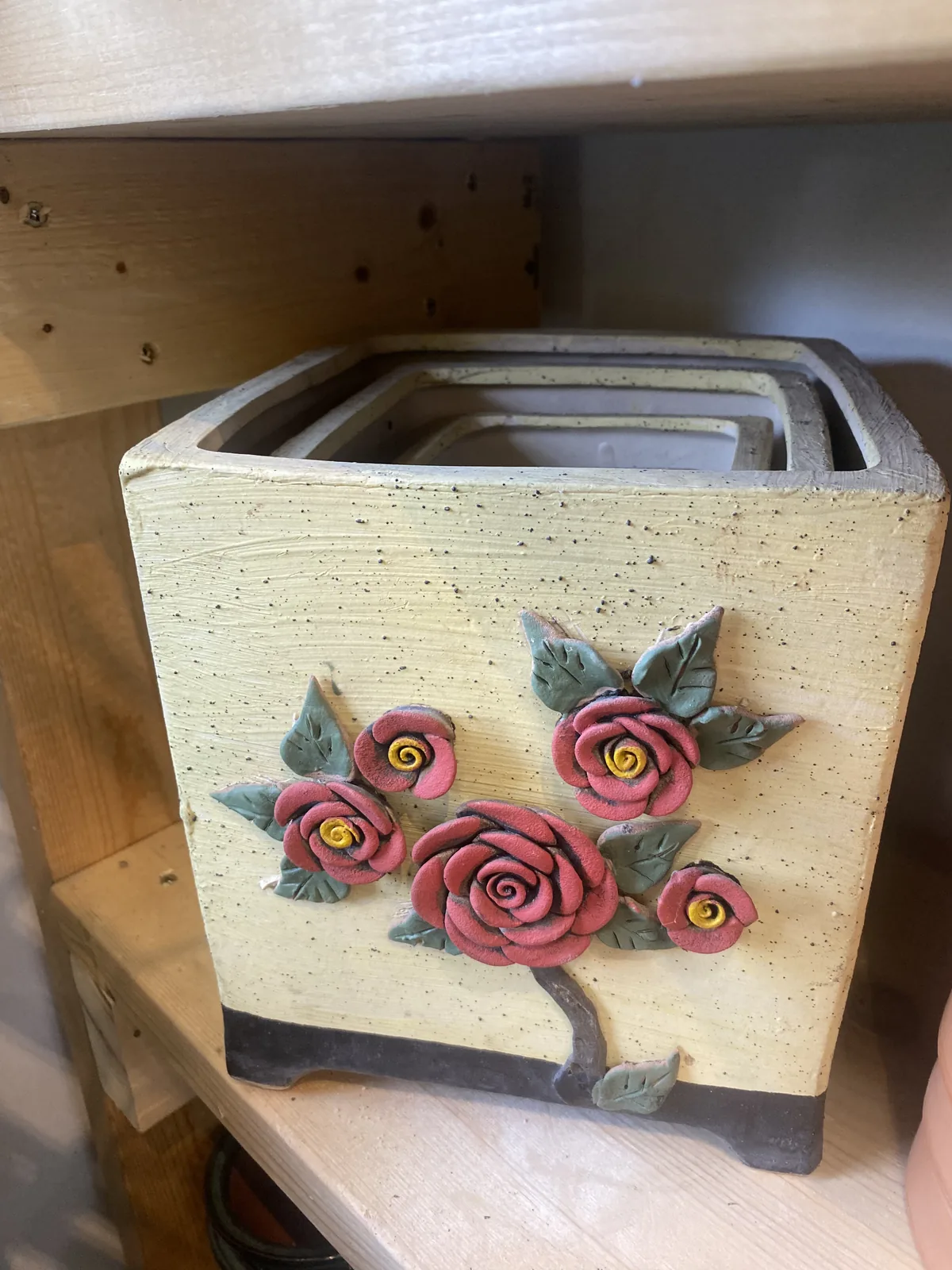
How often do I water outdoor pots in winter?
Less often than in summer, but not never. The answer depends on where the pot stands.
Ceramic pots outside in winter stand in the open and take more rain than they want from October to March. Those pots need drainage rather than a watering can. A pot under an eave or a covered balcony is a different story. It can stay bone dry for weeks while the rain falls all around it.
The check takes two seconds. Tip the pot slightly and feel the weight. Light means dry, heavy means wet. Your hands learn that difference faster than any schedule will.
Watch for water that runs straight down the inside of the pot and out of the hole. That usually means the soil has dried into a block and is shedding water. There is a short showing the water running off a potted palm.
Water in the morning, so the pot is not full of cold standing water overnight.
What can stay out all winter in a Vancouver pot?
Choose plants that shrug off rain. Cold is the smaller problem here.
Small evergreens, hardy ferns, heathers, boxwood, ornamental grasses and hardy bulbs all handle our winter in a container. The rules for ceramic pots outside in winter still apply. The pot has to drain, and it has to stand off the ground. Our winter container ideas for porch pots has the combinations we go back to each year.
Roots in a pot sit colder than roots in the ground, so choose plants with hardiness to spare. Our notes on protecting plants from frost and freeze cover what to move and what to wrap.
Is the plant outgrowing its pot? Autumn is not the moment to move it, and when to repot houseplants in Vancouver explains the timing.
What a cracked pot actually costs you
Nobody plans to buy the same pot twice. Plenty of people do it anyway, one winter at a time.
A pot and the plant in it cost less than most things people buy to make an entrance look better. Both last for years when the water can get out. The expensive version is the pot that sits flat on wet stone until it splits. Then you pay for the pot again, and usually the soil and the plant with it. Two offcuts of wood under the base cost you nothing at all.
There is a softer part people mention at the counter. Something green outside the kitchen window is the first thing many of us look at on a dark morning. A front step is also where a household sits together when the weather allows it. A row of split pots makes that corner feel neglected. That is not a study, it is what we hear in February.
Lifting ceramic pots outside in winter is one of the few garden jobs you fix once and then forget.
What comes with a pot from DH Garden Centre in Kitsilano
Not every pot we sell is built to stay out all winter, but we will tell you which ones are. The honest answer changes from one pot to the next. Come in any day we are open, 11:00 AM to 6:30 PM, and bring a photo of the spot on your phone.
If you buy a pot from us, we repot it at the counter and the soil is on us, up to 5 litres. There is no extra charge for the repotting. Here is what else comes with it.
- Ask about any pot on the shelf and we will say where it belongs, outdoors or indoors as a cover pot.
- Someone at the counter matches the pot to your plant, your light and the size of the space.
- The plant goes home already settled, with watering notes for our rain and our light.
- More shapes and glazes than we have shelf for. Darrell picks them himself in Bat Trang and Binh Duong.
- Pots priced fairly for what they are. You can see that on the shelf, not on a screen.
- All of that comes with the pot, at no additional cost.
A healthy plant in a pot that suits the doorway looks like it has always lived there. The same plant in a split pot looks like a job you have been putting off.
The rain gets heavier through October. Pots tend to crack after the first long wet stretch, so lifting them now is a five minute job.
Not close to Kitsilano? The free Vancouver Plant Care and Repotting Guide covers ceramic pots outside in winter, along with our light and our wet season. It arrives by email, and there is nothing to buy.
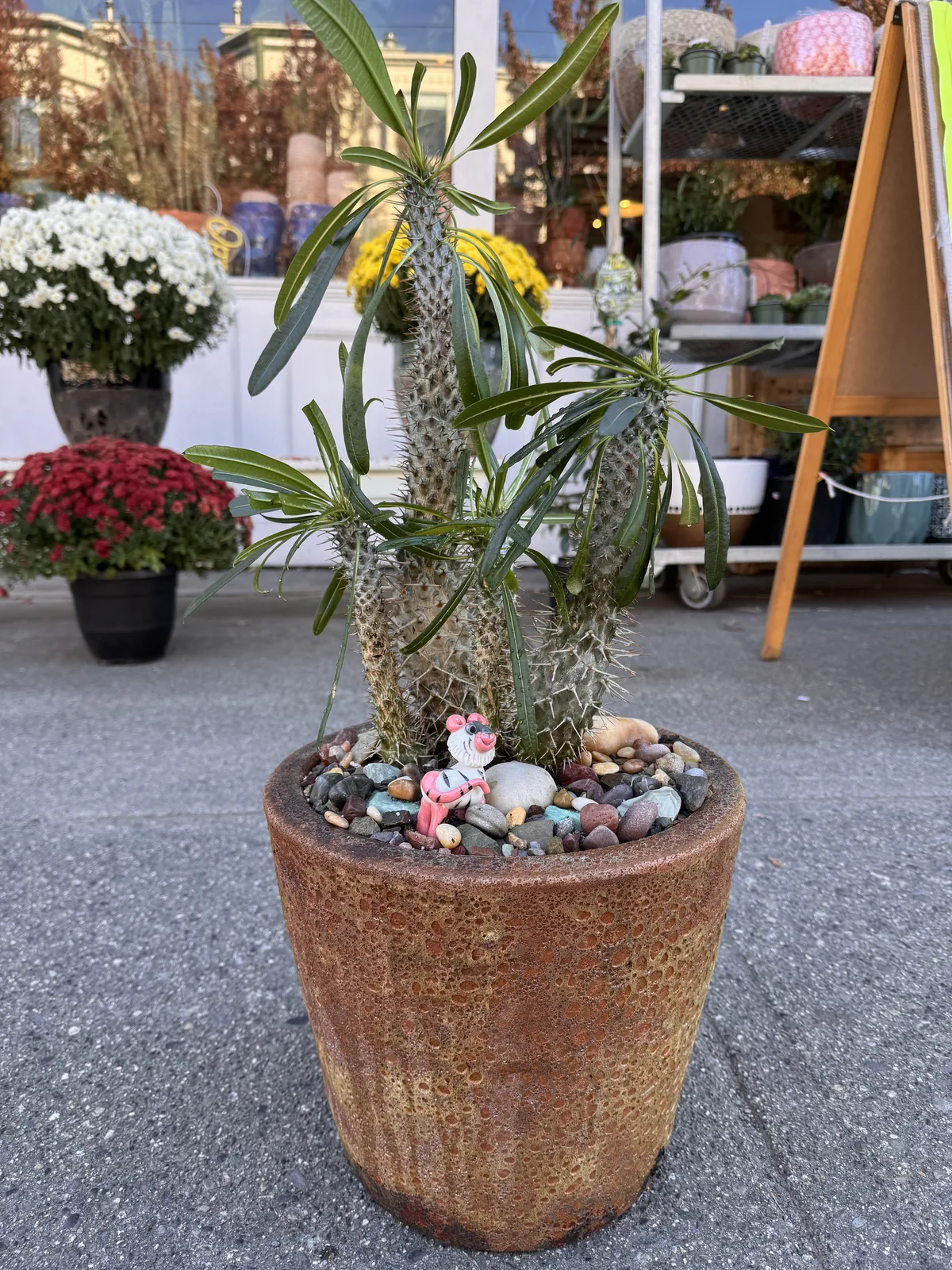
Come and stand next to a few of them in Kitsilano, at the shop on West 10th Avenue.
Frequently asked questions
Do glazed pots crack in frost?
Thick glazed pots with a drainage hole, standing on feet, usually come through our winter. Glaze helps, because it stops the clay body soaking up water. Drainage is still doing most of the work on ceramic pots outside in winter. Ask us about the pot you are holding.
What are pot feet, and do I really need them?
Pot feet are small ceramic or rubber blocks that raise pots off the ground. Any hard object of the same height does the job. Offcuts of wood, bricks and flat stones all work. You need a centimetre or two of air. The point is a clear path out of the hole.
Should I put a saucer under an outdoor pot?
Not in winter. A saucer outdoors collects rain and holds it against the drainage hole. That is the one situation you are trying to avoid with ceramic pots outside in winter. Saucers belong indoors, where they protect floors and furniture. Take them away in autumn. Put them back in late spring if you want them.
My pot already has a crack. Can I still use it?
Often yes, for a while. A hairline crack in the upper wall may hold for years. A crack running through the base tends to open further each winter. Move that pot indoors, or plant into it for one season only. Repotting into a sound pot in spring is the safer route.
Do plastic and terracotta pots crack in the cold too?
They can, and the rules for ceramic pots outside in winter apply to them as well. Plastic gets brittle in frost and can split at the rim, though it usually survives. Unglazed terracotta is the one to watch. The clay soaks up water, and that water flakes the surface when it freezes. Thick, well fired terracotta lasts. Thin terracotta from a garden display often does not.
Visit us in Kitsilano
DH Garden Centre
3742 W 10th Ave, Vancouver, BC V6R 2G4 (Kitsilano)
Open daily 11:00 AM to 6:30 PM
Phone (604) 929-7335
Directions: https://www.google.com/maps/search/?api=1&query=DH+Garden+Centre+3742+W+10th+Ave+Vancouver
YouTube: https://www.youtube.com/@dhgardencentre
Keep reading
Have a plant question? Bring it to the counter.
DH Garden Centre is at 3742 West 10th Avenue in Kitsilano, Vancouver, open 11:00 to 6:30 every day. Bring the plant, or a photo of the spot you want to fill, and we will look at it with you. If you buy a pot here we repot the plant at the counter, soil included up to 5 litres.
