
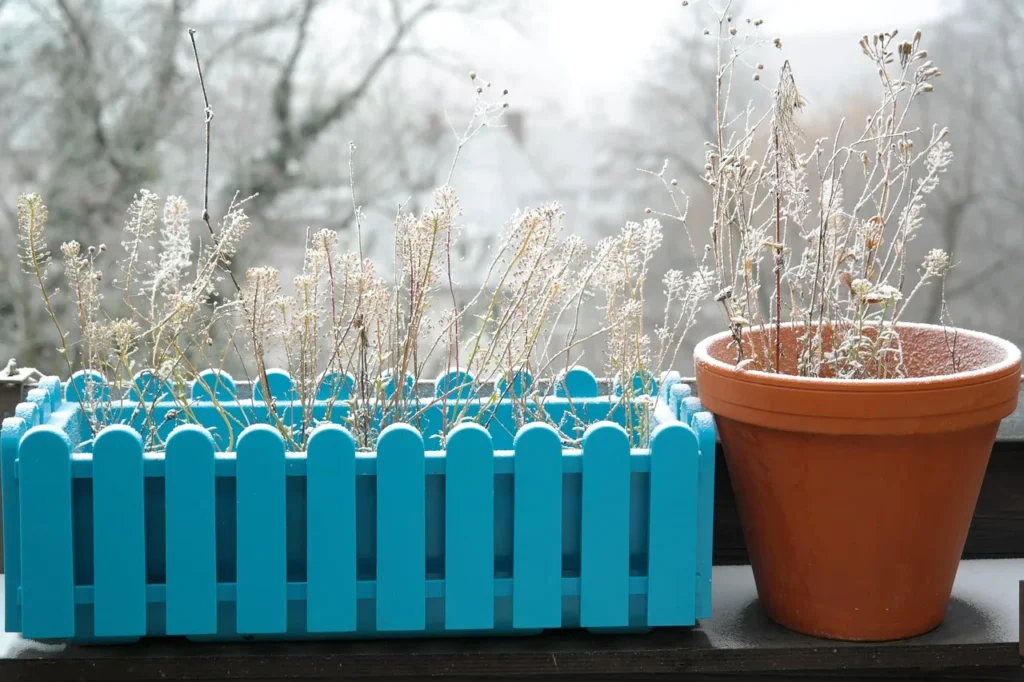
Every autumn someone stands at the counter holding a bag of tulips, looking at a pot they have carried in from the car, and asks whether the whole thing is going to freeze solid and die.
It is a fair question. The answer surprises people, because the usual cause of death is not the one they worry about.
Do bulbs in pots survive winter outside in Canada?
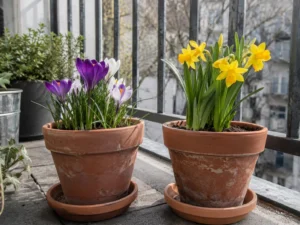
In most of the country, yes. Bulbs in pots survive winter outdoors well enough as long as the pot drains freely and is not left standing in water. Containers do run colder than the open ground, so pot size, wall thickness and drainage matter far more than they do in a garden bed.
Why a pot is colder than the ground
Soil in a garden bed is enormous. It holds summer heat, the deeper layers stay well above air temperature, and cold reaches the plant from one direction only, straight down from the surface.
A container is the opposite. Cold reaches it from every side at once, plus the top, plus underneath if it stands on a raised deck. The soil in a pot drops to air temperature within a day or two, then rises again the moment the sun comes out.
A useful rule of thumb when you are working out whether bulbs in pots survive winter is that a container outdoors behaves roughly one to two hardiness zones colder than the ground in the same garden. A pot on a Vancouver patio in zone 8 acts more like zone 6 or 7, which is comfortable for tulips, narcissus and crocus. A pot in zone 4 acts more like zone 2 or 3, and that is where the thinking starts.
The other half of it is that roots are less cold hardy than the top growth. A bulb rated for a zone 3 winter is rated for one sitting in insulating ground, not in a frozen container on a windy deck.
What actually kills bulbs in pots over winter?
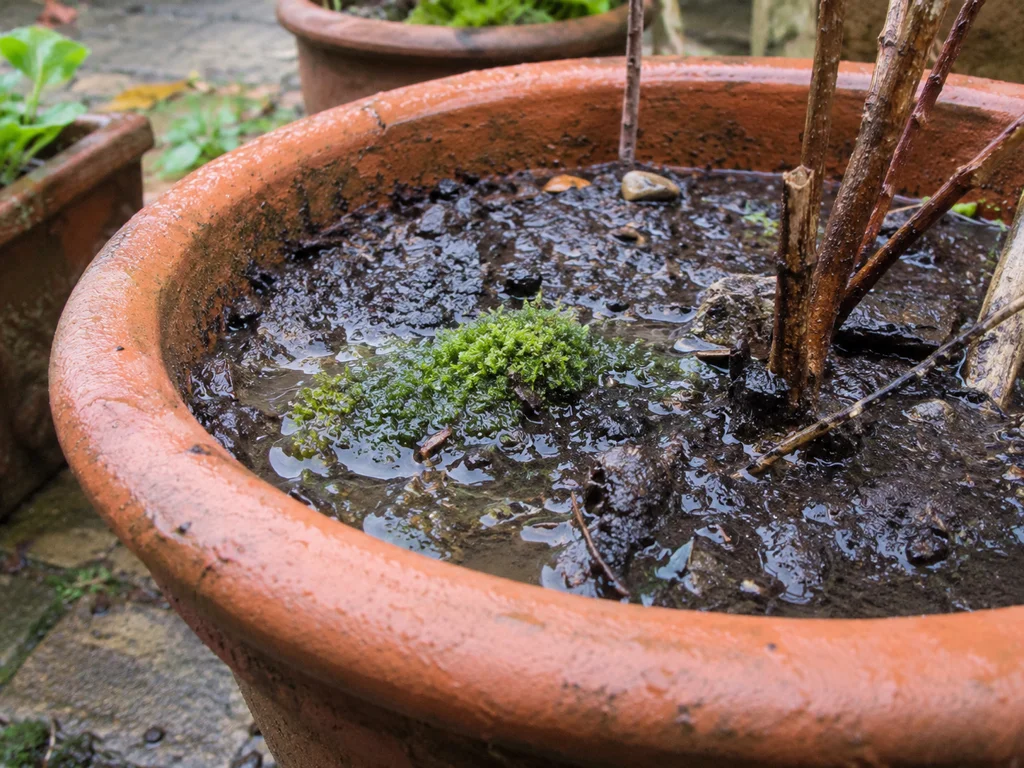
Water, almost every time. A bulb sitting in soggy soil rots from the base, and a pot with a blocked drainage hole holds water like a bucket, which is why bulbs in pots survive winter far more often when the water can get out. Freeze and thaw cycles then push that wet soil around and split the bulb tissue. Steady cold with good drainage does very little harm.
The five things that matter, in order
1. A drainage hole that is actually open
Check it with your finger before you fill the pot, and again in November. A hole plugged by roots, a saucer left underneath, or a pot sitting flat on wet concrete all give the same result, which is standing water at the level your bulbs sit at, and that is what decides whether bulbs in pots survive winter.
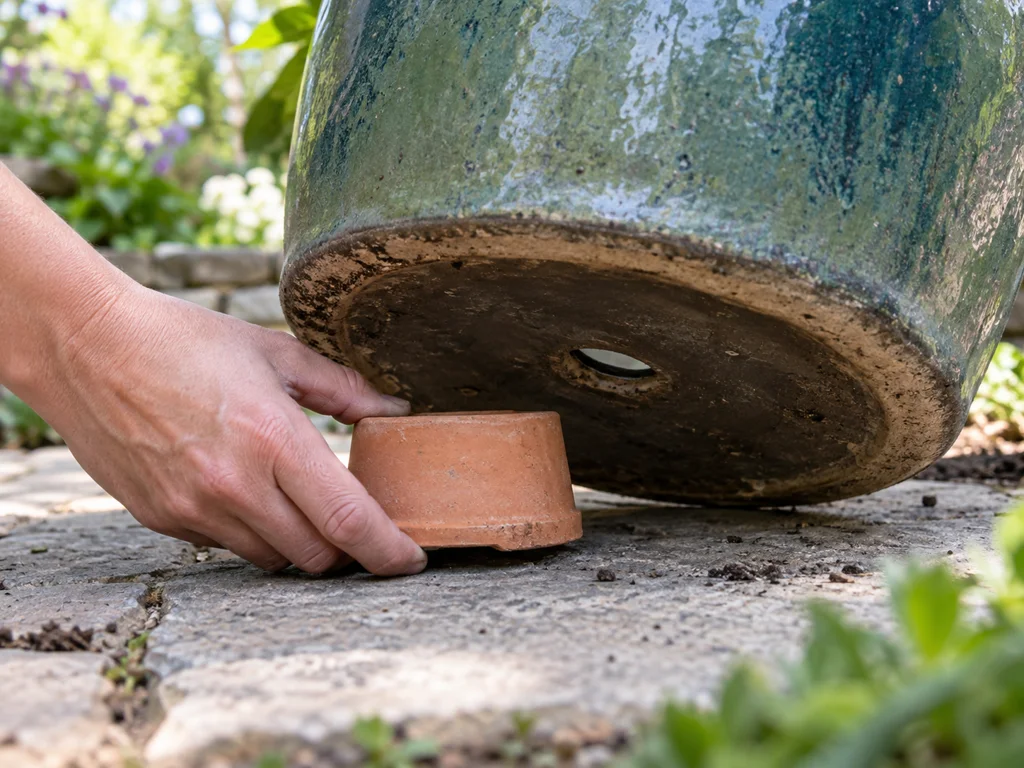
2. Raise the pot off the ground
Pot feet, two bricks, or a couple of scrap wood strips. Anything that lifts the base half an inch and lets water leave. This is the cheapest fix on the list and it solves the most common problem.
3. Use the biggest pot you reasonably can
More soil means more thermal mass, slower freezing, slower thawing, and a much gentler ride for the bulbs. A 6 inch pot on an exposed balcony in Winnipeg is a hard place to be a bulb, and soil volume is the quietest reason bulbs in pots survive winter at one address and not at the next. The same bulbs in a 14 inch pot have a genuine buffer around them.
4. Choose a pot with thick walls
Thin plastic follows the air temperature almost exactly, so it swings hard between a frosty night and a mild afternoon. Wall thickness has a real say in whether bulbs in pots survive winter, because a thick walled ceramic pot slows that swing, and the swing is harder on bulbs than steady cold.
That is why we bring in handmade Vietnamese ceramic pots and use them for our own winter displays. They are heavy for their size, which is the point. Whatever material you choose, the pot has to drain, since water trapped in the base is what cracks a pot in a freeze.
5. Group the pots and cover the soil surface
Before the first hard cold snap, push the containers together into a block against a house wall, on the side out of the wind. The pots in the middle are insulated by the ones around them and the wall gives off a little stored heat, which is the cheapest way to help bulbs in pots survive winter on an exposed deck.
Then put a couple of inches of leaves or bark mulch over the soil surface, the same reasoning we use when preparing raised beds for a Vancouver winter.
Zone by zone, what we would actually do
Zone 7 and 8, coastal British Columbia. Leave the pots outside all winter. Raise them off the ground, take the saucers away, and do not water unless the pot is under a roof. Our problem here is rain, not cold.
Zone 5 and 6, southern Ontario, Quebec, the Maritimes. Outside is still fine for hardy bulbs in a decent sized pot. Group the containers against a wall for the coldest stretch, mulch the surface, and use ceramic or another thick walled pot rather than thin plastic.
Zone 3 and 4, the Prairies and the north. A pot on an open deck is asking a lot. Two options work. Sink the whole pot into a garden bed or a deep pile of leaves so the ground does the insulating, or move it into an unheated garage or shed once the soil has chilled in late autumn.
If you use the shed method, keep it dark and check the soil once a month. It should be barely moist, never wet and never bone dry. Bring the pot back outside as soon as growth starts in late winter.
What not to do
Do not bring the pot into a heated house. Bulbs need weeks of cold soil before they will flower, and a warm hallway cancels that. You get leaves and no flowers.
Do not wrap the pot in plastic. It traps moisture against the soil, which is the thing you are trying to get rid of. Burlap or an old blanket is fine if you want extra insulation in a cold zone.
Do not keep watering. From November through February the rain does the job in most of the country, and a pot kept damp all winter is the one that loses bulbs. The exception is a pot under a deep overhang, which needs a check about once a month.
What it looks like in spring
Growth appears earlier than it does in the ground, because a pot warms faster than a border, and that early green is usually the first sign that bulbs in pots survive winter better than people expect. A late frost on emerged foliage looks alarming and rarely does lasting damage.
If a pot comes through with gaps, dig one of the missing spots. A bulb gone soft and sour smelling was drowned. One that is dry and papery, or simply not there, is squirrels rather than winter.
For an exposed balcony, these are the ones we plant in our own containers sit low enough that wind is not a factor, and they are happy outside through a wet winter.
If you would rather watch than read, Darrell covers what a hard freeze does to crocus, and what it does not do in a short video on our channel.
What it costs to guess whether bulbs in pots survive winter
The money in this is quiet, which is why it stings. A pot of tulips bought in September, a Saturday spent planting it, and then March arrives and the surface stays bare. Container gardening is unforgiving about water, so whether bulbs in pots survive winter is decided in the first minute of planting rather than in February.
Then there is the part nobody counts. You search for whether bulbs in pots survive winter, get ten pages that disagree, and half of them were written for a climate nothing like yours. Overwintering bulbs in containers is not hard, but it is easy to worry about.
The containers by your door are also the part of the garden other people see. Neighbours walk past them, family notice them from the kitchen window, and a pot that opens in late February is what you talk about over the fence. When it comes up empty, you are the one explaining bare soil.
So we take the guessing out of the front half. Every pack is checked by hand before it leaves, because a soft bulb has little chance in a winter pot. Darrell has more than 25 years of hands on gardening and landscaping on this coast and has lost pots of his own, which is where the drainage advice came from.
Get it right and bulbs in pots survive winter with almost no attention from you. Guess at it and you can lose a season of containers, then wait a year for another go.
Frequently asked questions
Can I leave tulip bulbs in pots over winter, or should I lift them?
Leave them in. Tulips need those weeks of cold soil to flower at all, so lifting them in autumn defeats the purpose. What you can do after flowering, once the leaves have gone yellow, is lift the bulbs and store them dry for the summer, though many gardeners simply refresh the pot with new bulbs each autumn instead.
Will my ceramic pot crack over the winter?
It can, if water is trapped in the base or the wall and then freezes. Keeping the drainage hole clear and raising the pot off the ground removes most of that risk. A thick walled, well fired pot with free drainage handles a coastal winter without trouble, and in very cold zones the safest place for a favourite pot is a shed.
Do bulbs in pots over winter need any protection in Vancouver?
Very little. Raise the pot, take the saucer away, and let the rain do the watering. During a hard cold snap you can push the pots together against a house wall for a few days, then leave them alone again. The bigger local risk is a pot sitting in standing water on a flat patio.
Is a plastic pot ever the better choice?
On a high balcony where weight is a genuine concern, a large plastic pot with good drainage beats a small ceramic one, because soil volume matters more than wall thickness. Where weight is not a problem, thicker walls give a steadier ride. Either way, use a free draining mix such as this coco coir and perlite blend rather than garden soil.
Ordering for this autumn
The version of this that goes right is quiet. You plant in October, do nothing at all for four months, and in late February there is something open on the pot by the door while the rest of the garden is still brown.
Our bulbs arrive in small lots, and once a variety is spoken for we cannot reorder it partway through the season. The other deadline belongs to the weather, since bulbs have to be in soil before the ground goes cold, which across most of Canada means October into early November.
Booking ahead holds better conditions than waiting for the packs to reach the shelf, and it puts the varieties you planned for under your name. Here is the pot collection we put together for balconies and small gardens. If you are still choosing varieties, start with the short, wind steady picks for balconies, and if you want one pot to flower for three months, read how we layer bulbs at three depths.
Visit us
DH Garden Centre
3742 West 10th Avenue, Vancouver, BC V6R 2G4
Open daily, 11:00 to 18:30
604-929-7335
If you are in Kitsilano, bring a photo of where the pot stands in winter, including what is underneath it. Darrell has been working on gardens on this coast for more than twenty five years, and he will usually look at the base of the pot before he says anything about the bulbs.
Keep reading

Have a plant question? Bring it to the counter.
DH Garden Centre is at 3742 West 10th Avenue in Kitsilano, Vancouver, open 11:00 to 6:30 every day. Bring the plant, or a photo of the spot you want to fill, and we will look at it with you. If you buy a pot here we repot the plant at the counter, soil included up to 5 litres.
