
Every September someone stands at our counter in Kitsilano holding a bag of bulbs and asks the same thing in a slightly worried voice. Will these actually come back.
It is a fair question here. The first hard frost lands in November on this coast and in early September on the prairies, and the same rack of bulbs gets sold in both places.
The best spring bulbs for Canadian winters are narcissus, crocus, scilla, muscari, snowdrops, allium and the smaller fritillaries. Those seven groups are the best spring bulbs for Canadian winters because they handle frozen ground through zone 3, most of them spread on their own, and none of them need to be lifted in the fall. Tulips belong in a Canadian garden too, but for a different reason, and I will come to that further down.
I am Darrell Smith. I have been planting bulbs in Vancouver gardens for more than twenty five years, and we ship them to gardeners in Saskatchewan and northern Ontario. What follows is my ranking of the best spring bulbs for Canadian winters, sorted by how much cold each group takes rather than by how it photographs.
What makes a bulb hardy enough for a Canadian winter?
Two things. The best spring bulbs for Canadian winters have to survive being frozen solid for months, and they have to survive being wet while they are frozen. Cold on its own rarely kills a spring bulb. Water sitting around a bulb through repeated freeze and thaw does, and that is the failure I see most often.
This surprises people. A scilla in a raised bed in Regina often comes through in better shape than the same scilla in heavy clay in Burnaby, because the prairie bed freezes in November and stays frozen, while the coastal bed thaws and refills with rain a dozen times before March.
When you are picking the best spring bulbs for Canadian winters, read a hardiness rating as a floor rather than a promise. If your soil holds water in winter, fixing the drainage in clay soil will do more for your bulbs than moving up a zone would.
The best spring bulbs for Canadian winters, group by group
Narcissus and daffodils, hardy through zone 3
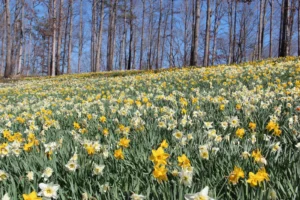
If I could only plant one thing in a cold garden it would be narcissus. The bulbs contain lycorine, which is bitter and mildly toxic, so squirrels, voles and deer leave them alone. They come back without help, they multiply, and I know clumps in Point Grey planted before I started working here.
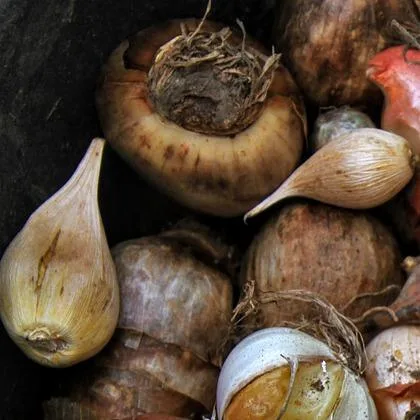
They also tolerate more soil types than almost anything on this list. Heavy ground, sandy ground, part shade under a deciduous tree, all fine. For how they compare with the other headline bulb, see whether tulips or daffodils come back every year.
Crocus, hardy through zone 3
Snow crocus, the small early Crocus chrysanthus types, opens first. The larger Dutch crocus, Crocus vernus, follows a week or two later. Both are properly hardy and both seed themselves into a lawn over time.
The honest catch is that squirrels do eat crocus corms. They sit shallow, and freshly dug soil is an advertisement. If you have had corms lifted before, read our notes on stopping squirrels digging up bulbs before you plant.
Scilla siberica, hardy through zone 2
Of all the best spring bulbs for Canadian winters, this is the toughest one I sell. A small blue thing, about 15 cm tall, that grows in ground which kills other bulbs. It seeds around freely, which is a nuisance in a tidy bed and exactly what you want under a tree or along a rough edge.
Muscari, hardy through zone 4 and often zone 3
Grape hyacinth sends up a tuft of leaves in autumn, weeks after planting, and every year somebody calls us thinking they have done something wrong. They have not. The leaves sit there all winter, look scruffy in March, and the flower comes up through them in April.
Snowdrops, Galanthus nivalis, hardy through zone 3
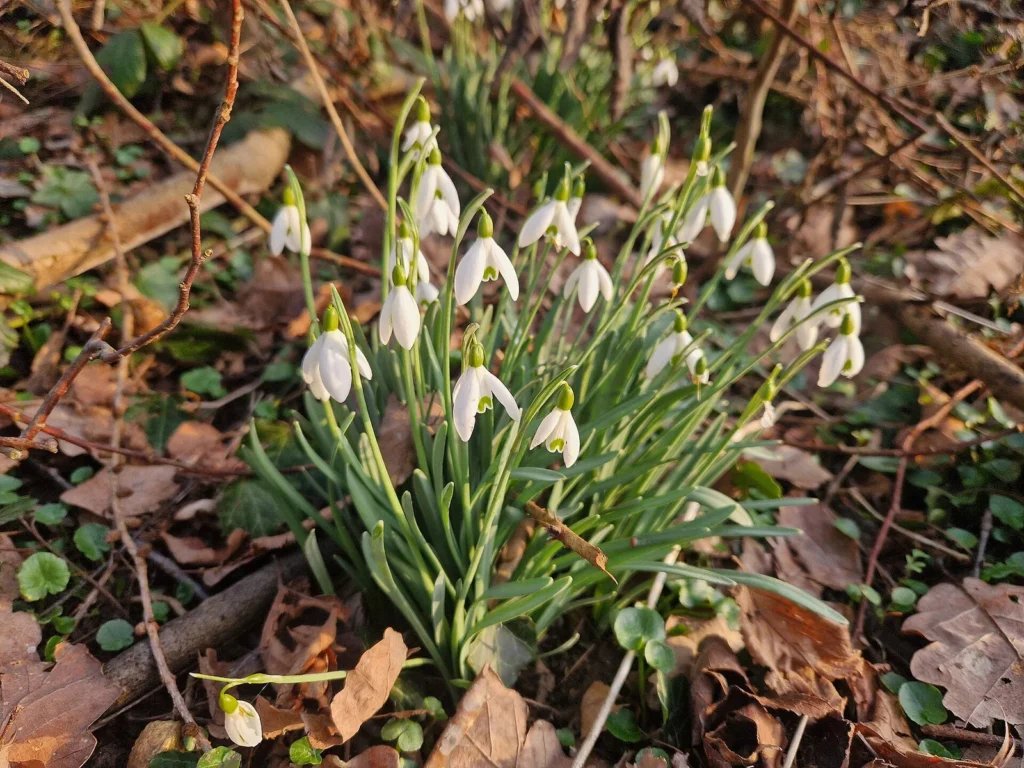
Snowdrops push up through snow, which is not a figure of speech. On this coast they often beat the crocus and they are what the first bees find on a mild February afternoon. They establish slowly, so give them three years before you judge.
Iris reticulata, reliable in zone 5, colder with cover
A small iris, about 12 cm tall, in deep blue and purple. Most suppliers rate it for zone 5 and up. Gardeners in zone 4 grow it well where snow cover is dependable, but I would not tell you it holds up in zone 3, because I have not seen that myself.
Allium, hardy through zone 3 or 4 depending on the species
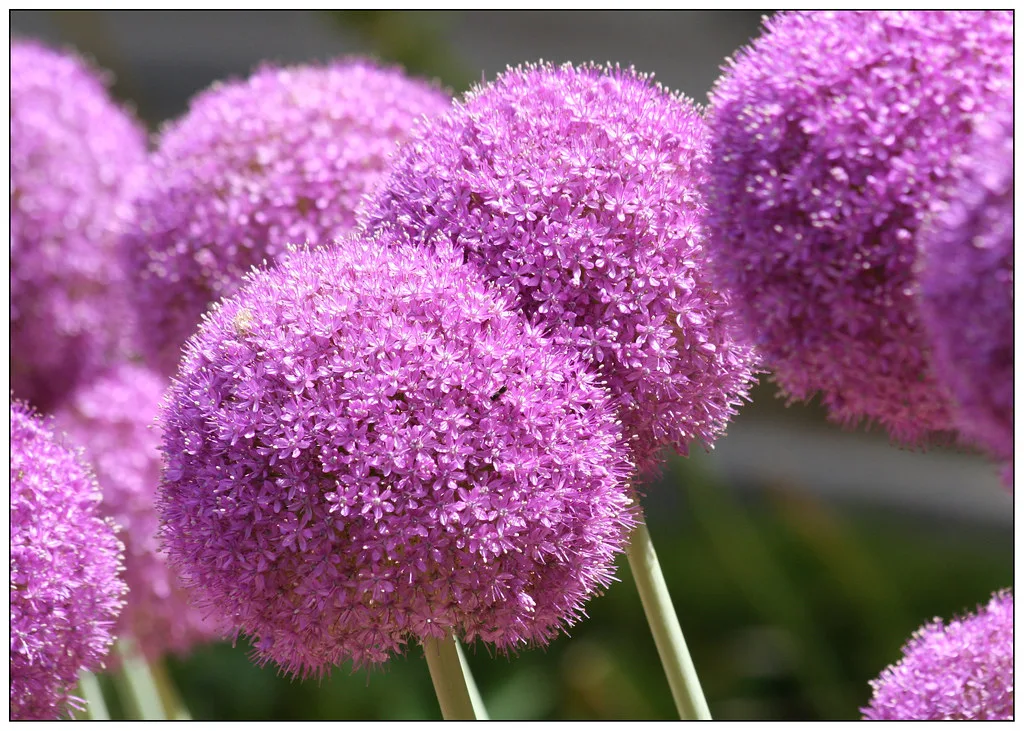
Rodents do not touch allium. Nothing does. Small species like Allium moly and Allium caeruleum take zone 3, and the tall drum sticks, Allium giganteum and Allium Mount Everest, are solid in zone 4 and up.
The tall ones earn their keep in the spot most people give up on, the strip along a fence. They stand above whatever is in front of them, hold their shape for weeks, and unlike the annuals that strip eats every May, they come back. The tall alliums and eremurus we chose for the back of a border are the ones I plant along fence lines myself.
Fritillaria, and why you have to split the family
These get lumped together and should not be. Fritillaria meleagris, the checkered snake’s head, is hardy through zone 3 and happy in ground that stays damp in spring. Fritillaria imperialis, the big crown imperial, is a zone 5 plant that wants sharp drainage and rots in a wet hole faster than anything else here. Plant the large bulbs on their side so water runs off the crown.
Where do tulips fit in a cold garden?
Cold is not the tulip’s problem. Most tulips are hardy to zone 3, so cold is not what keeps them off my list of the best spring bulbs for Canadian winters. The issue is that large modern hybrids are bred for one spectacular season, and by the third spring many of them come up as a clump of leaves and a thin stem. Species tulips and Darwin hybrids hold on longer.
So plant tulips for what they are. They give a colour and a size nothing else here can match, and in most Canadian gardens expect two or three good springs from a hybrid rather than twenty. Put narcissus and allium in the same bed and let them carry it once the tulips thin out.
What changes in zone 2 and zone 3
Not the list, mostly. The timing.
Get the best spring bulbs for Canadian winters into the ground four to six weeks before it freezes hard, so roots have time to form. In zone 2 and 3 that means late August through mid September, in zone 4 and 5 late September into October, and on the coast in zone 8 you have until well into November.
Plant a couple of centimetres deeper than the packet says, so the bulbs sit under the worst of the freeze and thaw. Put mulch down after the soil surface has frozen, not before. Mulching early keeps the ground warm and turns the bed into a winter apartment for voles.
Snow is insulation, so even the best spring bulbs for Canadian winters are at risk in a bed the wind scours bare. Use narcissus and scilla in a spot like that, and save the iris for somewhere sheltered.
Ordering for ground that freezes
That is my ranking of the best spring bulbs for Canadian winters. Now picture the last week of March. The bed you walked past all winter has snowdrops finished, crocus open, and the first narcissus buds fat and ready. That is the point of the work you do in October.
Bulbs come to us from our Dutch supplier in small lots, a handful of packs of each variety, and nobody reorders partway through a bulb season. Once a variety is spoken for it is gone until next autumn. The bulbs are in the store now, and ordering online is how you end up with the varieties you chose rather than whatever is left later in the season.
If you want to see the varieties we picked for ground that freezes, the full list is there and every pack ships across Canada. If you are still deciding where to order from, we wrote a checklist on what to look for when you buy flower bulbs online in Canada.
If you would rather watch than read, Darrell covers one of the stranger things about growing alliums in a short video on our channel.
Why choosing the best spring bulbs for Canadian winters is worth an hour
I watch people spend real money on a rack of bulbs that was shipped to Vancouver and to Regina in the same truck, with the same label. If the variety does not suit ground that freezes solid in November, that money is gone, along with the afternoon you spent planting. The best spring bulbs for Canadian winters are rarely the ones photographed on the front of the pack.
The looking up is worse than the planting. Zone ratings get read as promises when they are really floors, drainage matters more than the number on the map, and every second article contradicts the one before it. People arrive at the counter in Kitsilano worn out by the research, which is no way to feel about a bag of narcissus.
It is also not a private thing. A spring bed is what the neighbours see first, what a visiting parent comments on, and what somebody photographs on a walk. Cold climate gardening is hard enough without the bed at the front of the house coming up half empty while the street watches.
So I sort the best spring bulbs for Canadian winters by cold hardiness rather than by how they photograph, out of more than 25 years of hands on gardening and landscaping. I open the boxes myself when they land and go through the packs by hand, and soft or light ones go into my bin rather than your order.
Choose the best spring bulbs for Canadian winters for your ground and most of them come back on their own for years. Choose from a photograph and you are buying the same bed again next September.
Frequently asked questions
Which spring bulbs are hardiest in Canada?
Scilla siberica takes the most cold, rated to zone 2, with narcissus, crocus, snowdrops and the small alliums close behind at zone 3. All of those survive frozen ground without lifting or protection. In practice, drainage decides whether they come back, not the temperature on your zone map.
Do I need to mulch spring bulbs in a cold zone?
Only in exposed beds, and only after the top of the soil has frozen. A layer of leaves or straw evens out freeze and thaw once winter is set. Putting it down in October keeps the soil warm and gives voles somewhere comfortable to spend the winter.
Can I still plant if the ground has frozen on top?
If you can dig a hole to full depth, plant. A crust of frozen soil in the morning that softens by noon is not a problem. Once the ground is frozen solid at planting depth the season is over, and the bulbs are better kept cool and dry to pot up indoors.
Do spring bulbs need to be dug up in the fall in Canada?
No. Every bulb on this list stays in the ground through winter and needs those cold months to flower. Digging and storing applies to tender summer bulbs such as dahlia, canna and gladiolus, which do not survive a Canadian winter outdoors in most of the country.
DH Garden Centre
3742 West 10th Avenue, Vancouver, BC V6R 2G4
Open daily, 11:00 to 18:30
604-929-7335
If you are anywhere near Kitsilano, bring a photo of the bed on your phone and come in. It is easier to tell you what will hold up in that spot when I can see the light and the soil.
Keep reading

Have a plant question? Bring it to the counter.
DH Garden Centre is at 3742 West 10th Avenue in Kitsilano, Vancouver, open 11:00 to 6:30 every day. Bring the plant, or a photo of the spot you want to fill, and we will look at it with you. If you buy a pot here we repot the plant at the counter, soil included up to 5 litres.
